
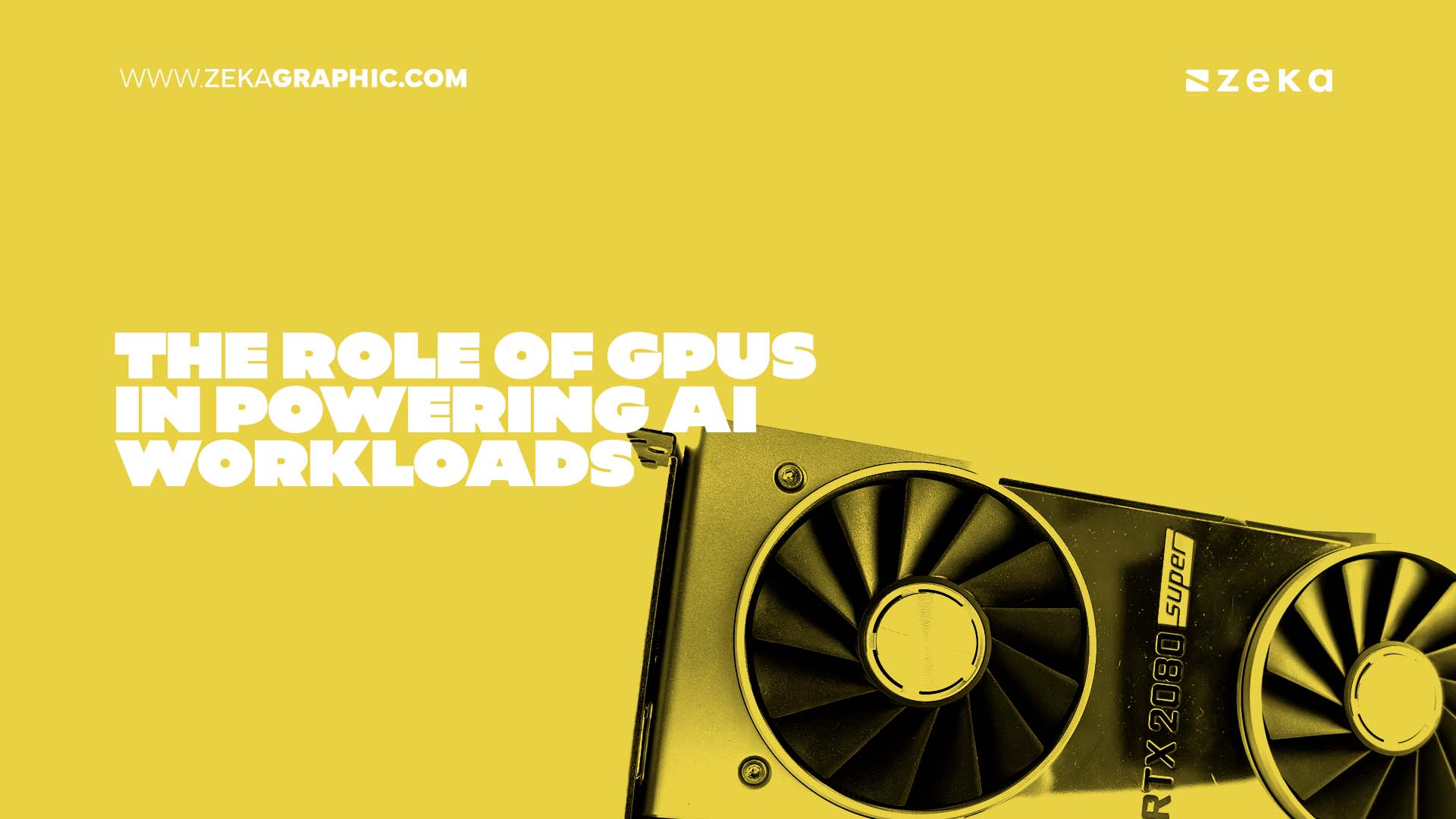
Artificial intelligence workloads have a reliable way of turning reasonable compute budgets into major capital decisions. As more organisations move from experimenting with AI to running it in production, the bottleneck shifts from ideas to infrastructure.
In most cases, the centre of that infrastructure is the GPU. And not because GPUs are trendy, but because modern AI is fundamentally a parallel-compute problem that rewards massive throughput, high memory bandwidth, and fast interconnects.
For teams trying to scale responsibly, especially under cost and capacity pressure, options like refurbished NVIDIA H100 GPUs have become part of the practical conversation about performance per dollar, lead times, and lifecycle strategy, not just raw speed.
Advertisment
Most AI workloads, especially deep learning, rely heavily on matrix math. That means huge numbers of similar operations are applied across very large datasets. CPUs can do this, but they are not built to do it at the scale AI demands.
GPUs were designed for parallel workloads from day one. They can execute thousands of operations simultaneously, which aligns neatly with how neural networks train and run inference.
For many AI tasks, GPUs deliver much higher throughput than CPUs, and they often do it more efficiently for the kinds of computations AI depends on. That efficiency gap is a big reason GPUs have become the default compute engine for AI, from data centre clusters to edge deployments.
GPU adoption is not only about hardware. Mature tooling, libraries, and optimisation practices make it easier to translate theoretical GPU performance into real-world results.
Advertisment
AI “workloads” are not one thing. At a high level, there are two dominant phases: training and inference. They both benefit from GPUs, but they stress the hardware in different ways.
Training is the heavy lift. It involves processing massive datasets repeatedly to adjust model weights. This is where you see multi-GPU clusters, high memory bandwidth requirements, and fast GPU-to-GPU communication to avoid bottlenecks.
Inference is the operational phase. It is when a trained model is used to answer questions, classify images, generate text, or make real-time predictions. Inference often prioritises low latency, high throughput per watt, and predictable performance under variable demand.
The practical implication is that “the best GPU strategy” depends on whether an organisation is building models, deploying them, or doing both. NVIDIA’s performance guidance for data centre inference focuses heavily on throughput and efficiency metrics that reflect how operational AI is increasingly measured.
Spec sheets are useful, but they are not a strategy. For AI workloads, a few hardware characteristics tend to dominate outcomes.
Memory matters because AI models are large and data hungry. If the model cannot fit efficiently in GPU memory, performance can drop sharply due to constant data movement.
In multi-GPU training, fast GPU-to-GPU communication reduces idle time and improves overall utilisation. A GPU is not “one box”; it is a node in a system, and the system’s behaviour often determines the ceiling.
AI workloads are sustained, high-intensity compute. That means consistent cooling, stable power delivery, and predictable component behaviour are not optional. They are part of staying online and protecting uptime.
Advertisment
GPU conversations often start with compute and end with budget. But the real multiplier is energy. AI-driven data centre growth is forcing infrastructure decisions that used to be “facilities problems” into the core IT roadmap.
The International Energy Agency projects that electricity demand from data centres worldwide is set to more than double by 2030, to around 945 TWh, driven by AI.
That matters because GPUs do not operate in isolation. The operational costs of AI include power, cooling, and constraints imposed by your physical environment. For some organisations, the limiting factor is not how many GPUs they can buy, but how many they can power and cool without destabilising the rest of the system.
This is why discussions about efficiency are becoming mainstream. It is not just performance per dollar. It is performance per watt, performance per rack unit, and performance per operational simplicity.
Not every team has an unlimited GPU procurement budget. In the real world, organisations juggle supply constraints, capital budgets, and the uncomfortable truth that AI capacity planning is rarely perfect.
Total cost of ownership is not only the purchase price. It includes energy, maintenance, reliability risk, deployment time, and how quickly you can scale.
Industry forecasts reinforce that AI infrastructure spending is accelerating, intensifying competitive pressure on compute and capacity. Gartner has forecast that worldwide AI spending will reach $2.52 trillion in 2026, underscoring the scale of investment in AI foundations and infrastructure.
IDC has forecast AI infrastructure spending reaching $758 billion by 2029, with accelerated servers expected to dominate.
In that environment, enterprise-grade refurbished hardware, including refurbished NVIDIA H100 GPUs, can be a rational lever. Refurbished options can reduce upfront capital exposure, shorten procurement cycles, and enable phased scaling. They are not always the right answer, but they represent a legitimate option in a mature infrastructure playbook.
Advertisment
Rather than starting with “what GPU should we buy?” start with “what outcome do we need?” This keeps the decision anchored in reality.
Are you training models, fine-tuning existing models, or running inference at scale? Each has different requirements for memory, throughput, and interconnect.
Is usage steady, bursty, seasonal, or project-based? Inference workloads in production can look very different from those of a research team running periodic training runs.
Power, cooling, rack space, and network capacity should be treated as first-class constraints, not late-stage surprises.
A higher purchase price can be justified if it reduces energy cost, increases utilisation, or avoids downtime. A lower purchase price can be justified if it accelerates delivery and reduces project risk.
AI infrastructure should not be a one-off. It should be monitored like any other critical system, with performance baselines, cost tracking, and clear refresh triggers.
Advertisment
GPUs are not just “faster compute.” They are the operational backbone of modern AI, and the choices organisations make about GPU strategy now affect budgets, energy footprints, project timelines, and competitive capability.
The organisations that win tend to do three things well: they match hardware to workload reality, treat power and cooling as first-class constraints, and manage TCO as a discipline, not a spreadsheet exercise.
Whether that means investing in new hardware or evaluating refurbished NVIDIA H100 options to extend compute capacity without overextending budgets, the real question is not “can we get GPUs,” but “can we build an AI compute strategy that scales without breaking everything else?”
Advertisment
Pin it for later!
If you found this post useful you might like to read these post about Graphic Design Inspiration.
Advertisment
If you like this post share it on your social media!
Advertisment






Want to make your Business Grow with Creative design?
Advertisment

Advertisment