Creative agencies are quickly putting money into AI-powered workflows because artificial intelligence gives them a clear way to run smoother, deliver better results for clients, and produce more creative and more personal work at scale.
This is not just about picking up a few new tools; it is a smart move to stay competitive, keep up with changing client requests, and build stronger campaigns in a fast digital space.
When agencies add AI to their work, they can automate boring tasks, give people more time for strategy, and get clearer insights from data. This changes how modern marketing and creative production work. Because of this shift, many agencies also choose expert partners in Addepto AI development to help them work with AI in the right way.
Advertisment
An AI-powered workflow for creative agencies means a big change in how work gets done, how ideas are created, and how campaigns are managed. It is a connected setup where AI tools and models are used across each stage of creative and product work, from early ideas to final delivery. The goal is to support people, not replace them, so teams can work faster, waste less time, and make choices based on insights.
This approach is more than basic automation. It means steps that used to be manual and slow are improved or fully handled by smart systems. The result is a more flexible process that uses data and pattern matching, instead of a fixed step-by-step method.
Agencies do not just respond after something happens; they can plan ahead, improve faster, and personalize content at a speed that used to be out of reach.
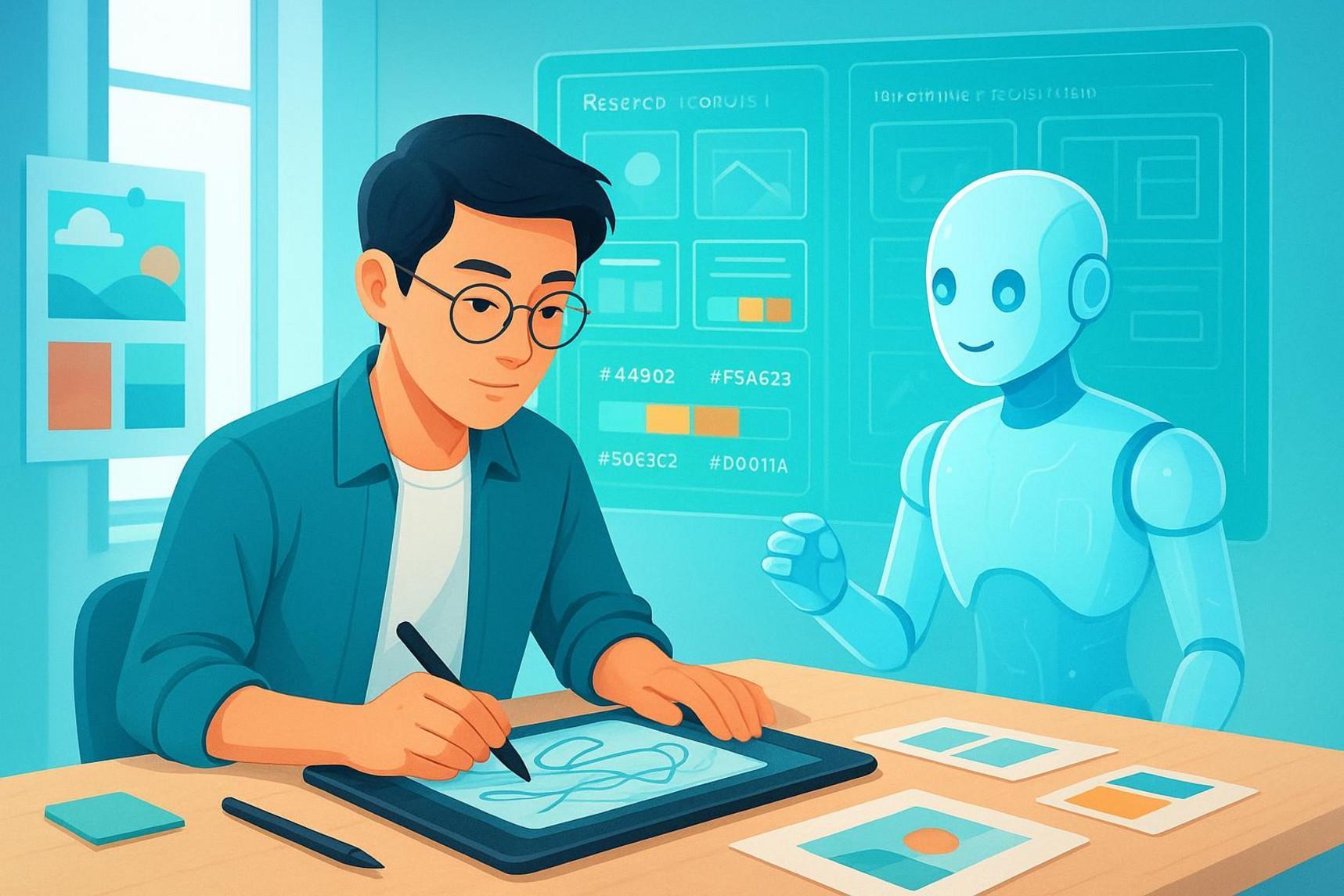
At its core, an AI-powered workflow is a set of connected steps where AI helps in specific ways. These workflows often include the following parts working together:
This full loop makes AI part of the ongoing creative process, not just a one-time helper.
AI is changing the creative process by working like a strong co-pilot and shifting where teams spend their time. In the past, visual production depended on manual work like editing images, resizing, and reworking designs for different formats. These tasks matter, but they repeat often and take many hours. With AI, automation speeds up this work, such as improving images and handling layout changes with less hands-on effort.
This is not about AI replacing designers, marketers, or content teams. It is about removing the “busywork” so people can focus on things that need human judgment: storytelling, brand voice, and big ideas. As Alfredo Deambrosi noted in March 2025, AI-driven improvements help professionals spend less time on mechanical tasks and more time on ideation, testing, and storytelling.
AI makes it easier to try different styles quickly, iterate faster, and adjust content for many platforms. That gives teams more room to create stronger work, with AI providing speed and analysis while people lead the creative direction.
Advertisment
Agencies are investing in AI-powered workflows because they have to respond to a market that is hard and changing fast. AI is no longer a far-off idea; it is something agencies need now to grow and compete. Adoption is rising because of strong market pressure, higher client expectations, and new chances to use data to guide creative work.
As Jonathan Healey, Group Technology Director at IDHL, said, “AI is not a tool, AI is not a strategy,” but a capability that can boost what people can do when used well.
Digital marketing is crowded and competitive. Brands need a constant flow of new, high-quality visuals and strong content across many channels. Agencies are pushed to deliver more, faster, and still keep quality high, often with smaller budgets. In this space, work that used to stand out is now easier for many to produce, which raises the minimum level clients expect.
Jonathan Healey said, “The ability for a brand to truly differentiate just got much harder.” This “sea of sameness” can drown brands that do not try new approaches, which pushes agencies to find better ways to stand out.
AI helps agencies compete by letting them meet these demands directly. By automating repeat work and speeding up production, teams can move faster and react more quickly. They can test more ideas, adjust faster, and respond to market changes with less delay. Agencies that use AI well gain more time for strategy, more space for fresh thinking, and an advantage in a very visual digital market.
Clients are more informed than before. Many know what AI can do and expect agencies to use it to create very personal experiences while also proving they can work efficiently. A McKinsey report says companies that beat competitors at personalization earn 40% more revenue, and clients pay attention to numbers like this. They do not want generic messages; they want content and campaigns shaped to different people, across every channel.
AI workflows make large-scale personalization possible without eating up all resources. By reading large sets of customer data, AI can help shape content, offers, and timing, and it can adjust based on real-time performance. This speed lets campaigns react quickly to changes in the market or shifts in audience mood. Clients also want clear results and lower waste. AI-driven work can cut manual effort, speed up delivery, and use budgets and people more effectively, which matches what clients are asking for.
Another strong reason agencies invest in AI is the chance to base creative work on data in a deeper way. AI can study huge datasets and spot patterns in trends, customer behavior, and campaign performance. This goes beyond normal reporting. AI can find hidden behavior sequences, predict which channels may work best, and suggest message angles using past results and prediction models.
This changes how creative strategy is built. Instead of relying only on gut feeling, agencies can make choices based on evidence, lowering risk and improving the chance of real impact. AI can also find trending topics, suggest SEO keywords with high search and low competition, and point out missing content areas. That helps teams focus on stories and designs that are creative and also more likely to perform well. AI does not reduce creativity; it can make it stronger by linking it to insights that keep work relevant and measurable.
Advertisment
Adding AI to agency workflows brings a wide set of benefits that change both operations and creative output. From faster delivery to clearer insights, AI helps agencies meet demand and raise the quality bar.
One of the clearest benefits is faster work and better efficiency. Sorting and processing large amounts of marketing data-contacts, campaign stats, social engagement-by hand is slow and leads to mistakes. AI can handle repeat tasks like image editing, resizing for different platforms, fitting designs to different layouts, and checking grammar and style.
Lauren Richardson, a senior account executive at Marketing Signals, explains it well: “Repetitive admin tasks can drain valuable time that could otherwise be spent on more strategic or creative projects. Automating some of these tasks using AI can free up time, supercharge productivity, and reduce errors all at once.”
With this kind of automation, tasks that once took hours-like rough concept visuals, storyboards, or film setup ideas-can be created and improved much faster. Wes Maynard, Managing Director at The MTM Agency, noted how much easier it is now to reach a visualization clients can understand with very little work. This speed lets teams test more options, get approvals quicker, and cut delays that slow down projects.
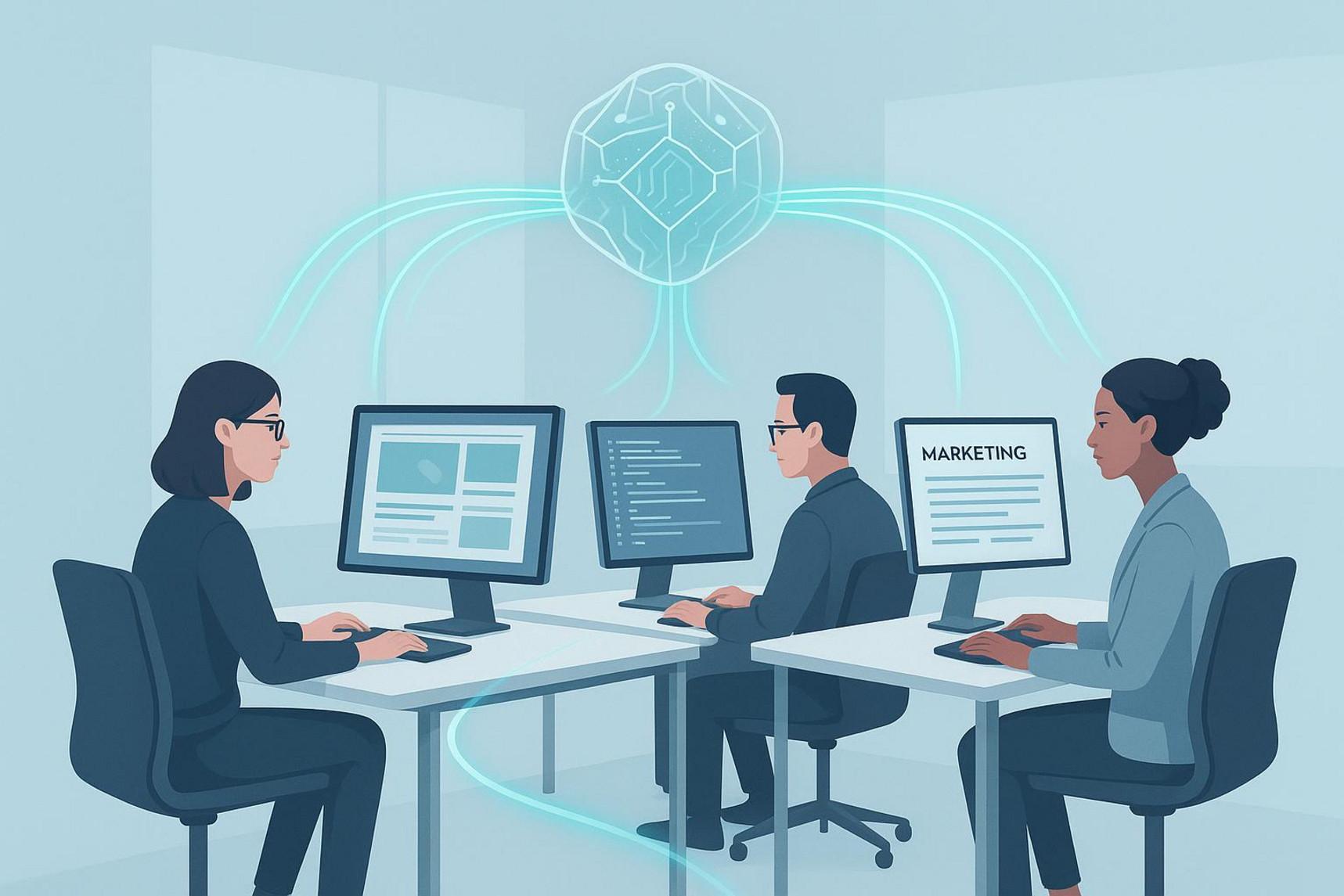
AI tools can also improve teamwork across design, development, and marketing. AI can act like a bridge by turning ideas into formats other teams can use, which helps everyone stay aligned. This matters even more for large projects or remote teams where keeping things consistent is hard.
Agencies also use AI to keep content and code consistent. AI can review copy to keep tone and brand messaging steady across many pieces. For developers, tools like Code Rabbit and DeepMind’s AlphaCode can help write code faster and with fewer mistakes, while following standards. Better consistency reduces back-and-forth edits and makes collaboration smoother.
Marketing and e-commerce need a nonstop stream of strong visuals and varied content. In the past, keeping up often meant higher budgets or lower quality. AI gives another option: scale production without overloading the team. By speeding up changes, automating slow refinements, and reducing friction in production, agencies can create more content-often better content-without a huge resource increase.
A single core asset can be reused quickly in many formats. For example, a blog post can turn into social posts, an infographic, or a video script. AI social media tools can then schedule and publish content at the best times across platforms. This supports a steady flow of content that stays consistent across channels, helping agencies grow reach and results.
AI can process huge amounts of data and give agencies a clearer view of trends, customer preferences, and campaign performance. This supports planning ahead instead of only reacting after results come in. AI can review search trends, competitor content, and viewer preferences, then suggest content angles and SEO keywords. It can also help personalize and improve content in real time.
Tools like MonsterInsights, Semrush, Hotjar, HubSpot, and the Google Marketing Platform use AI for analysis, competitor research, user behavior insights, and optimization. More advanced setups can even predict user actions, like churn risk or upsell signals, by finding small patterns early.
Forrester reports that companies using predictive analytics in their workflows see 20% faster revenue growth. This forecasting helps agencies plan smarter campaigns and raise the odds of real impact.
AI can also support creativity instead of limiting it. By taking over repetitive tasks, it gives people more time and energy for work that needs human taste and judgment. Wes Maynard’s line, “You don’t want AI to do your job. You want AI to do the dishes,” sums this up.
AI can act as a brainstorming partner. Tools like ChatGPT and DALL-E help teams plan concepts, write early copy, and create quick prototypes that inspire the final work. Agencies can generate many idea options fast, like ten campaign directions with outlines in minutes, which used to take hours. This shifts time toward higher-value work: strategy, creative improvement, and quality checks. The value is not just replacing steps, but widening what teams can create.
Advertisment
AI in agencies is now a day-to-day tool, not a concept for the future. Teams use it across many tasks to speed up routines and support data-based decisions, while creatives still guide the work.
AI is especially useful at the start of creative work. Generative tools like ChatGPT and DALL-E can produce lots of ideas for campaign themes, copy angles, visual concepts, and storyboards. An agency might use AI to list keyword ideas for a search campaign or try different camera angles and backgrounds during video planning.
As Dmitrii Kustov from Regex SEO explained, AI content creation works best with a human-first approach: give clear outlines and instructions, let AI produce rough drafts, then have people refine the result. This speeds up early ideation and keeps humans in control. Jeanette Palmer from NAIL Communications also mentioned using Midjourney for its quality and range when creating storyboards, presentation comps, and exploring concept looks.

AI is strong at handling repetitive tasks that take up large parts of a creative worker’s day. This includes admin work and content adjustments. Editing images, resizing for different platforms, and fitting elements to different layouts used to require careful manual effort. Now, automation can speed this up.
AI can also run grammar and style checks and help keep written content and code consistent. Agencies use AI to manage and share content across formats, including scheduling social posts at better times. This frees teams for more strategic and creative work while lowering errors and raising productivity. As Elyse Flynn Meyer from Prism Global Marketing Solutions noted, AI can help pick better times to reach prospects by analyzing engagement data, which speeds up early contact and improves the prospect experience.
AI makes it much easier to deliver personal content to many people at once. Instead of sending one generic message, AI can adjust content, offers, and timing based on behavior, preferences, and past actions. This level of personalization used to be expensive and hard to run.
For example, AI-based email personalization can combine firmographic data and contact data to automate personalization across large email campaigns, saving hours and cutting costs. Anton Mart, a marketer with over ten years of experience, notes that AI marketing workflows support hyper-personalized experiences across all touchpoints, going beyond broad message changes. The result is a customer journey that feels personal even at large scale, which can increase engagement and conversions.
AI helps agencies improve marketing strategy by turning large amounts of data into useful insights. AI tools can spot trends, run competitor checks, study user behavior, and suggest content improvements. MonsterInsights, Semrush, Hotjar, HubSpot, and the Google Marketing Platform all use AI in these areas.
AI can also suggest strategy moves based on past results, competitor data, and prediction models. This supports adjusting campaigns based on real-time performance, predicting which channels will work best, and building content for specific audience groups. AI-based ad workflows can even react quickly to shifts in market conditions or sentiment, adjusting spend and creative direction during a campaign to improve ROI.
AI also makes content management and distribution easier. After creating a core asset, AI can reshape it into formats that fit other channels. A long blog post can become social updates, an infographic, or a short video script, while keeping brand consistency.
AI social media tools can then schedule and publish across platforms at strong times. This helps content reach the right people at the right time. After publishing, AI can track performance and suggest improvements in readability, engagement, and SEO. This creates a feedback loop that keeps content strategy improving over time, so content is both created and managed with clear intent.
Advertisment
AI brings clear benefits, but agencies also face real challenges and risks. They need to handle these carefully so AI supports their value and stays in line with legal and ethical needs.
A key drawback of AI-generated content is that it often lacks deeper judgment and subtlety. AI can produce drafts and visuals quickly, but it may miss emotional detail, cultural context, and the unique point of view that makes great work stand out. If AI creates a project end-to-end without people shaping it, the result can feel off or generic, sometimes called the “uncanny valley effect.” Audiences can often sense when content does not feel human.
So even if AI helps with basics like outlines or grammar, agencies still need strong manual review to meet quality expectations. Designers and creatives must edit AI outputs to add brand voice, expert insight, and original thinking. As the context data says, “The quality of what you get out is directly proportional to the quality of what you put in,” which is why careful human review is needed to keep work authentic.
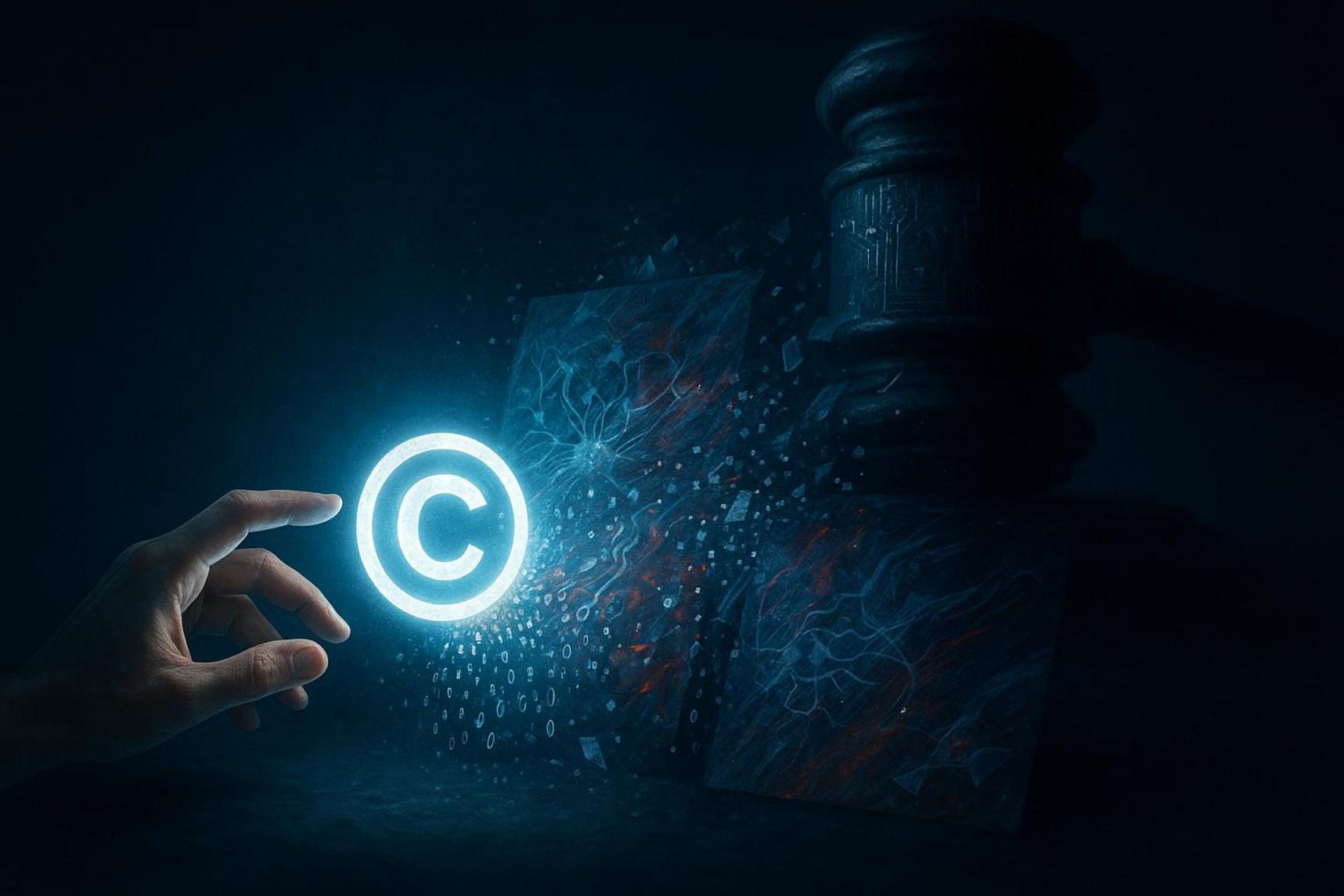
The legal side of AI-generated content, especially copyright, is still unclear and can be risky for agencies and clients. In many cases, AI output is seen as not copyrightable, which can make it hard for clients to protect branding and marketing assets if they rely only on AI-created work. A 2022 case showed this when the U.S. Copyright Office partially pulled back a copyright registration for a graphic novel because the images were made with Midjourney and were “not the product of human authorship.”
Things get even less clear when humans and AI work together. Agencies often need to show how humans changed and improved AI output so the final work can be protected. This calls for careful documentation and up-to-date knowledge of legal changes, so both agency and client rights are protected.
Agencies need to balance automation with human creative skill. If teams rely too much on AI, they may lose the human judgment and strategy that clients actually pay for. AI can support people, but it does not replace real expertise.
Jonathan Healey points out that clients care about outcomes, and the basics of marketing-knowing the audience, creating messages that connect, and making sure people feel and remember them-have not changed. In a space where AI raises the baseline, creativity and smart thinking matter even more. Agencies win by using insight, judgment, and cross-team thinking that automated systems cannot match. The goal is to use AI as support, while humans lead strategy, refinement, and quality checks.
As AI tools spread fast, work that used to feel special can now be created by many. If agencies use the same tools in the same way, it can create a “sea of sameness” where brands struggle to stand out. Jonathan Healey’s point that “The ability for a brand to truly differentiate just got much harder” becomes very real here. If agencies let AI generate content without enough human creative direction, they may lose their unique voice and the qualities that keep clients loyal.
Over-reliance also brings ethical risks, including bias and data privacy issues. AI can repeat bias if training data is limited. Many newer AI tools do not fully protect what users type in, so private or sensitive data should never be entered into public tools. Agencies need to use AI in a way that supports their creative identity and protects client trust.
Advertisment
Using AI well requires a smart plan that keeps people central, follows ethical rules, and adapts over time. It is not only about tool choice; it is also about building habits and skills that make AI useful and safe.
The most important best practice is keeping humans involved. AI can boost what people can do, but it does not replace expert judgment. Human review is key for quality and authenticity. AI can create drafts, visuals, or analysis, but people need to do final refinement, fact checks, and brand voice work.
This means treating AI like a strong assistant, not a self-running creator. Teams should keep their time for strategy, creative improvement, and quality control, while AI handles repeat or data-heavy work. This approach keeps the final result fast and efficient, while still original, clear, and emotionally strong.
The number of AI tools can feel like too much, especially for clients who do not work with them often. Agencies can act as trusted advisors by helping clients decide which tools to use, when to use them, and how to read the results. This also includes explaining limits and ethical risks.
Wes Maynard warns that “self-service tools really just enable people to get things wrong quicker and spend money faster in the wrong places.” Agencies reduce this risk by giving clear guidance and showing how AI fits into a real strategy. When agencies are open about how AI is used-and show that human expertise is still driving decisions-clients gain confidence and work better with the team.
AI tools and features change very quickly. Agencies that want to stay competitive need ongoing training. This is not just learning buttons in new software; it includes understanding how AI works, how to write good prompts, and how to manage ethical issues.
Creative teams will need prompt skills so they can communicate intent clearly to AI models. They also need fast ways to review and improve AI output. Agencies can invest in structured testing programs, like IDHL Labs mentioned in the context, to try, check, and scale AI uses in a controlled way. Ongoing learning helps teams stay strong with current tools and ready for what comes next.
With many AI tools available, agencies need to pick ones that match their goals and improve daily work. Leaders should judge tools not only by features, but also by how well they fit into current workflows and help meet key targets. The goal is real adoption with results, not random testing.
Evaluation should include:
Agencies often choose tools that remove common delays, support creative output without replacing human judgment, improve teamwork, and support data-based decisions. Tools like Canva AI, Uizard, Figma AI, and FD Ryze show how AI tools are being built to support specific creative tasks, from design work to compliance-focused content creation.
Advertisment
AI use in agencies is still early. What comes next may bring more advanced tools and a major shift in advertising and in how agencies and clients work together.
AI is likely to become more capable and more subtle in creative tasks. As Natural Language Processing (NLP) improves, AI will write with more nuance and a more human tone. Future AI may be better at telling stories that match the real needs and preferences of specific customers. Visual generative AI will also keep improving, producing more refined and original assets.
AI may also move from “helper” to a more active partner in creative work. AI design agents may suggest layouts, check design rules, and flag accessibility issues on their own. Larger organizations may build AI into every layer of their process: planning, concept tests, production, and reporting. No-code and prompt-based interfaces will keep growing, making advanced creative tools easier to use through plain language and templates.
The discussion between Jonathan Healey and Wes Maynard points to a possible creative comeback in advertising. As technology makes average content easier to produce, strong ideas become even more valuable. Wes Maynard said, “We are probably at the dawn of another golden age in advertising.”
If everyone can use similar AI tools, the main difference will be the idea-how agencies mix data, insight, and human creative skill to create campaigns that stand out. AI can help agencies add more value, not less, by freeing teams to focus on meaning instead of manual work. This future is about teamwork between AI and people: AI handles speed and scale, while humans lead bold concepts and emotional storytelling.
Advertisment
As AI becomes a deeper part of marketing and creative work, the agency-client relationship will change too. Agencies will likely become even more important as strategic partners who bring clarity and control to a complicated tech space. More clients now realize AI is not a strategy by itself, so they will turn to agencies for guidance, rules, and real expertise that creates value.
Agencies will help clients choose and set up AI tools, and explain what the results mean. They will also help keep AI use aligned with goals, brand voice, and ethical standards. AI will also let agencies offer more personal and proactive services, like customer journeys that adjust in real time and campaigns that improve as markets shift. The next 12 to 18 months will likely shape how agencies and clients use AI-driven marketing, and teams that combine clear direction, strong governance, solid data, and creative courage will be in the best position to succeed.
Advertisment
Pin it for later!
If you found this post useful you might like to read these post about Graphic Design Inspiration.
Advertisment
If you like this post share it on your social media!
Advertisment



Want to make your Business Grow with Creative design?
Advertisment
Advertisment