This Post Contains Affiliate Links
Apple is the most popular computer brand among graphic designers and it’s not a surprise as they have some of the best designed and user-friendly computers for designers, and if you are looking to buy an Apple computer but you don’t know if buy an iMac or a MacBook and which is better, then this post will help you know what is the best Apple computer for you.
Advertisment
It’s not a secret that plenty of graphic designers prefer to use Apple computers for their work for decades, and it’s due to the high color accuracy, image quality, and ease of use for designers at the same time that some major design software like Sketch is only compatible with iOS, in addition, the last Apple products have high-end retina display that will make your design work much easier.
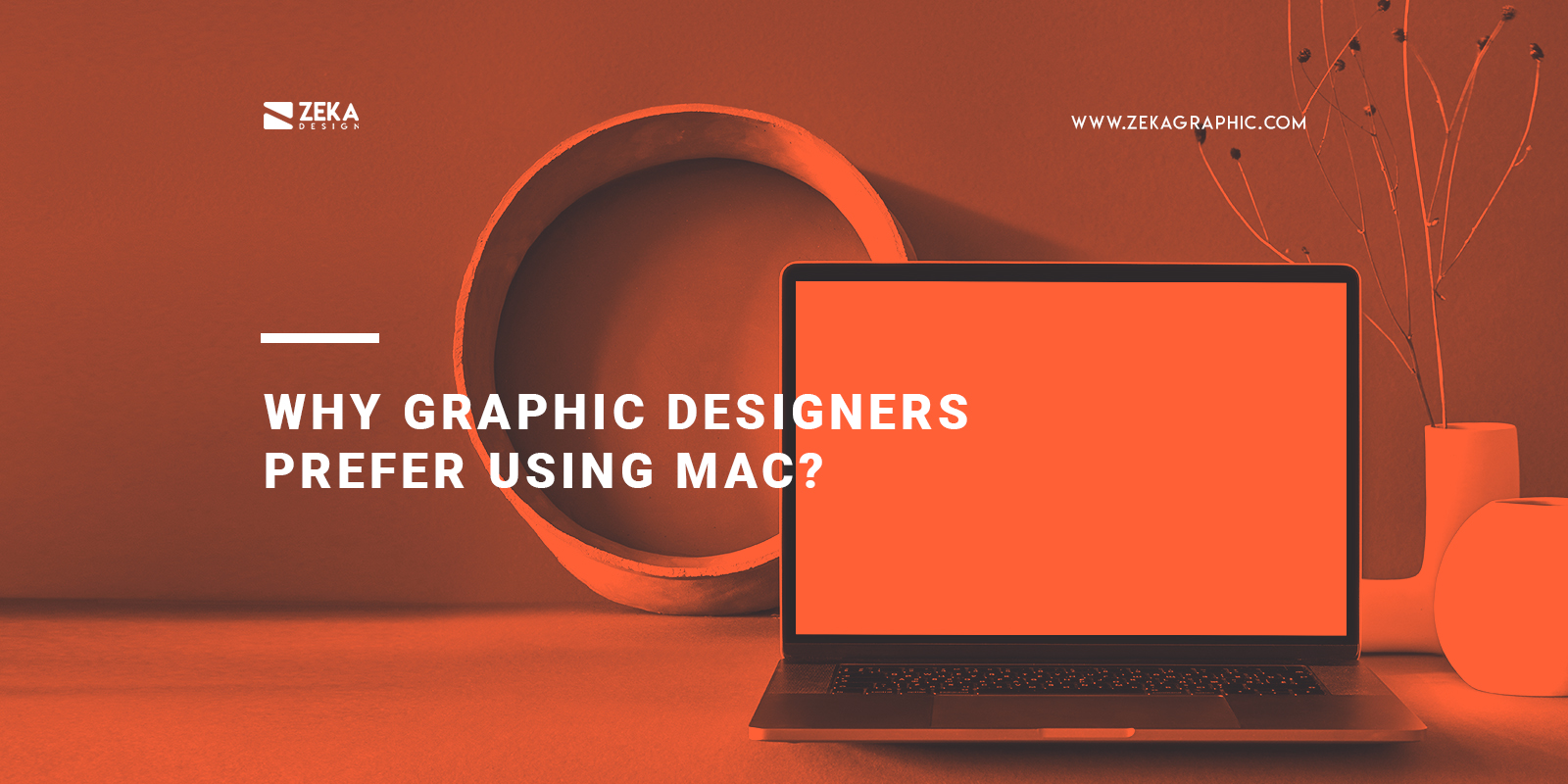
What is best to buy? MacBook or iMac? is a frequent question many graphic designers ask, but the answer is much easier than you think, of course, you can buy both if you have that budget, but if you need to choose one, you need first to consider what kind of graphic designer are you?.
For those graphic designers who want to have their office and decorate how they like and don’t move a lot from them, you should go for a desktop iMac, but if you are a graphic designer who wants to work everywhere and you move from place to place constantly the best for you is a MacBook, and if you are an art student you can find more mac resources on Fliptroniks.

Specs: 14.2-inch Liquid Retina XDR display, Apple M5 Pro / M5 Max chip, up to 36GB unified memory, up to 2TB SSD storage, integrated GPU (up to 40-core in Max Chip), up to 24 hours battery life.
The MacBook Pro 14” hits a sweet spot for graphic designers who want serious performance without carrying a larger machine. It’s powerful enough for branding, UI/UX, illustration, and even motion work, while still being compact enough for daily portability. The Liquid Retina XDR display offers excellent color accuracy, deep contrast, and high brightness, which makes it ideal for working on detailed visual projects.
With Apple’s latest M5 Pro and M5 Max chips, this machine handles heavy Adobe workflows, Figma files, and multitasking without slowing down. It’s a reliable choice for designers who need performance on the go but don’t necessarily want the size and weight of the 16”.
Pros
Cons
Advertisment
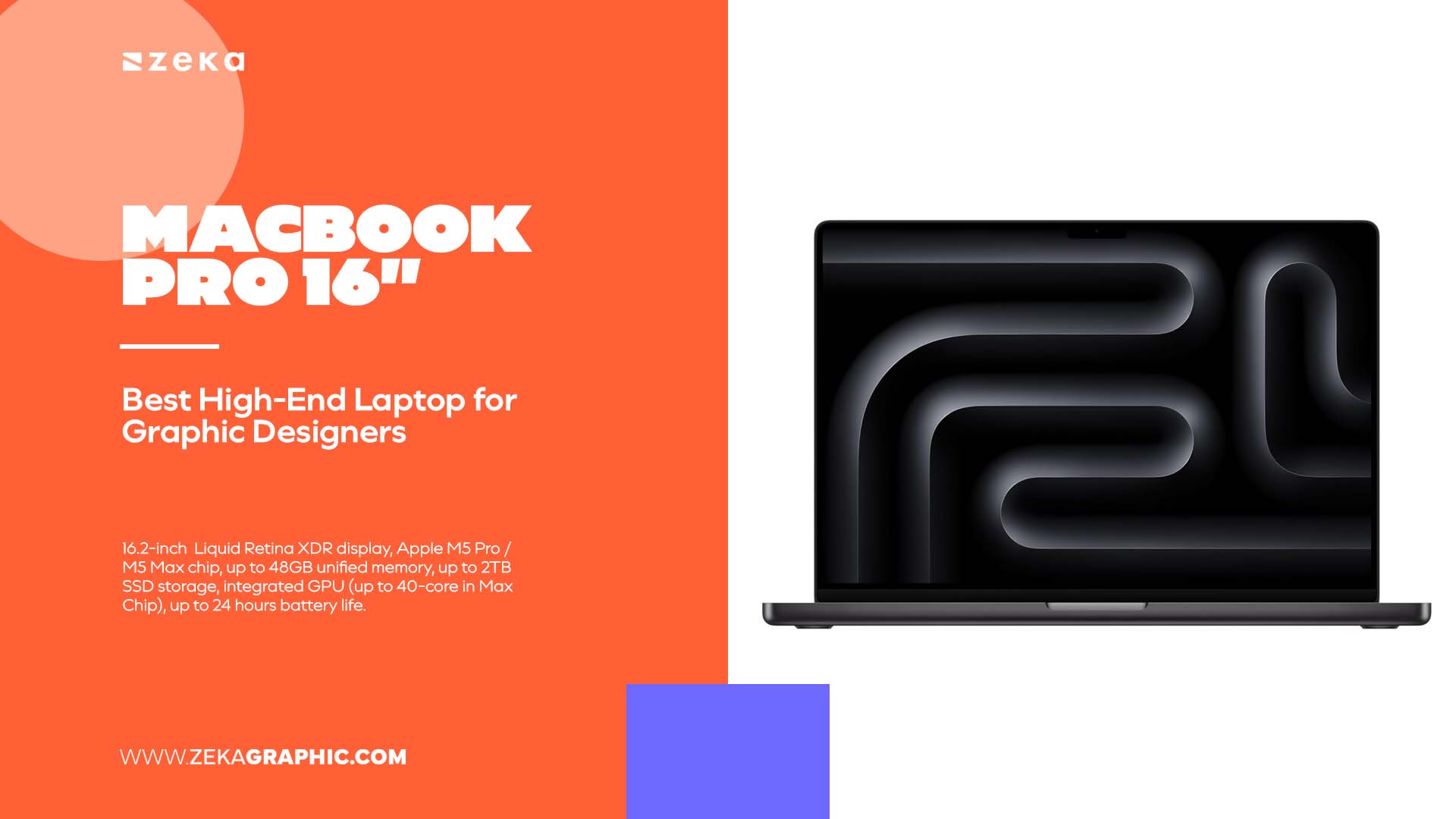
Specs: 16.2-inch Liquid Retina XDR display, Apple M5 Pro / M5 Max chip, up to 48GB unified memory, up to 2TB SSD storage, integrated GPU (up to 40-core in Max Chip), up to 24 hours battery life.
The MacBook Pro 16” is built for designers who work on demanding projects and need a larger screen to manage complex compositions. Whether you’re working on large-scale branding systems, editorial layouts, or motion graphics, the extra screen space makes a noticeable difference in workflow efficiency.
Powered by M5 Pro and M5 Max chips, it delivers consistent performance across heavy tasks like rendering, multitasking, and working with large files. This is the laptop for designers who treat their machine as a full workstation and don’t want compromises.
Pros
Cons

Specs: 13.6-inch / 15-inch Liquid Retina display, Apple M4 / M5 chip, up to 24GB unified memory, up to 1TB SSD storage, integrated GPU, up to 18 hours battery life.
The last MacBook option for designers which office is always changing and value the mobility of their graphic design tools, the Apple MacBook Air is the most affordable Apple laptop giving you an extraordinary work experience.
The MacBook Air with M4 and M5 chips is ideal for designers who prioritize portability and efficiency. It handles tools like Photoshop, Illustrator, and Figma smoothly for most day-to-day tasks, making it perfect for students, freelancers, or designers working on lighter projects. The fanless design keeps it silent, and the battery life makes it reliable for working anywhere.
Pros
Cons
Advertisment
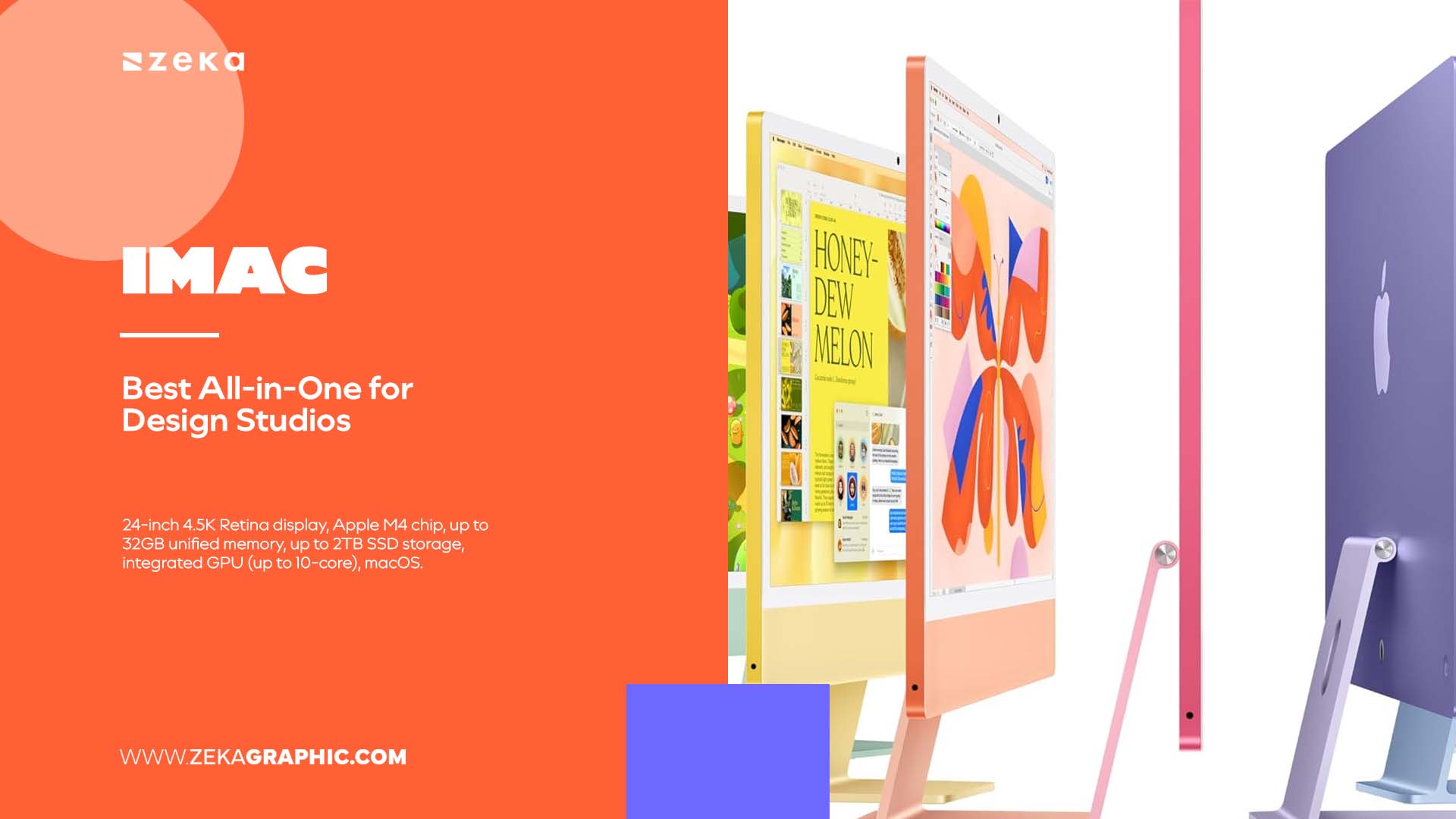
Specs: 24-inch 4.5K Retina display, Apple M4 chip, up to 32GB unified memory, up to 2TB SSD storage, integrated GPU (up to 10-core), macOS
The iMac remains one of the cleanest desktop setups for graphic designers. It’s designed for those who want a fixed workspace with minimal clutter, combining performance and a high-quality display in a single device. The 24-inch 4.5K Retina display delivers sharp visuals and accurate colors, making it ideal for branding, digital design, and content creation.
With Apple’s M4 chip, the iMac handles most design workflows efficiently, from vector work to moderate photo editing. It’s especially appealing for designers who value aesthetics in their workspace alongside functionality.
Pros
Cons
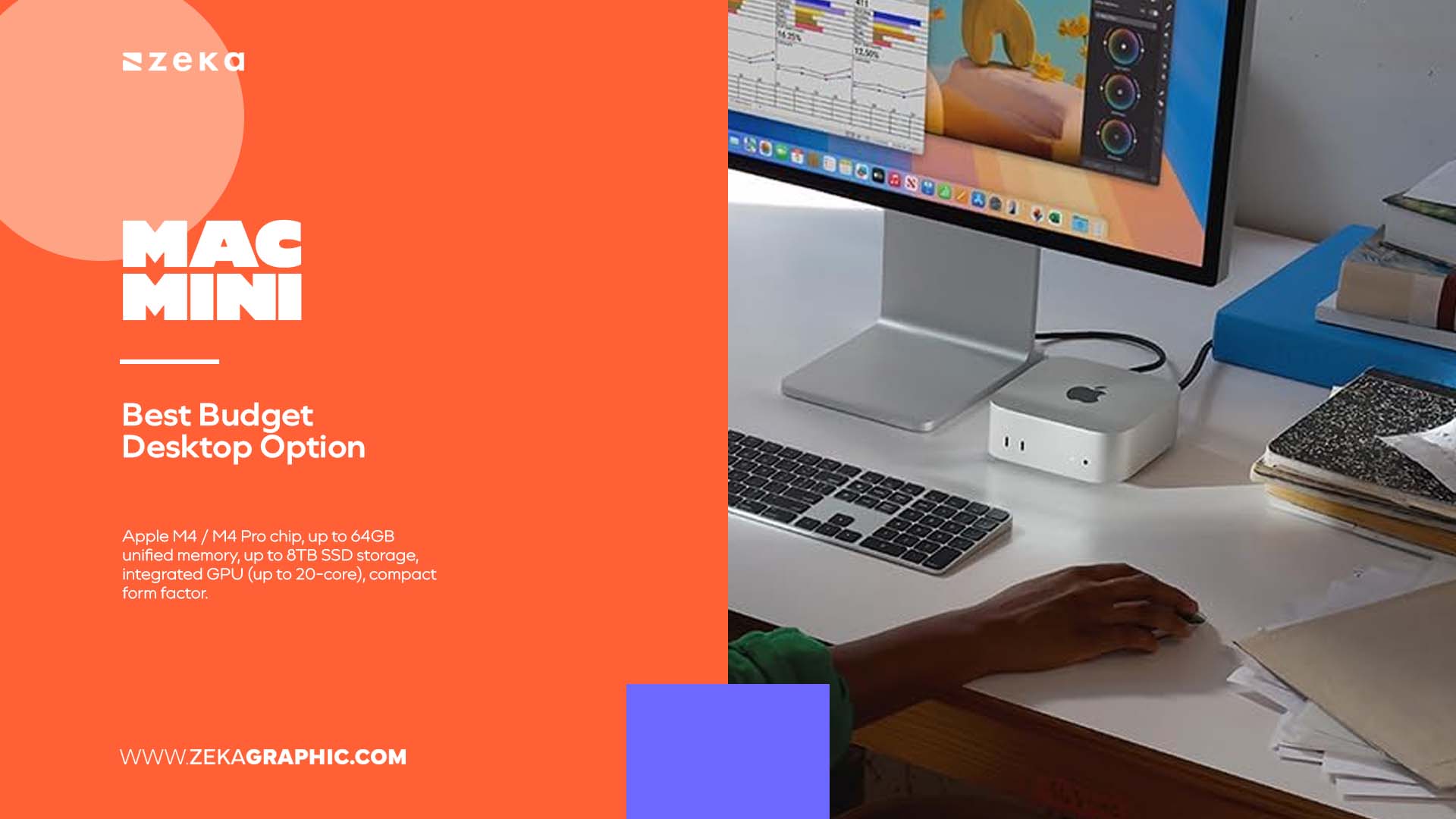
Specs: Apple M4 / M4 Pro chip, up to 64GB unified memory, up to 8TB SSD storage,integrated GPU (up to 20-core), compact form factor.
The Mac Mini is a strong entry point for designers who want desktop performance without spending too much. It’s compact, flexible, and powerful enough for most graphic design tasks when paired with a good external monitor. This makes it a practical option for freelancers or beginners setting up a workspace.
With M4 and M4 Pro configurations, it can handle Adobe Creative Cloud, Figma, and other tools smoothly. Its small size also makes it easy to integrate into any setup without taking up space.
Pros
Cons
Advertisment
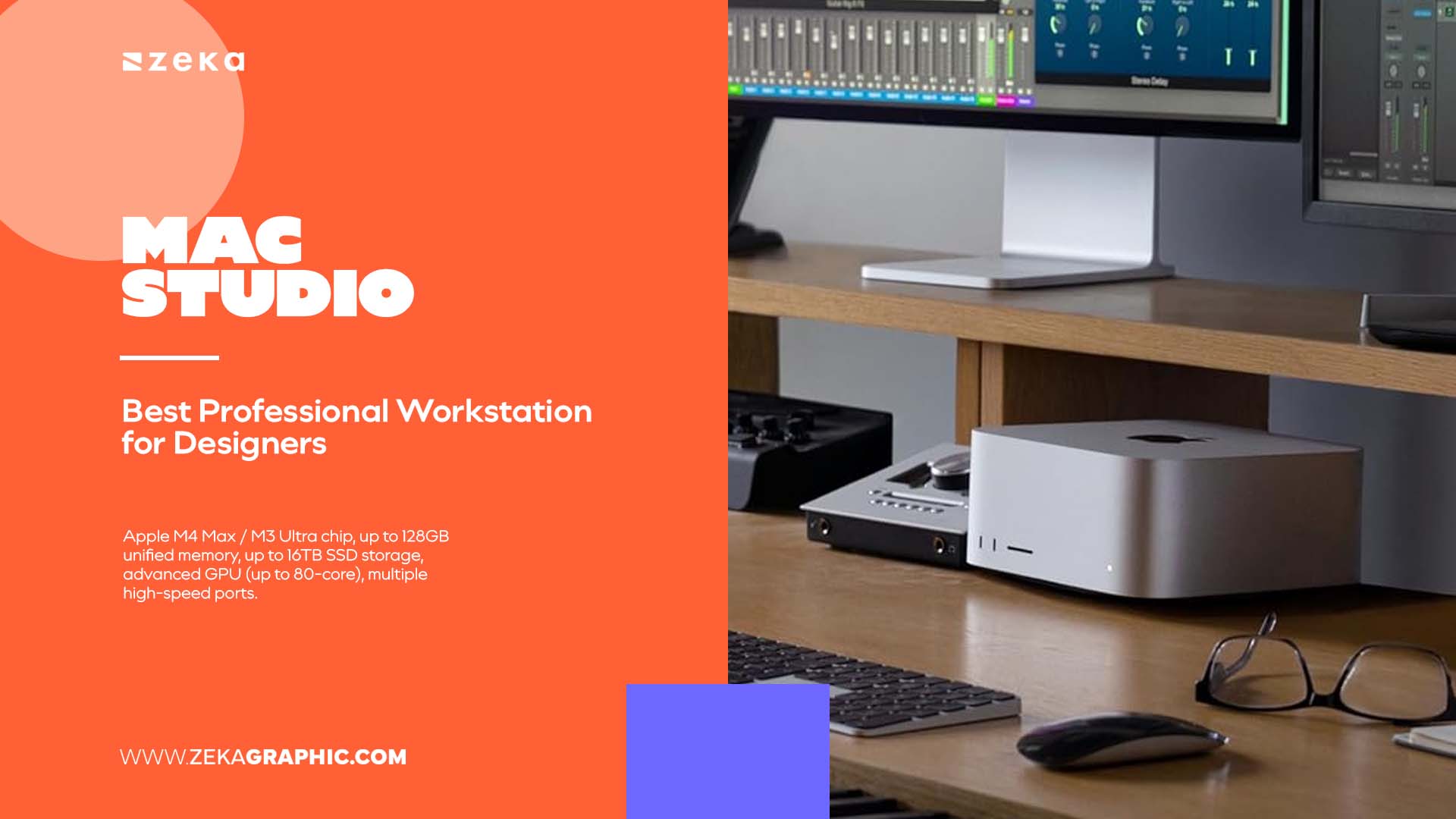
Specs: Apple M4 Max / M3 Ultra chip, up to 128GB unified memory, up to 16TB SSD storage, advanced GPU (up to 80-core), multiple high-speed ports.
The Mac Studio is built for designers working at a high level, especially those dealing with large files, 3D work, motion graphics, or complex creative pipelines. It’s significantly more powerful than the Mac Mini and designed for professionals who need consistent, high-end performance.
With M4 Max and M3 Ultra chips, it handles intensive workloads effortlessly. This is the machine for designers who don’t want limitations—whether working in Adobe, Blender, Cinema 4D, or multitasking across multiple heavy applications.
Pros
Cons
Advertisment
Choosing the best Apple Mac for graphic design in 2026 comes down to how—and where—you work. If you need mobility and flexibility, the MacBook lineup gives you everything from lightweight efficiency to full workstation-level performance. If your workflow is more studio-based, desktops like the iMac, Mac Mini, or Mac Studio offer cleaner setups and more sustained power for demanding projects.
What really matters isn’t just specs—it’s matching the machine to your creative process. A well-chosen setup will feel invisible while you work, letting you focus entirely on design, not performance limitations. Whether you’re building brand systems, designing interfaces, or exploring motion and 3D, the right Mac becomes a tool that supports your ideas without friction.
Invest in what aligns with your workflow today—but also what will grow with you.
If you found this post useful you might like to read these posts about Graphic Design Inspiration.
Advertisment
Written by
If you like this post share it on your social media!





Advertisment
Advertisment