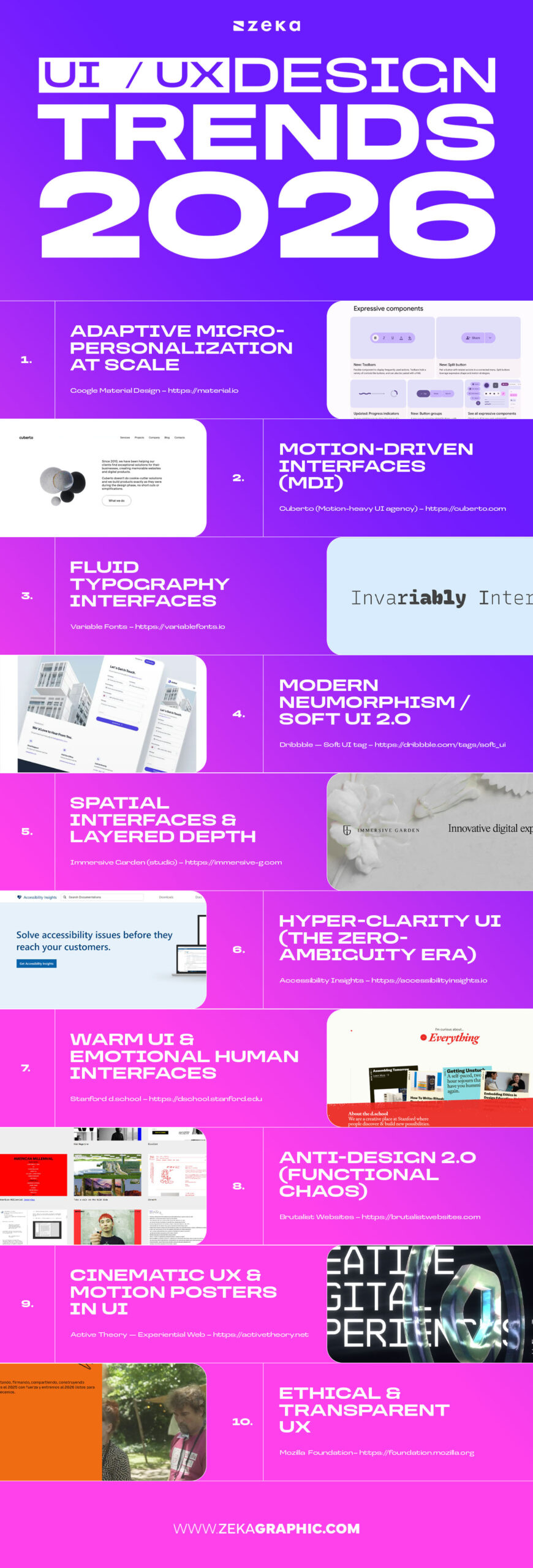
The landscape of digital design is undergoing one of its most transformative phases, and UI/UX Trends 2026 reflect a shift that is both technological and deeply human. We’re entering an era where interfaces behave more like intelligent collaborators than simple digital tools. These changes aren’t driven by aesthetics alone — they’re the result of cultural shifts, accelerated automation, and the demand for clarity, emotional resonance, and adaptive experiences. As a graphic designer, I see this new era as a fusion of precision engineering and expressive creativity, where every pixel carries intentionality.
At the same time, designers are challenging the flat, minimal, utilitarian interfaces that dominated the past decade. The newest upcoming UI trends bring depth, warmth, movement, and personality back into digital experiences. These evolutions align with our cultural desire for calm, more human technology — interfaces that feel alive yet trustworthy. With the latest digital product design forecast, we see brands embracing intelligent micro-personalization, spatial hierarchies, and motion-assisted clarity to guide users through increasingly complex ecosystems. This isn’t about flashiness — it’s about building usable, emotional, future-ready interfaces that stand out in an overcrowded digital world.
Advertisment
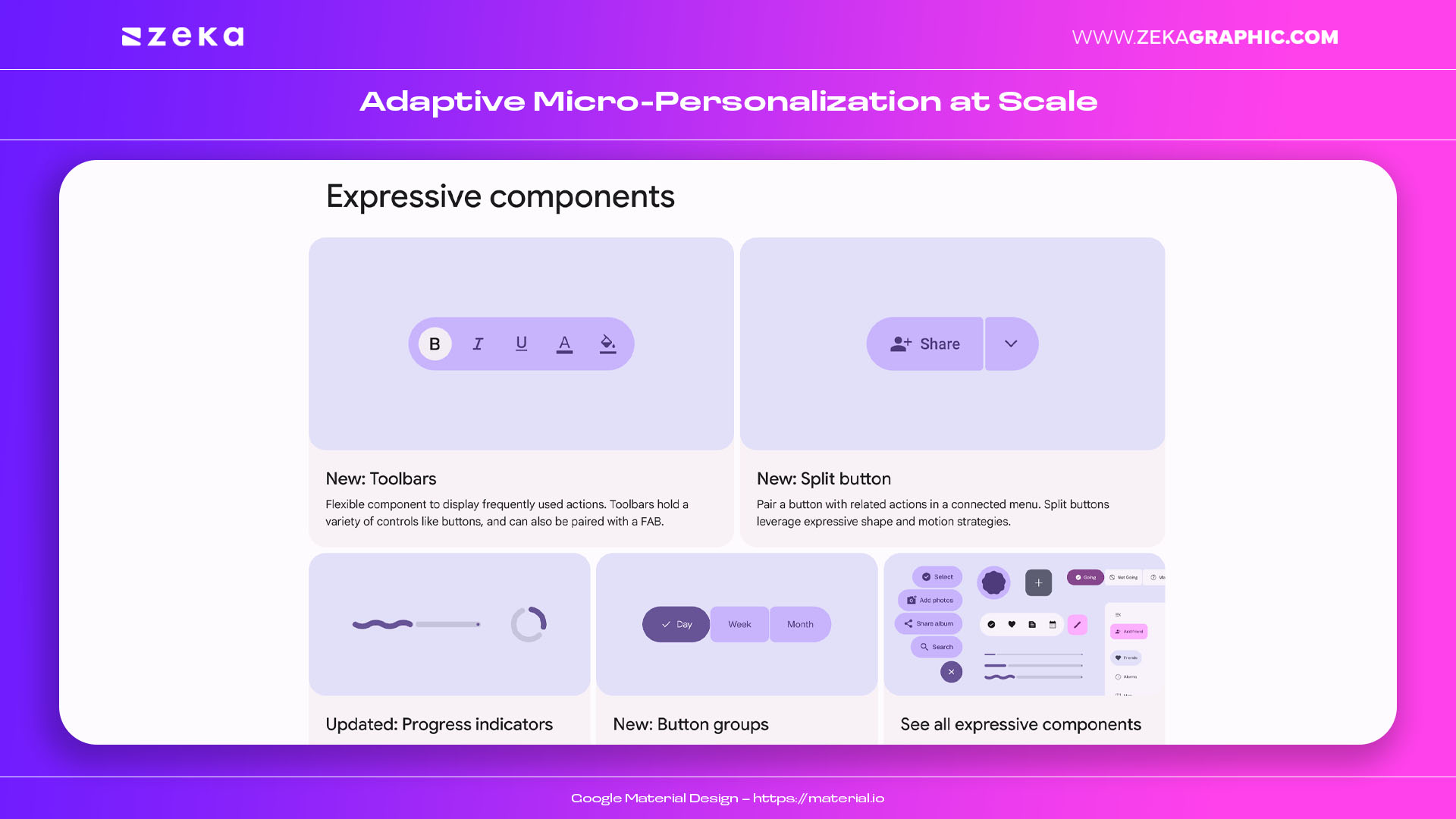
The adaptive personalization UI trend transforms onboarding, dashboard layouts, navigation choices, and even content hierarchy. Modern apps now analyze inputs in real-time — location, time of day, behavioral patterns — to create context-aware UI systems that guide the user without overwhelming them. This type of personalized product design is becoming essential as digital ecosystems grow more complex and users demand frictionless interactions.
Beyond convenience, micro personalization enhances clarity. A finance app may shift its dashboard based on whether users typically check spending or investments first. A learning platform might adjust lesson complexity automatically. This level of micro personalization UX 2026 requires designers to think beyond static screens and move into systems design — modular components, intelligent states, predictive flows, and behavior-driven patterns. Ethical personalization, transparency, and user control become crucial so adaptive systems remain empowering rather than intrusive.
Key UX opportunities:
Google Material Design – https://material.io
The rise of motion UI 2026 stems from the need to communicate hierarchy, flow, and intent faster than static visuals ever could. Designers now rely on motion to clarify navigation, soften transitions, highlight interactions, and create a natural sense of rhythm. When used correctly, motion acts like a guiding hand, subtly leading users through complex tasks with confidence and ease. The best animated UI patterns combine physics-driven movement, micro-delays, and progressive reveal techniques to make digital interactions feel tactile and alive.
The shift toward microinteraction trends 2026 also reflects our expectations for digital systems to feel more “human.” Buttons expand softly before releasing, cards fold into place, and navigation elements glide with purpose. They reduce cognitive load, anchor the user in space, and support accessibility by reinforcing cause-and-effect relationships. Strong UX motion principles require designers to build choreographies: how elements enter, move, scale, and exit. These micro-movements create predictable behavior that minimizes user confusion and enhances intuitive navigation.
Motion UI essentials for 2026:
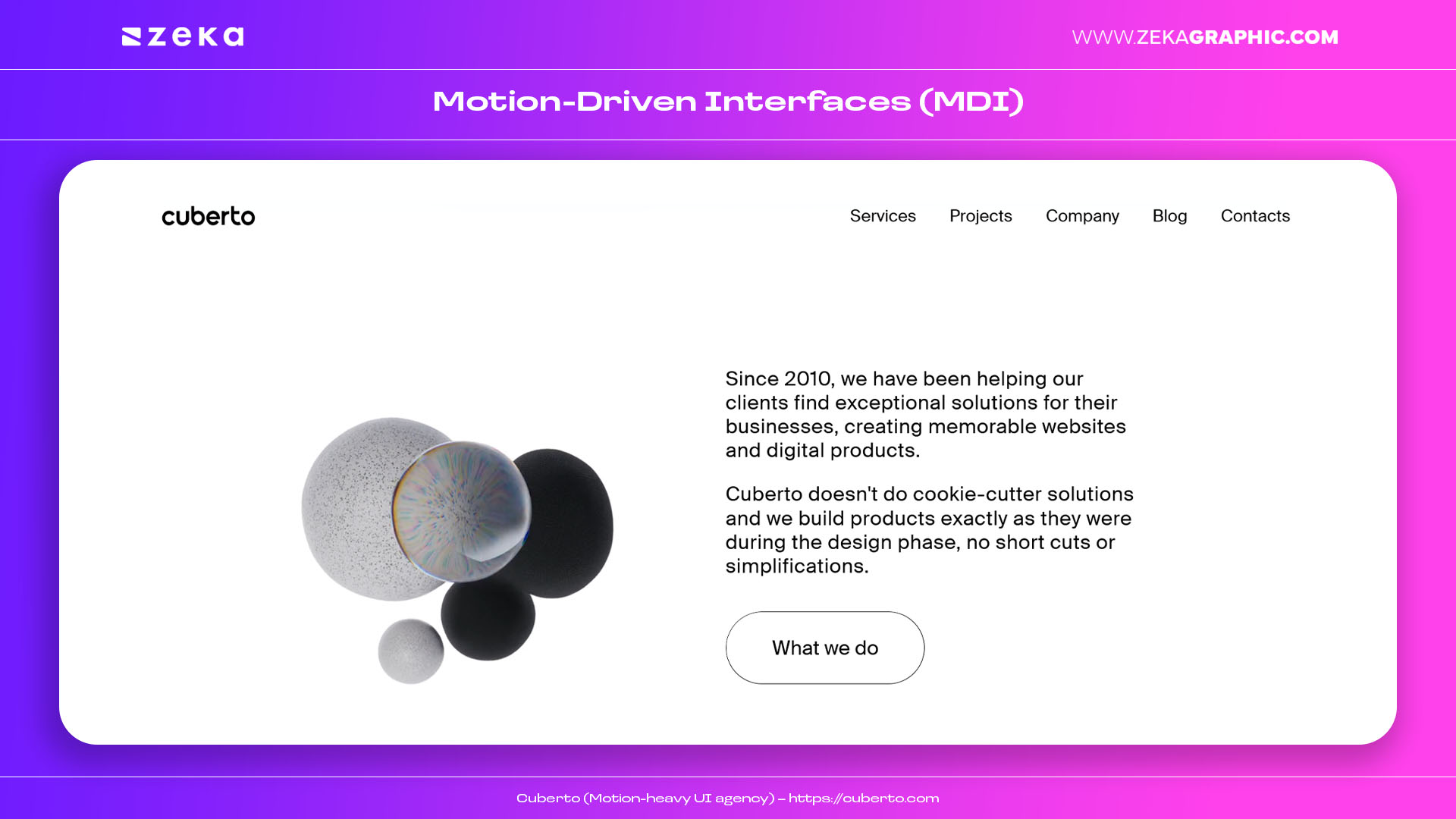
Cuberto (Motion-heavy UI agency) – https://cuberto.com
Advertisment
The fluid typography UI trend is driven by the rise of variable fonts and adaptive systems that allow text to resize, stretch, condense, or shift dynamically. Instead of relying on breakpoints alone, responsive variable type 2026 reacts to viewport, interaction, motion, and even user preferences. This builds interfaces where text is no longer static but behaves as a living component of the design system.
For designers, fluid type means building adaptive font scaling UI rules that maintain readability while enhancing personality. Typography now participates in navigation, animation, and pacing — it grows to highlight priority, shrinks when content density increases, and transforms subtly during transitions.
This emerging liquid typography UX introduces type-as-interface models: rotating headlines as navigation, dynamic labels that adjust based on motion, and typography that anchors spatial depth.
Benefits of Fluid Typography Interfaces:
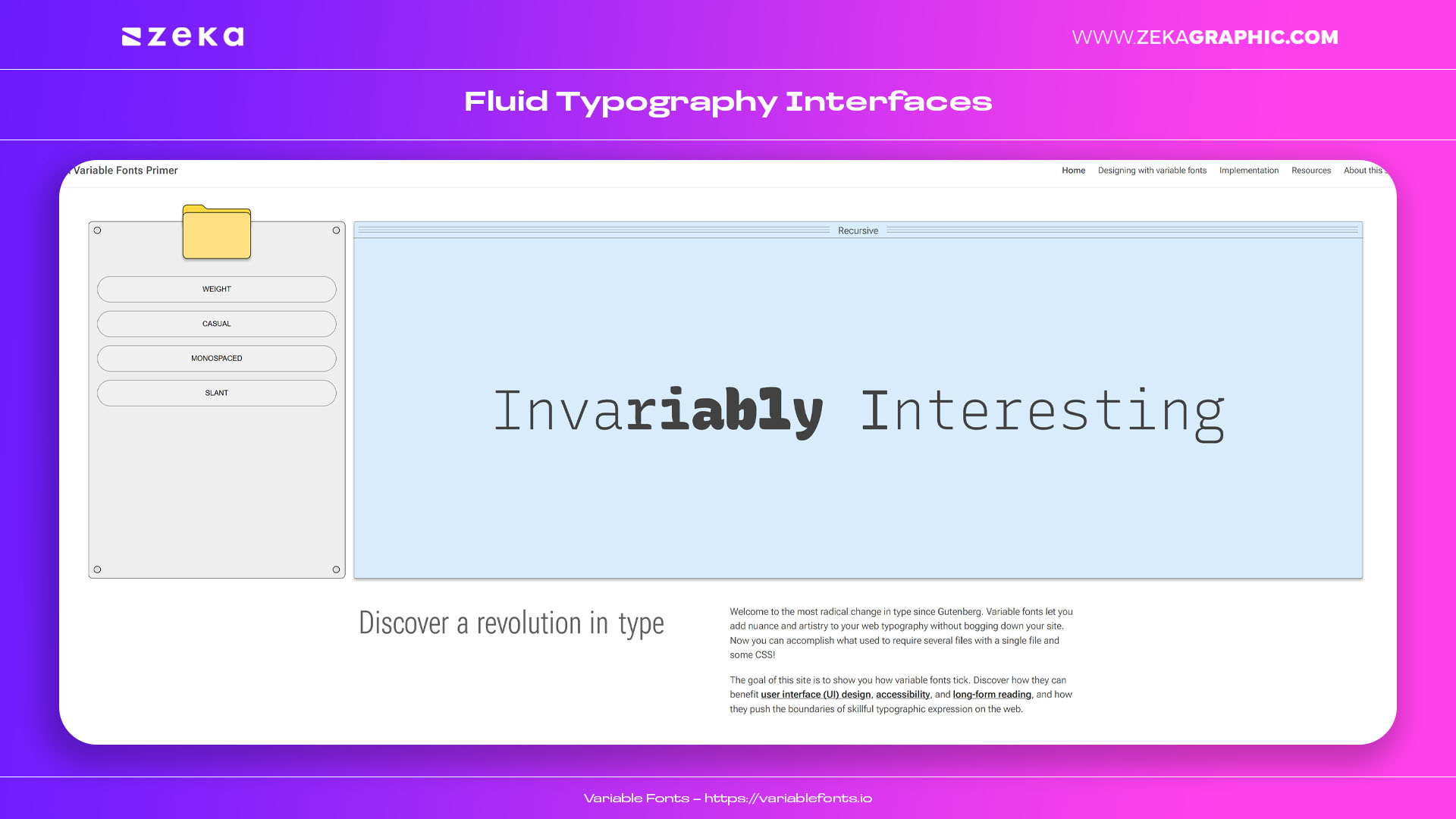
Variable Fonts – https://variablefonts.io
After disappearing due to accessibility limitations, Soft UI makes a powerful return in the soft UI trend 2026 — this time redesigned, contrast-optimized, and intentionally hybrid. The neumorphism 2026 update blends clean light-depth surfaces with sharper shadows and improved color contrast to deliver a more tactile, functional interface.
Instead of the overly subtle look of early neumorphism, this evolution introduces stronger highlights, bolder layers, and realistic embossed UI elements that remain accessible even for visually impaired users.
The modern approach focuses on tactile interface design, making digital surfaces feel more physical and emotionally appealing. Dropdowns appear cushioned, buttons feel pressable, and card systems subtly lift with depth. The use of modern soft shadows UI creates a spatial hierarchy that enhances clarity while maintaining visual elegance. Brands are gravitating to Soft UI 2.0 because it humanizes technology, adding softness in an era of rigid minimalism. Combined with spatial design and motion, it forms interfaces that are both clean and emotionally inviting.
Characteristics of Soft UI 2.0:
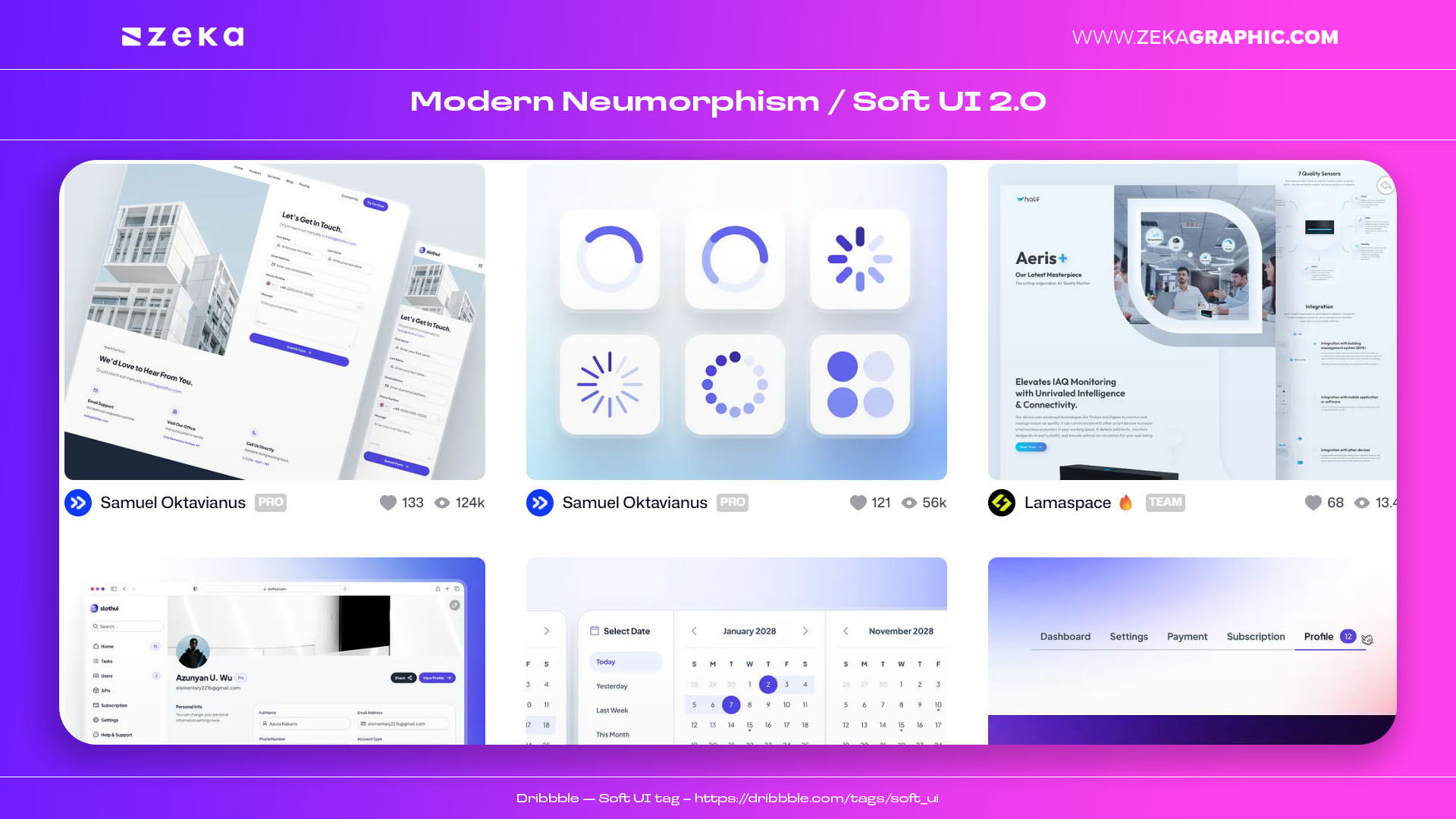
Dribbble — Soft UI tag – https://dribbble.com/tags/soft_ui
Advertisment
The spatial UI trend is becoming a defining characteristic of digital experiences in 2026, driven by new visual systems designed to reduce cognitive load while guiding user attention through controlled hierarchy. With depth-driven interfaces 2026 shaping the direction of product aesthetics, designers are shifting away from flat, compressed layouts and embracing layered UI design that uses subtle 3D-like UI depth to improve clarity, focus and usability.
These semi-immersive layers also play a functional role in navigation. Spatial interaction patterns allow users to understand where they are and what matters most, through floating panels, atmospheric shadows and dimensional transitions. Instead of overwhelming users with noise, spatial product design creates calm environments where each layer speaks with purpose.
What Designers Should Apply
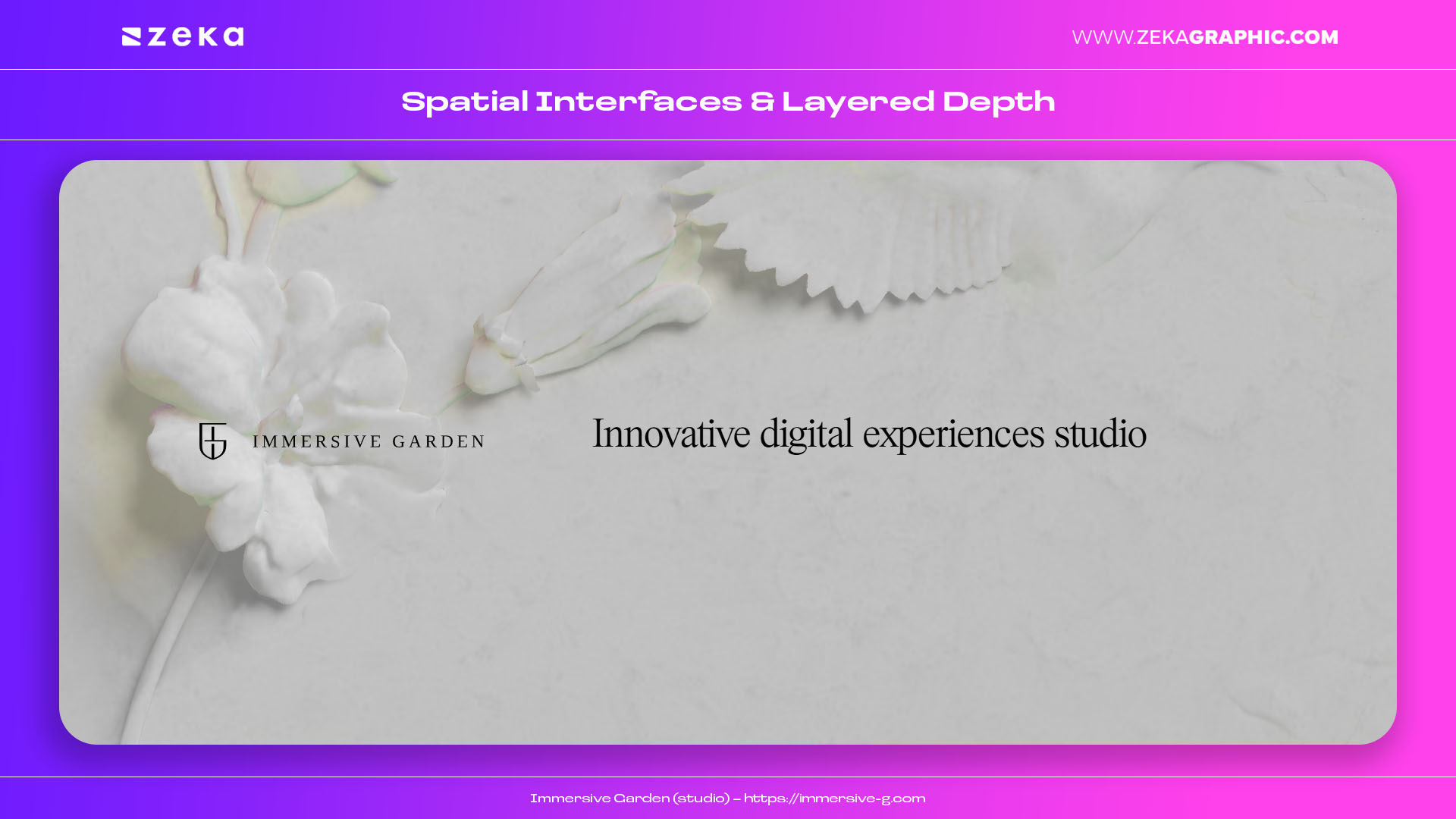
Immersive Garden (studio) – https://immersive-g.com
The clarity UI trend defines 2026 as the year of zero ambiguity. With an aging digital audience, strict accessibility requirements, and overwhelming interface complexity, ultra clear UI 2026 patterns are emerging as a necessity — not an aesthetic preference. We’re entering an era where readable interface design becomes the foundation of trust and usability. This shift encourages designers to prioritize oversized typography, straightforward layouts and controls that remain visible at all times, eliminating guesswork.
This hyper-clarity movement also responds to cultural expectations. Users want instant comprehension, straightforward flows, and clean readable UI systems that support fast decision-making. With accessible clarity patterns, designers are removing layers of friction: reducing animations where unnecessary, simplifying navigation, and choosing typography that adapts seamlessly between devices. In 2026, legible UX is not optional — it’s the baseline for products that want real engagement, better retention, and long-term trust.
The best part? Clarity-first design often outperforms highly stylized layouts in both usability testing and SEO-driven behavior metrics.
What Designers Should Apply
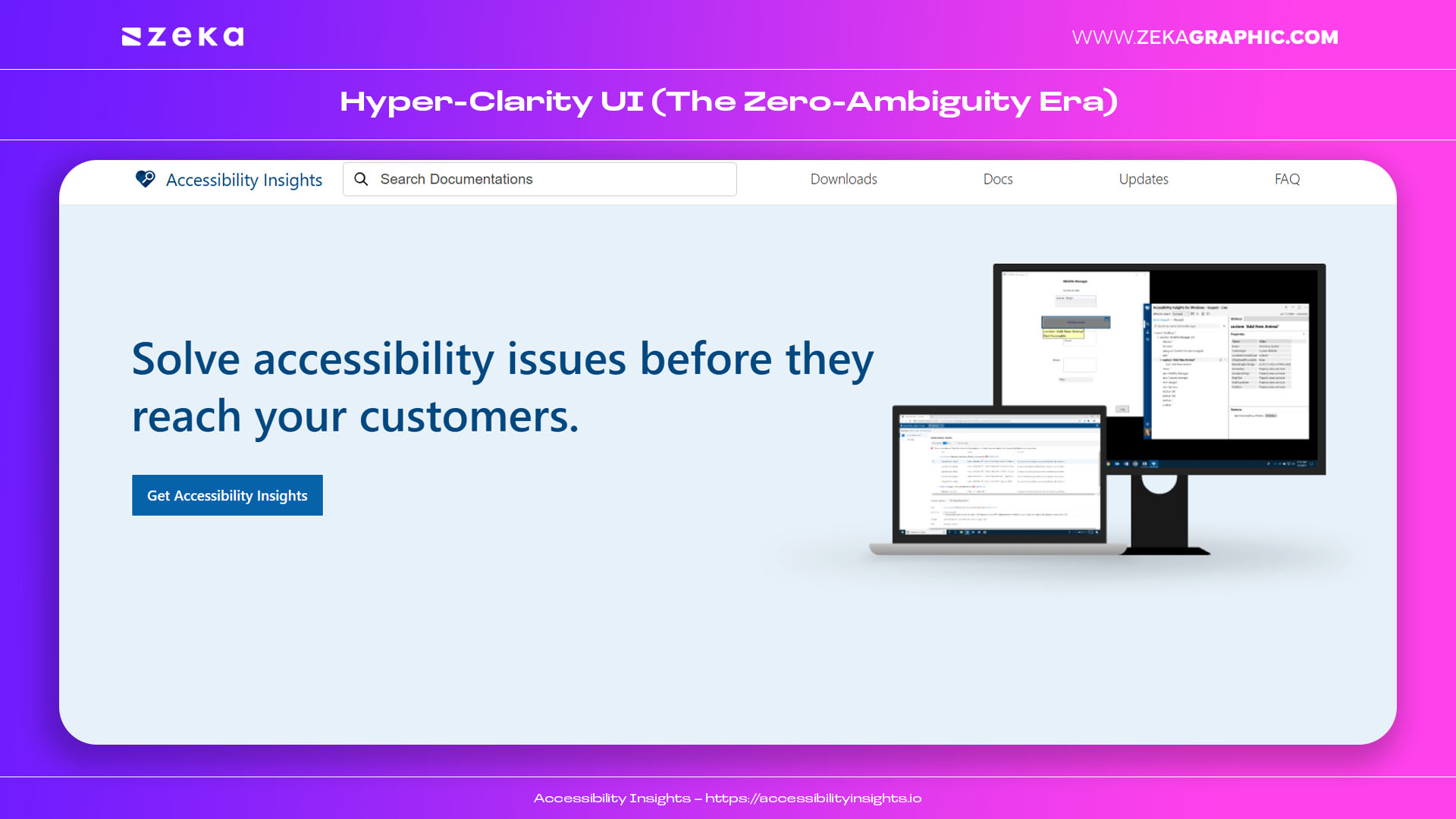
Accessibility Insights – https://accessibilityinsights.io
The emotional UI trend is redefining how brands connect with people in 2026. After years of cold, sterile, tech-driven screens, designers are embracing a warmer interface style 2026 that blends empathy, softness and human-centered UI patterns. This shift reflects a global cultural need: interfaces that feel supportive, friendly and genuinely human.
By using warm color palettes, comforting shapes, and empathetic microcopy, brands are reducing friction and building emotional trust. Users are no longer impressed by purely “efficient” interfaces — they want experiences that care.
Emotional user experience also influences product loyalty. Human-centered UI patterns encourage designers to focus on reassurance, tone, and emotional feedback loops. Instead of neutral or corporate-sounding UI text, many brands adopt conversational microcopy that feels like a real interaction. Soft UI design and friendly UI elements create a sense of comfort without sacrificing functionality. Empathetic design UX is particularly powerful in onboarding, error handling, and high-stress situations (fintech, healthcare, support apps).
What Designers Should Apply
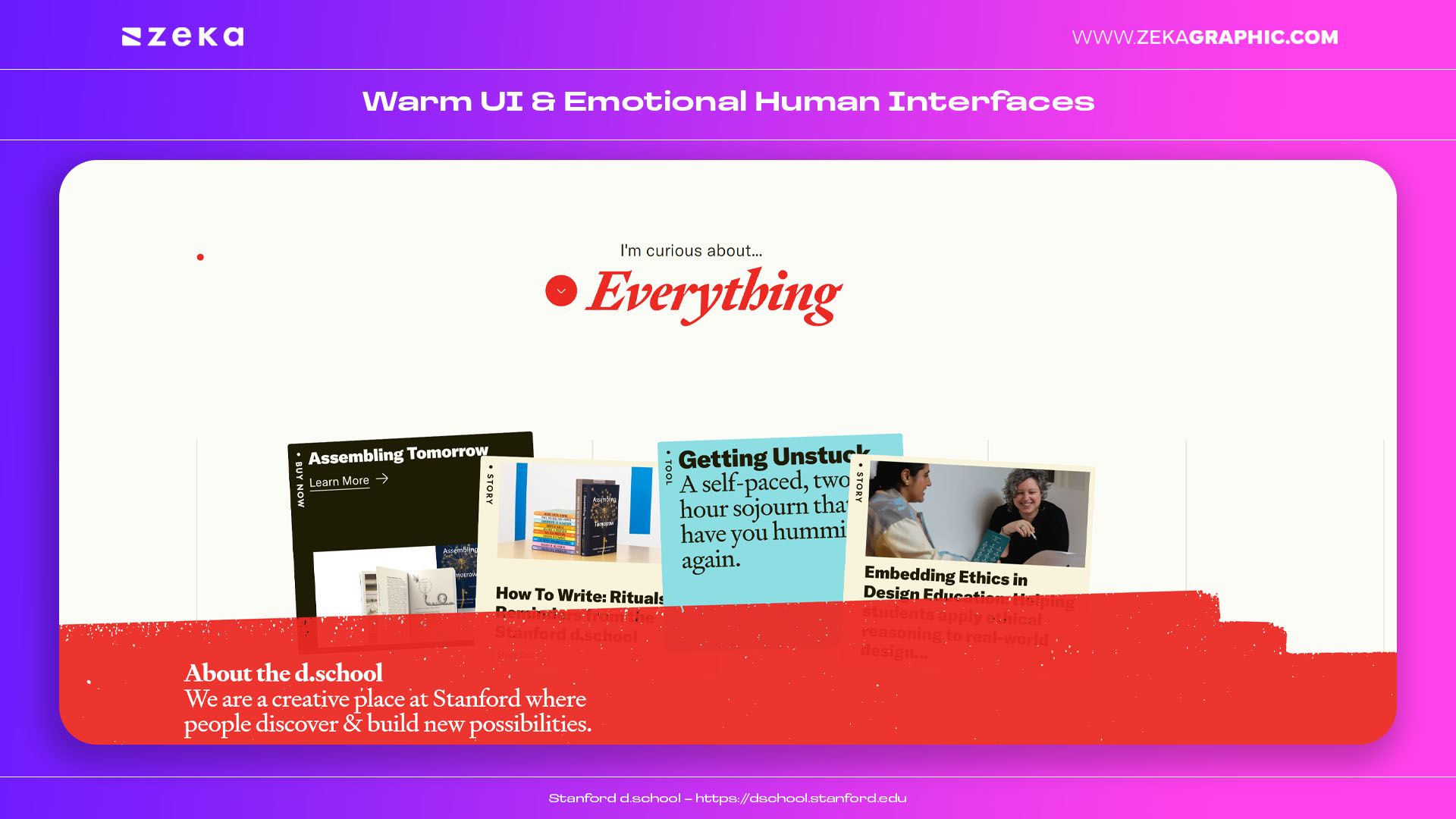
Stanford d.school – https://dschool.stanford.edu
Advertisment
This new iteration, Anti-Design 2.0, uses functional chaos strategically to deliver bold storytelling, brand expression, and attention-grabbing interfaces. With experimental UI layouts 2026, designers are breaking traditional grids but with intentionality. Every asymmetry, oversized element, and broken-grid UI decision contributes to narrative tension and visual impact. Personally, I see this as a creative liberation for designers who want to challenge norms without compromising usability.
This chaotic design UX approach works particularly well for fashion, music, entertainment, gaming, and culture-driven brands that want to feel rebellious yet premium. Unconventional interface patterns allow screens to feel alive, expressive and unfiltered, appealing especially to younger audiences. However, despite the chaotic visuals, the structure behind the scenes remains logical: clean content hierarchy, predictable interaction patterns, and highly legible type. Functional chaos is the keyword here — not randomness.
What Designers Should Apply
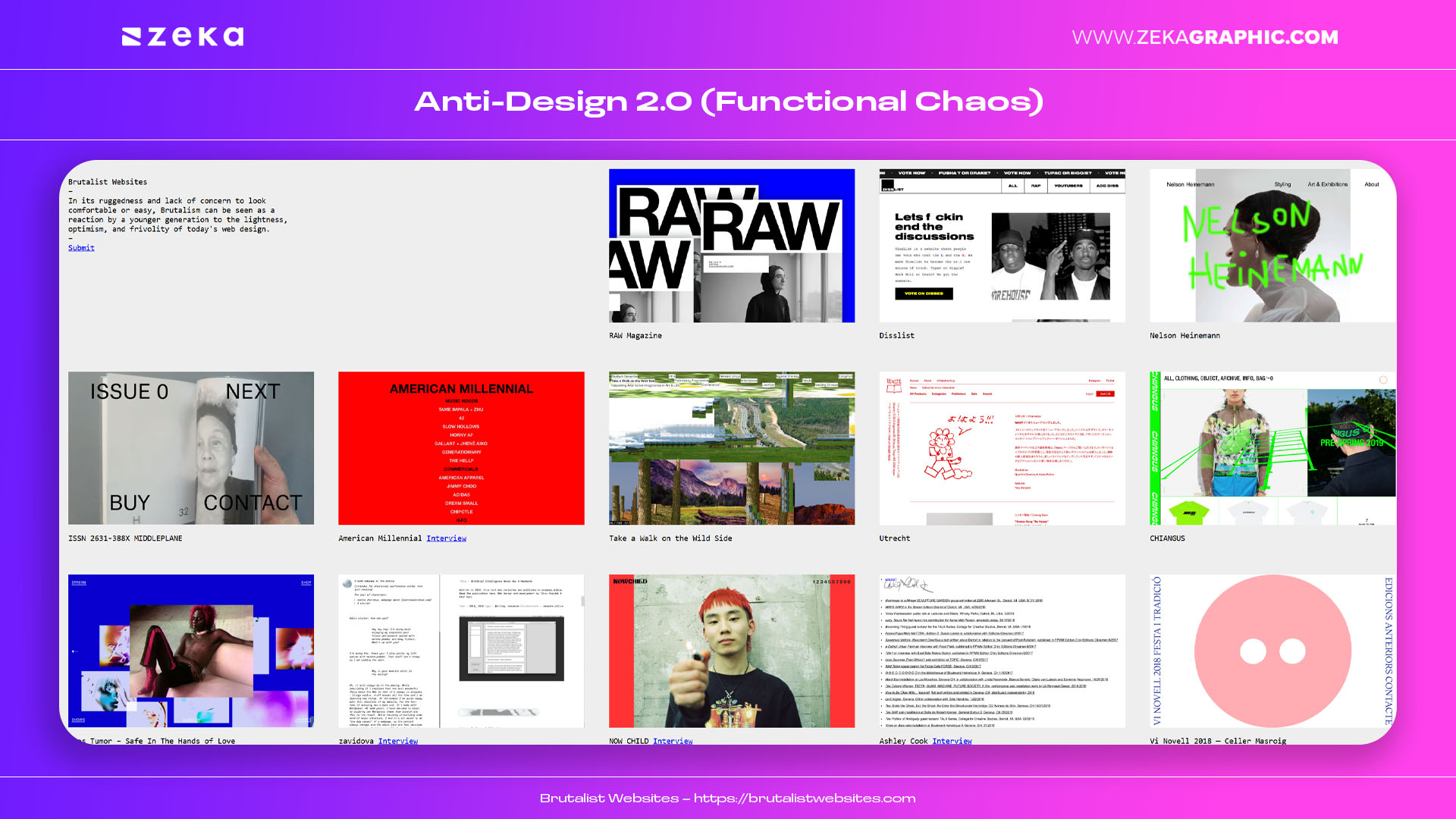
Brutalist Websites – https://brutalistwebsites.com
Advertisment
The cinematic UI trend transforms traditional interfaces into atmospheric digital experiences that feel more like film scenes than UI screens. With atmospheric UX 2026 shaping visual direction, designers are blending dramatic lighting, moody interface design, and cinematic animations UI to create environments filled with emotion, depth and narrative. Screens no longer act only as functional tools — they become worlds.
This trend is particularly powerful in hero sections, onboarding flows, entertainment platforms and digital experiences where brand emotion matters.
Motion poster UI enhances this effect by introducing animated backgrounds, dynamic textures and camera-like transitions that feel immersive and expressive. Storytelling interfaces communicate mood instantly, even before the user interacts with a single element. Personally, I find this trend deeply relevant because it helps brands create unforgettable digital identities in seconds. The key to success is balancing cinematic atmosphere with usability — avoiding visual overload while maintaining clarity, accessibility and speed.
What Designers Should Apply
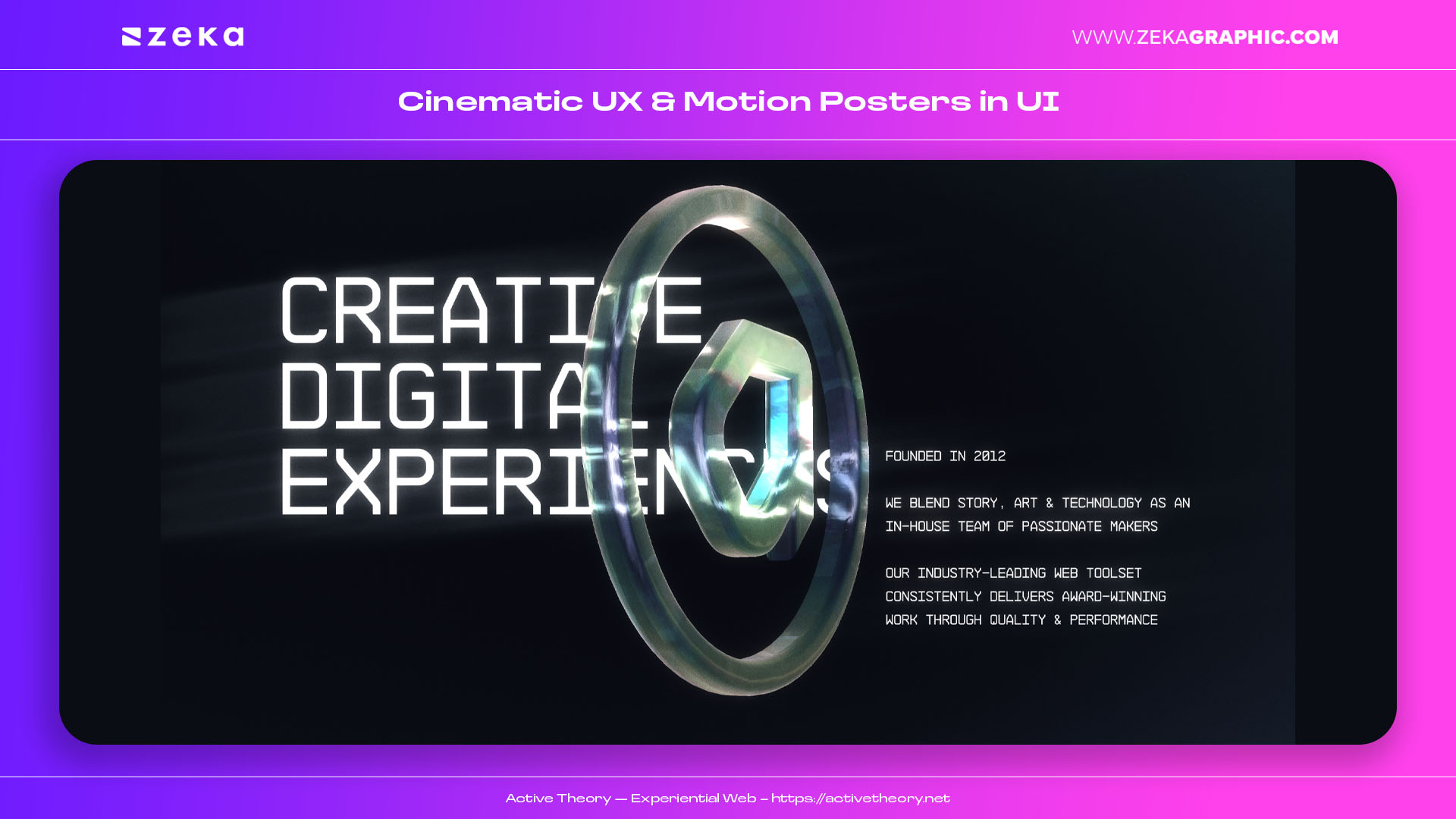
Active Theory — Experiential Web – https://activetheory.net
Advertisment
Users are more aware of manipulation techniques, and global regulations are increasingly strict, making anti dark patterns 2026 a mandatory standard for product teams. Ethical design systems emphasize transparency, honesty and trust-first interaction. Instead of hiding options or forcing behaviors, designers are now building clear user flows that empower decision-making. This shift not only aligns with user expectations but also contributes to long-term brand loyalty.
Transparent UI patterns also reshape how data is communicated. Honest UI surfaces explain why data is collected, what it improves, and how the user remains in control. Ethical digital product design replaces pressure tactics with supportive guidance, accessible privacy controls, and friction-free opt-out processes. This approach benefits everyone: users feel respected, and brands reduce legal and reputational risks. In 2026, integrity becomes part of the interface — not a page in the privacy policy.
What Designers Should Apply
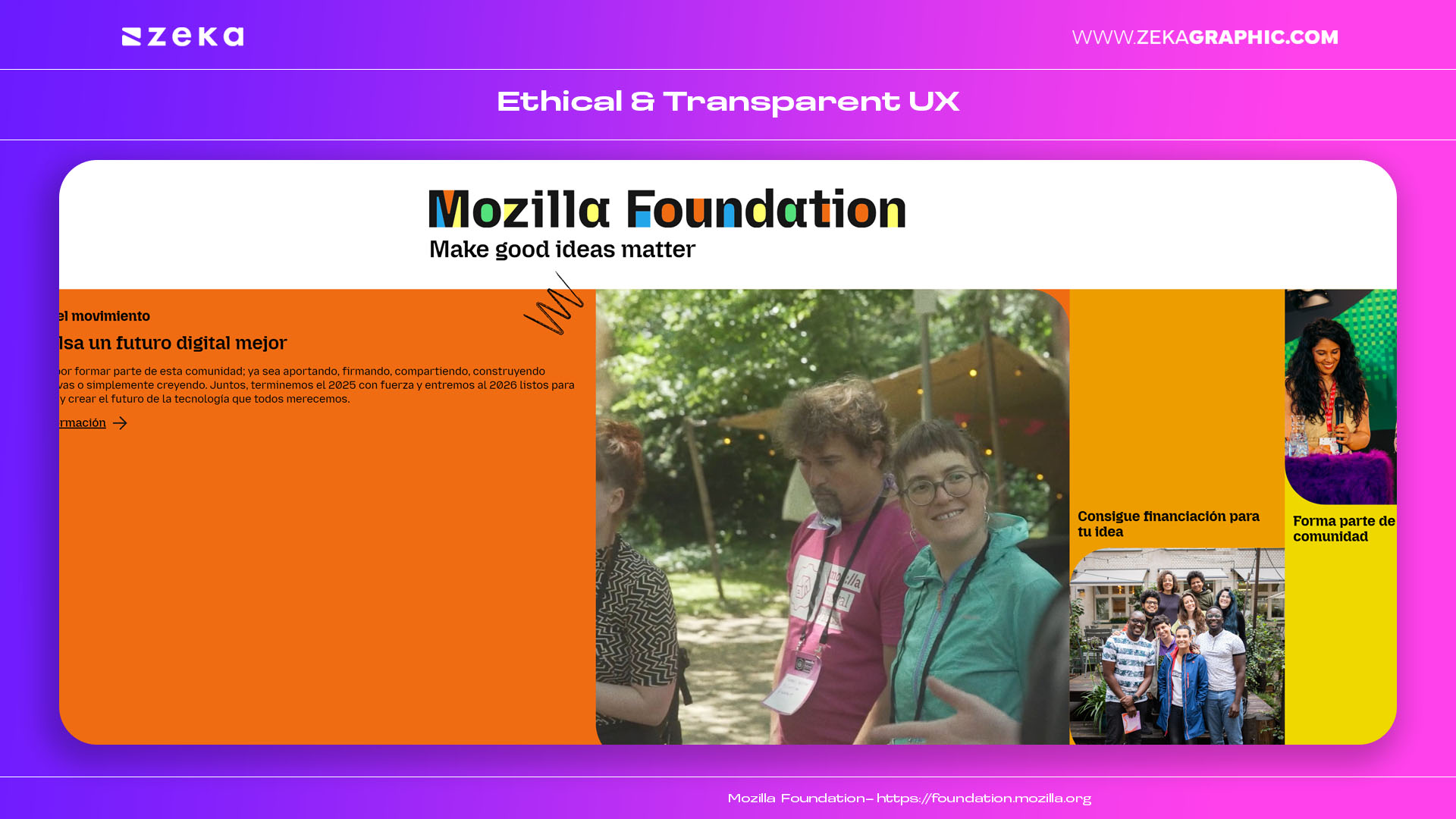
Mozilla – Privacy & Transparency – https://foundation.mozilla.org
Advertisment
This new era of interface design is defined by adaptive systems that personalize themselves in real time, motion-driven interactions that guide users intuitively, and typographic frameworks that respond dynamically to context. At the same time, we’re witnessing a cultural shift toward clarity, warmth, storytelling, and ethical responsibility—proof that users now expect technology to be not only efficient, but supportive, transparent, and emotionally resonant.
As the future of interface design accelerates, the most important lesson is this: trends are not decorative add-ons. They are strategic signals of where user expectations, cultural values, and technological capabilities are heading. By understanding these upcoming UI patterns—from spatial depth to Soft UI 2.0, Anti-Design 2.0, and ethical UX—designers can create products that stand out now while remaining relevant in the years ahead. The goal isn’t to follow every trend blindly, but to integrate the ones that enhance usability, strengthen identity, and elevate user experience.
The UX forecast 2026 shows a clear direction: design must become more adaptive, more intentional, and more human-centric. For designers, product teams, and brands, this is the moment to embrace innovation with clarity and purpose. The products that succeed in 2026 won’t just look modern—they’ll feel meaningful, trustworthy, and unmistakably alive.
Pin it for later!
If you found this post useful you might like to read these post about Graphic Design Inspiration.
Advertisment
Written by
If you like this post share it on your social media!
Advertisment




Want to make your Business Grow with Creative design?
Advertisment
Advertisment