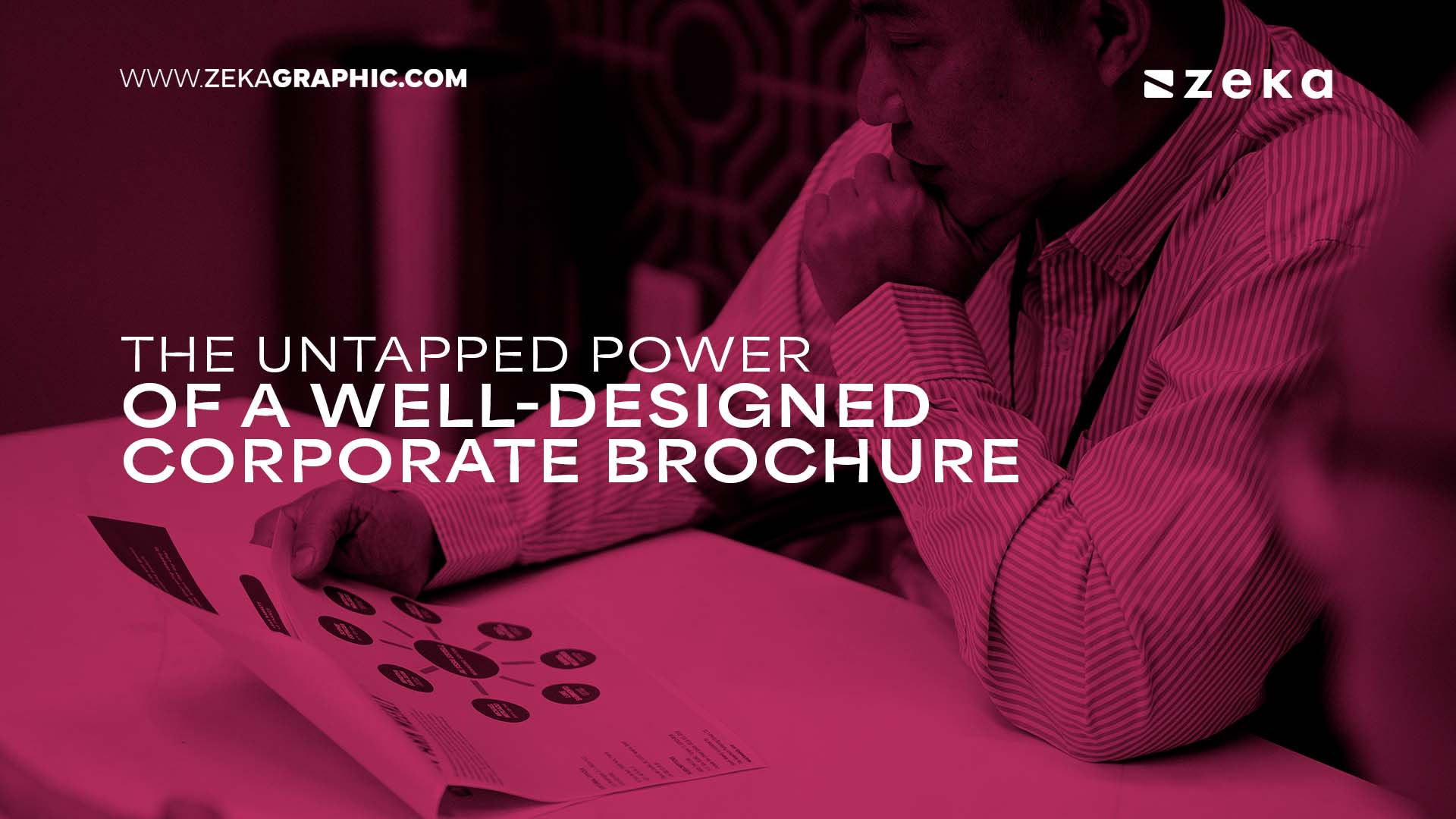
Most brands have more information than attention.
Your buyer is moving fast, scanning screens, hopping between meetings, and making decisions with limited context. In that reality, a corporate brochure still matters because it creates focus. It slows the moment down, makes your message easier to absorb, and leaves behind something tangible that doesn’t disappear when a tab closes.
The real unlock isn’t simply having a brochure. It’s building one that’s designed like a brand experience and structured to support real sales conversations. A simple format upgrade makes this even more effective: a corporate brochure with a pocket that lets you personalize the message without rebuilding the entire piece every time.
For B2B teams using creative direct mail, this kind of brochure becomes the piece that turns interest into a scheduled next step.
Advertisment
A well-designed brochure is a clarity tool. It answers three buyer questions quickly:
Digital content can absolutely do those things, but it competes with endless distractions. Print holds space. It sits on desks, gets carried into meetings, and gets passed to other stakeholders. That physical persistence matters when buying decisions involve more than one person, especially in B2B, where multiple stakeholders need to align.
There’s also evidence that print can be easier to process and more memorable than digital ads in certain contexts. Canada Post shared findings from a neuromarketing study showing that direct mail delivered 70% higher brand recall and required less cognitive effort to understand than digital advertising.
Here’s the problem with many corporate brochures: they try to speak to everyone at once. That usually leads to crowded pages, generic messaging, and content that isn’t relevant to the person holding it. A brochure with pocket solves that by separating what should stay consistent from what should be customized.
Use the main brochure or folder for your core narrative:
Then use the pocket inserts for what should change:
This modular approach is also easier for teams to maintain. Marketing can update inserts quarterly without reworking the entire layout. Sales can build the right package for each meeting without going off-brand. Compared to a Z-fold brochure, the pocket format makes it easier to refresh and swap inserts without reprinting your entire brochure.
A brochure should read like a guided conversation, not a corporate autobiography.
Start with a simple story arc:
Design for skimmers first. Most readers scan headings and subheads before they commit. Use a strong hierarchy: clear section titles, short paragraphs, generous whitespace, and visuals that support the point rather than compete for attention.
Make the tactile details part of the brand story. Paper choice and finishing are not just production decisions. They’re perception decisions. A premium offering shouldn’t feel cheap in hand. A modern tech brand should not look visually dated. The brochure should feel like your positioning.
Advertisment
Most brochures fail because they focus on what the company wants to say rather than what the buyer needs to understand.
A high-performing corporate brochure usually includes:
If you’re using a pocket folder, keep the core piece clean and move details into inserts. Inserts that support real sales conversations include:
This is where the pocket format becomes a conversion system, not just a design choice.
Advertisment
Print engages more senses than a screen. That sensory difference can influence memory.
The Association for Psychological Science has shared findings that exploring objects through touch can create detailed, durable memories, even when people aren’t trying to memorize information. From a marketing lens, Forbes has discussed why paper can outperform digital in attention and impact in certain situations, including recall effects observed in studies.
Direct mail brochures are most effective when a decision needs reinforcement, not just awareness.
Use cases that consistently perform well:
In each case, the brochure is doing more than explaining. It’s helping someone retell your story internally.
Advertisment
The strongest brochures bridge physical attention to digital action.
Add trackable elements:
If you’re sending it as a pocket mailer, include a segmented QR code and a simple offer to track responses cleanly. If sales hands out packets, track influenced opportunities and the conversion from meeting to next step for recipients.
If you’re mailing brochures, USPS Informed Delivery can add digital impressions alongside the physical piece. USPS reports 72.9 million active users and an average email open rate of 58.6% in its Year in Review document.
Before you approve the final print file, run this quick check:
Advertisment
A corporate brochure should not be a static summary of what you do. It should be a focused experience that builds trust, shows proof, and makes the next step obvious. If you want a brochure format that adapts to different audiences without constant redesign, start with a pocket structure and build a clean core story. Then let your inserts carry the personalization that modern teams need.
Advertisment
Pin it for later!
If you found this post useful you might like to read these post about Graphic Design Inspiration.
Advertisment
If you like this post share it on your social media!
Advertisment


Want to make your Business Grow with Creative design?
Advertisment
Advertisment