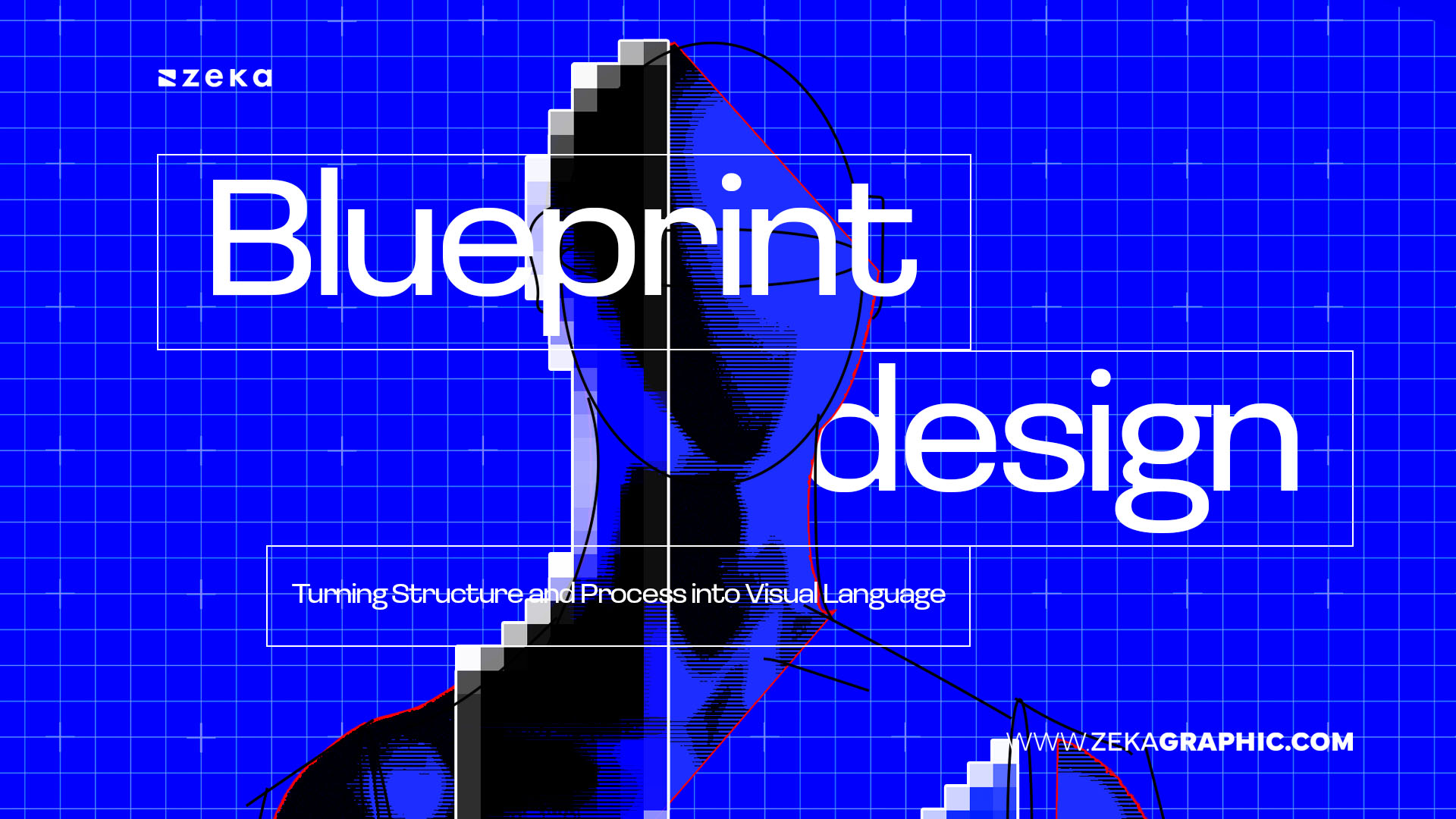
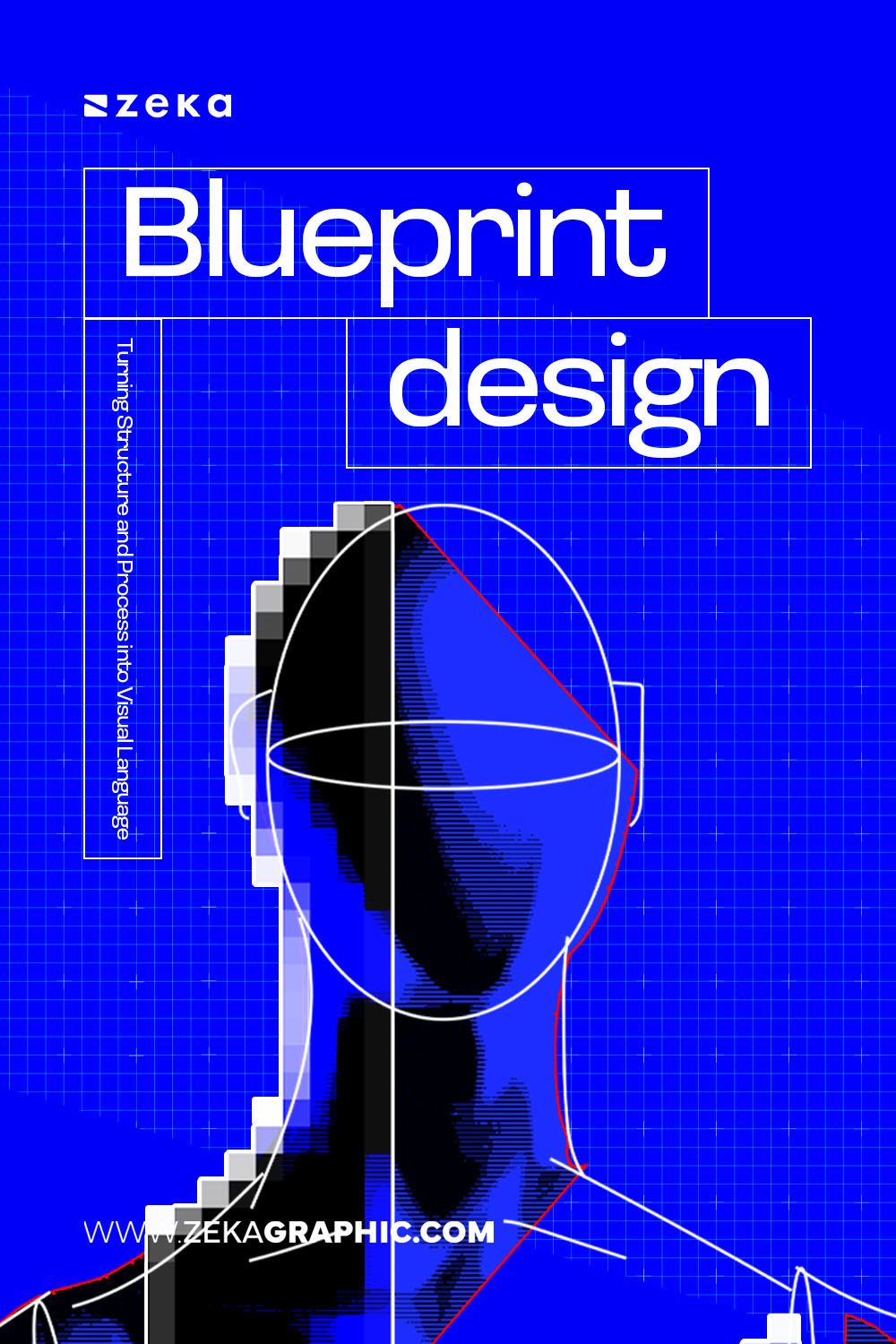
In recent years, more designers have stopped hiding structure and started showing it on purpose. Grids, guides, measurements, overlays, and system logic are no longer confined to internal files — they’re becoming part of the final visual output. This shift is what defines blueprint graphic design.
The reason isn’t aesthetic experimentation. It’s cultural. As products, platforms, and services become more complex, audiences want to understand how things work, not just how they look. Blueprint-style visuals answer that need by making logic visible. They communicate clarity, intention, and accountability — qualities increasingly associated with trust.
Within the broader Graphic Design Trends 2026 landscape, blueprint graphic design emerges as a response to transparency fatigue and black-box design systems rather than a passing visual style.
Advertisment
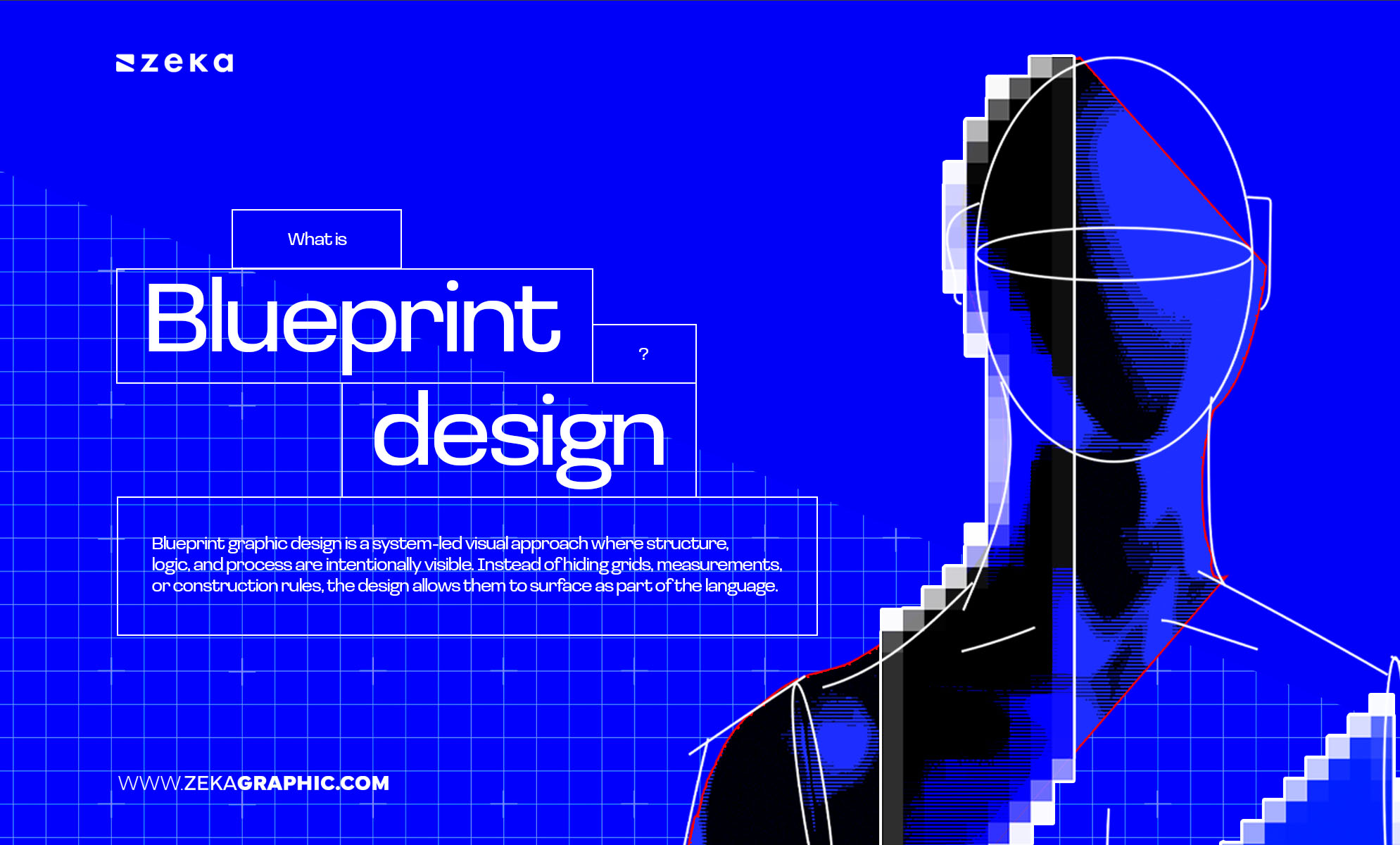
Blueprint graphic design is a system-led visual approach where structure, logic, and process are intentionally visible. Instead of hiding grids, measurements, or construction rules, the design allows them to surface as part of the language.
What defines the style isn’t a specific color or line treatment — it’s intent.
Structure isn’t just supporting the design; it is the design.
The viewer is invited to read how things are built: how elements align, how components relate, and how decisions connect. Hierarchy still exists, but it’s no longer dependent on polish or decoration. Priority is created through visible logic rather than visual tricks.
Blueprint graphic design doesn’t simplify the system.
It makes the system readable.
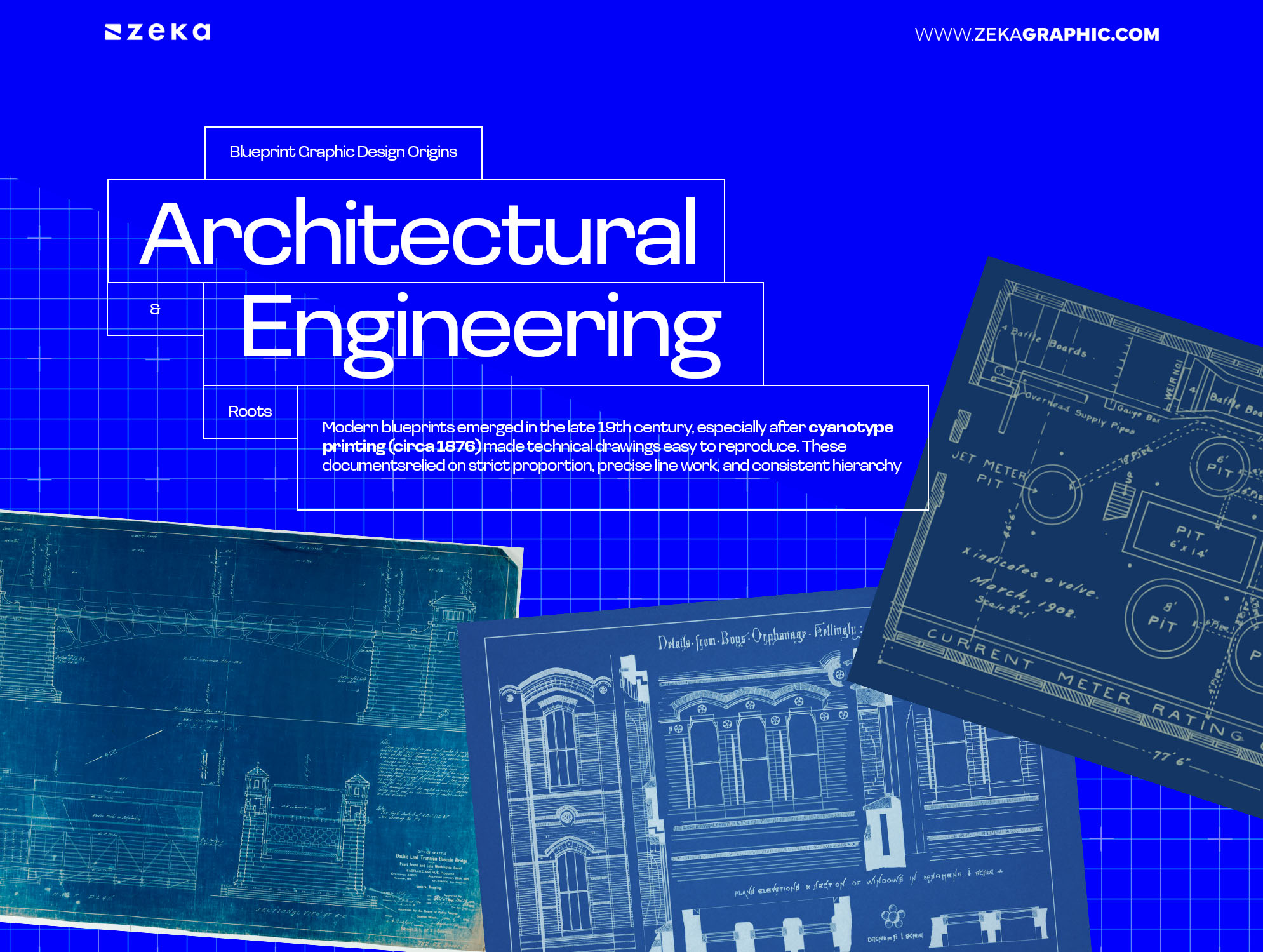
Blueprint graphic design originates in fields where visuals exist to prevent errors, not to persuade.
Architecture and engineering drawings were created to explain systems clearly enough that multiple people could act on them without interpretation.
Modern blueprints emerged in the late 19th century, especially after cyanotype printing (circa 1876) made technical drawings easy to reproduce. These documents relied on strict proportion, precise line work, and consistent hierarchy because mistakes had real-world consequences. A misaligned line wasn’t aesthetic — it was structural failure.
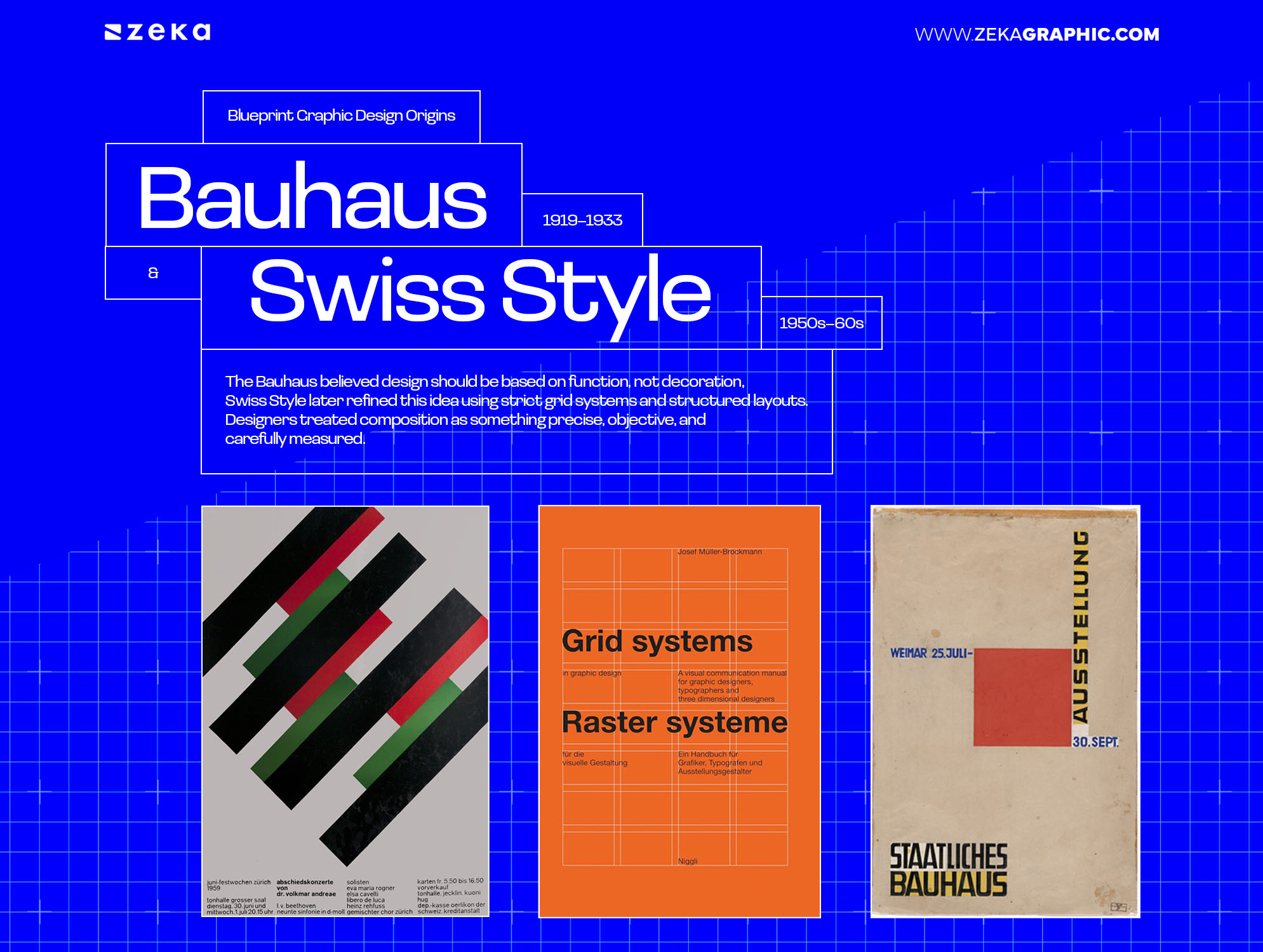
In the early 20th century, this mindset moved into design culture.
The Bauhaus (1919–1933), led by figures like Walter Gropius, pushed the idea that form should emerge from function and system. Decoration was secondary to structure. Later, Swiss Style (1950s–60s) refined this further, treating layout as an engineered grid rather than an expressive surface. Designers such as Josef Müller-Brockmann approached composition with the same discipline as technical schematics: objective, repeatable, measurable.
When this lineage appears in contemporary graphic design, it carries those associations with it.
Exposed grids echo drafting tables.
Overlays resemble revision layers.
Annotations feel like technical callouts.
These cues borrow credibility from disciplines where planning comes before presentation. That’s why blueprint-inspired design feels especially natural in SaaS, fintech, infrastructure, and data platforms — spaces where users expect systems to be visible, not hidden.
Advertisment
Today’s digital products are powered by processes users can’t see. Algorithms, automation, and AI systems operate behind clean interfaces — and that invisibility often creates mistrust.
Blueprint graphic design responds by making structure legible.
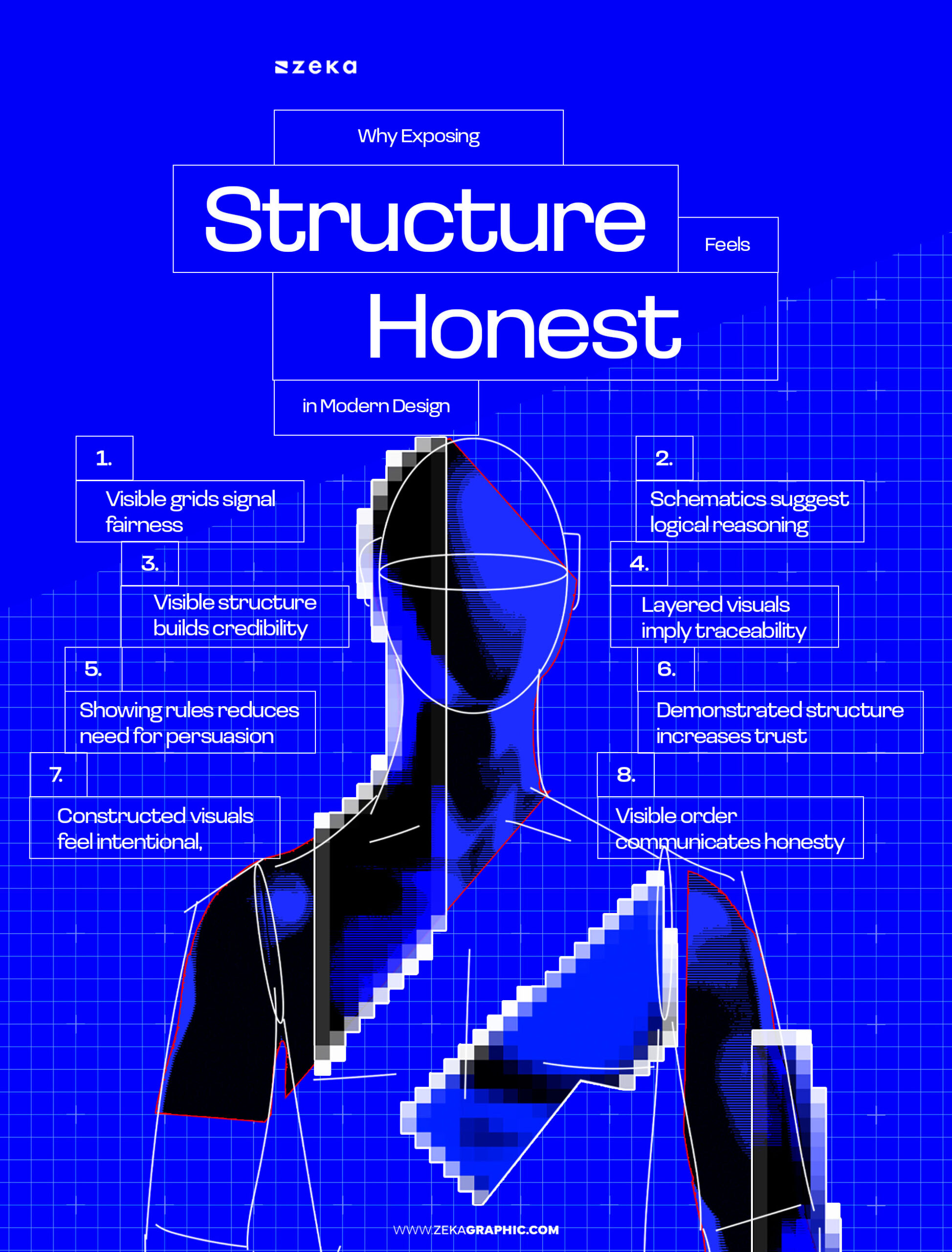
Visible grids suggest fairness.
Schematics imply reasoning.
Layers suggest traceability.
The goal isn’t to explain everything — it’s to show that the design follows rules. When structure is exposed, persuasion is replaced by demonstration. The design doesn’t ask for trust. It shows why trust is reasonable.
This is why blueprint visuals resonate so strongly now. They communicate that decisions weren’t improvised or manipulated, but constructed. In a landscape where polish is easy and truth is harder to read, visible order becomes a form of honesty.
Advertisment
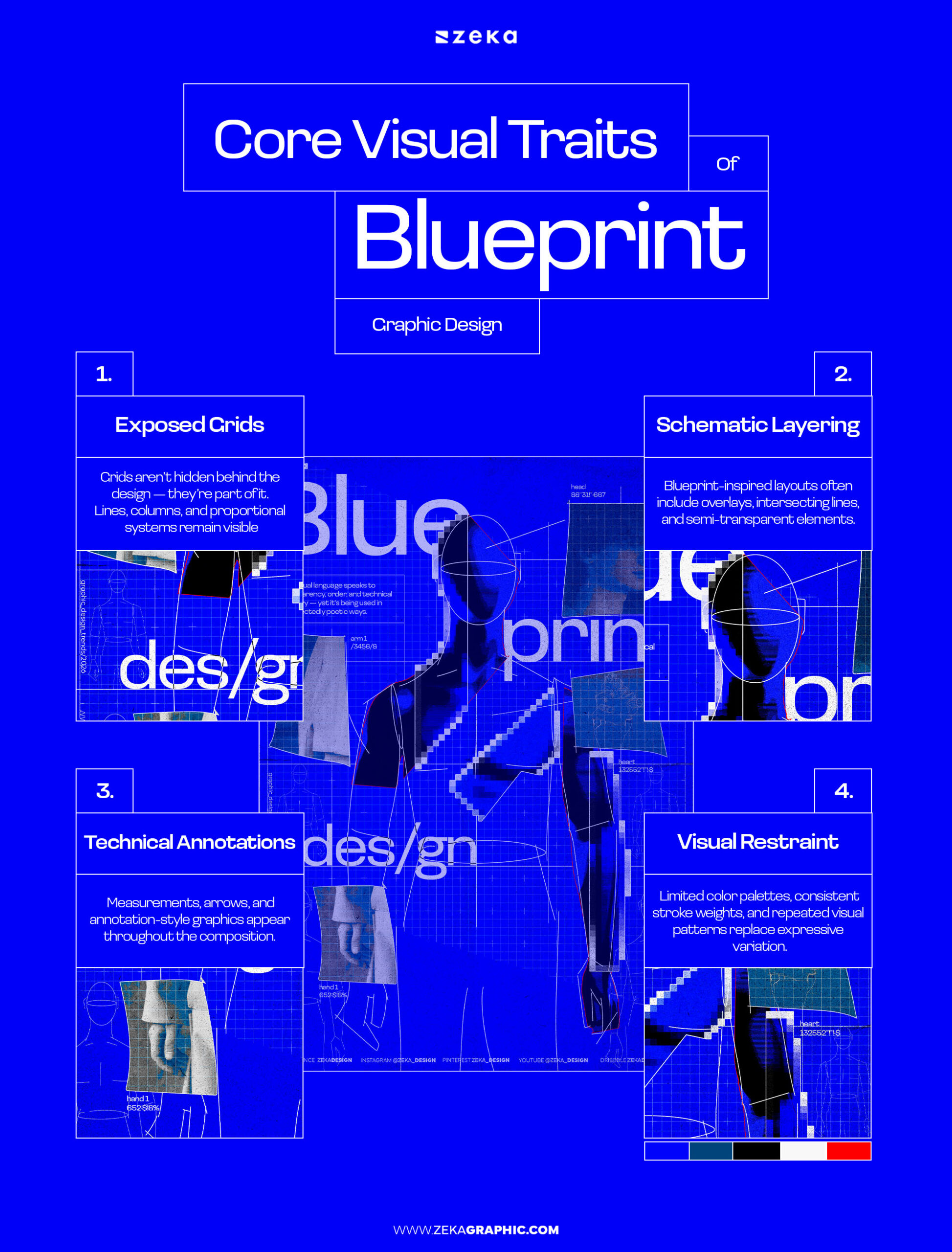
Blueprint graphic design is less about color and more about visible structure. It communicates logic, process, and intention through how elements are built and arranged.
Exposed Grids
Grids aren’t hidden behind the design — they’re part of it. Lines, columns, and proportional systems remain visible, reinforcing the idea that the layout is constructed, not decorated. This creates a sense of order that feels deliberate and trustworthy.
Schematic Layering
Blueprint-inspired layouts often include overlays, intersecting lines, and semi-transparent elements. These layers echo technical drawings in progress, suggesting analysis, testing, and refinement rather than a finished, polished surface.
Technical Annotations
Measurements, arrows, and annotation-style graphics appear throughout the composition. They’re not meant to instruct the viewer literally, but to imply verification and thought. The message is subtle: decisions here are reasoned, not arbitrary.
Visual Restraint
Limited color palettes, consistent stroke weights, and repeated visual patterns replace expressive variation. When these blueprint graphic design elements are treated as a system—not a visual gimmick—they become flexible enough to scale across posters, interfaces, and full brand systems.
Blueprint graphic design works best when clarity creates trust.
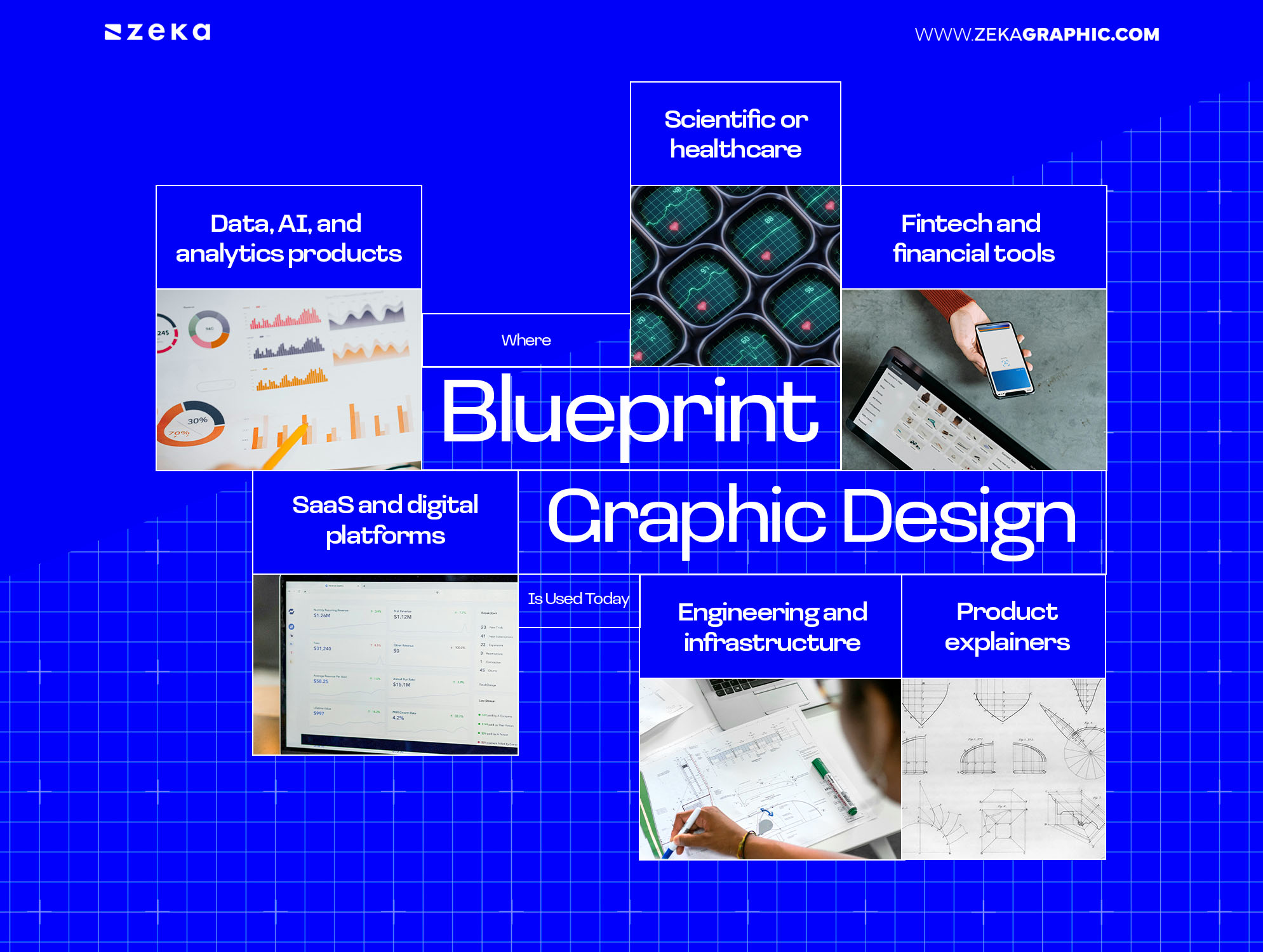
It naturally fits environments where people expect systems to make sense. In SaaS, fintech, and data-driven products, this visual language suggests that things are thought through, tested, and built with intention — not guesswork.
This style is also common wherever complexity needs to feel manageable. Technical interfaces, infrastructure brands, and process-focused content often rely on diagram-style layouts and light overlays to guide the viewer without overwhelming them.
You’ll usually see blueprint graphic design shine in areas like:
Where it tends to struggle is in emotionally driven branding. When a brand depends on warmth, spontaneity, or personal storytelling, logic-first visuals can feel distant. Blueprint graphic design isn’t meant for everything — but in the right context, it adds clarity, confidence, and credibility.
Advertisment
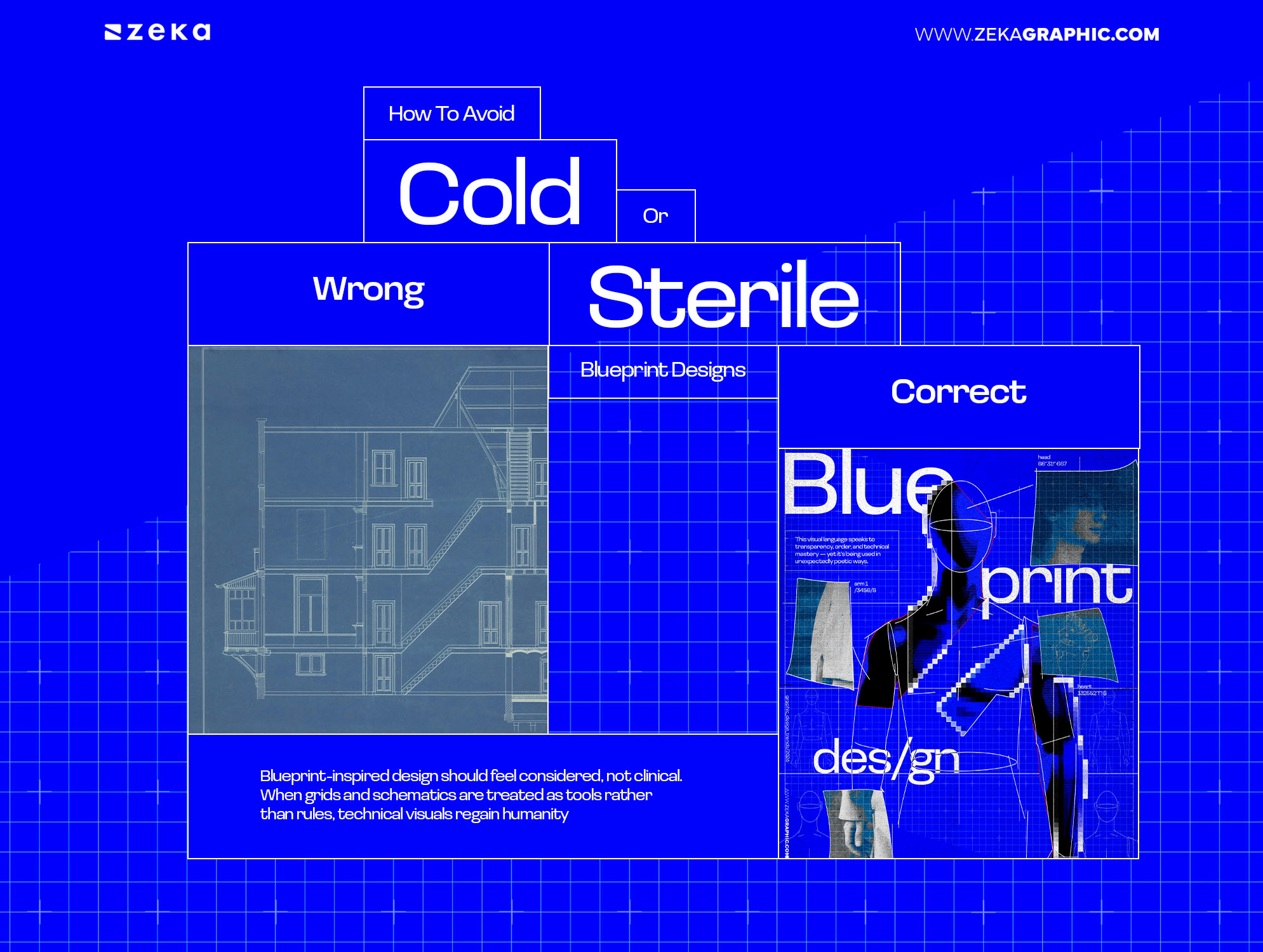
Blueprint design feels lifeless when structure becomes the message instead of the support.
Overly rigid grids, excessive annotations, and perfectly uniform layouts can drain rhythm and focus. Instead of communicating clarity, the design starts to feel mechanical — one of the most common blueprint graphic design mistakes.
The solution isn’t removing structure.
It’s using structure with intent.
Hierarchy allows certain elements to lead while others step back. Spacing can create pauses, emphasis, and breathing room — not just alignment. Even in highly systematic layouts, contrast introduces direction and meaning.
Blueprint-inspired design should feel considered, not clinical. When grids and schematics are treated as tools rather than rules, technical visuals regain humanity — clear, confident, and quietly expressive instead of cold.
Advertisment
Blueprint graphic design evolves when precision stops being the goal and starts becoming the foundation.
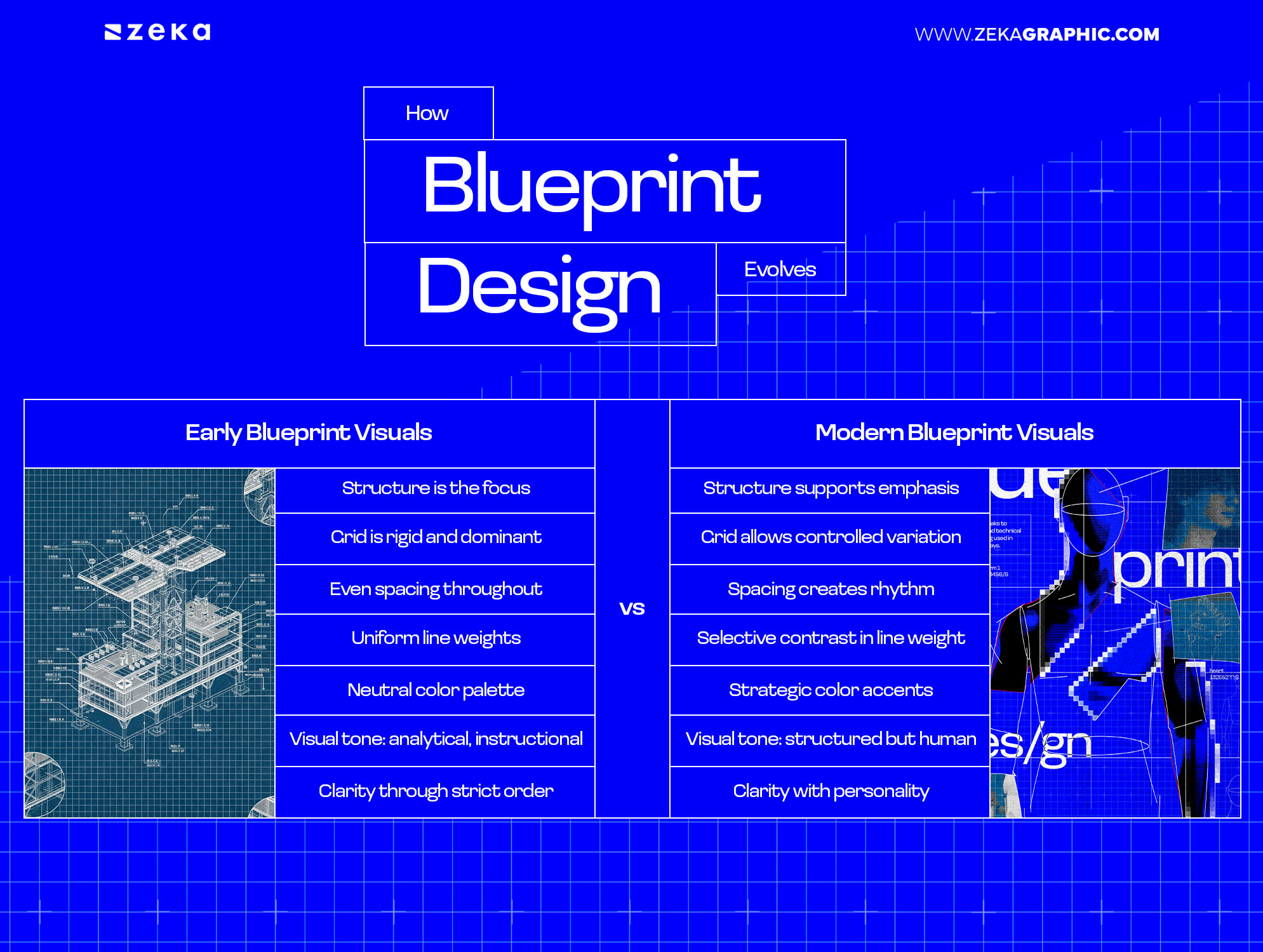
Early blueprint visuals focus on clarity and logic. Mature systems go further — they use that structure to support expression. Emotion doesn’t come from breaking the system, but from choosing where the system flexes.
Human-centered system design introduces moments of emphasis. One element leads. Another pauses. Spacing creates tension or relief. Even restrained visuals can feel expressive when hierarchy and pacing are intentional.
The key shift is this:
Blueprint design moves from showing how things are built to showing why decisions matter. When logic and feeling coexist, structured design gains personality without losing credibility.
Advertisment
Blueprint graphic design looks like a trend, but it behaves like a response.
As products become more complex — AI systems, financial platforms, invisible infrastructures — users demand clarity, not polish. Blueprint visuals answer that need by making systems readable instead of decorative.
This isn’t about a specific look. It’s about process-driven visual systems becoming more visible as complexity grows. Transparency scales better than ornament.
Will it last?
The aesthetic may evolve, but the principle won’t disappear. Design that explains itself is becoming a baseline expectation, not a novelty.
Is blueprint graphic design only for technical industries?
No — but it works best where clarity builds trust.
While it’s common in tech, SaaS, and infrastructure, creative brands can also use blueprint logic when they want to signal intention, transparency, or process. The key is adapting the system to the context, not copying technical aesthetics blindly.
Does blueprint graphic design have to look cold or minimal?
Not at all.
Structure doesn’t remove emotion — lack of hierarchy does. Blueprint design feels cold only when everything is treated equally. Focus, contrast, and pacing introduce warmth without breaking logic.
Is blueprint graphic design suitable for branding?
Yes, when the brand values clarity and trust.
Blueprint branding design works especially well for system-based brands, platforms, and services where reliability matters. It strengthens identity by making consistency visible rather than symbolic.
Is blueprint graphic design a trend or a design philosophy?
It’s closer to a mindset than a look.
Blueprint design treats process as visual language. That approach outlasts trends because it responds to how modern systems work — and how people want to understand them.
Advertisment
Blueprint graphic design isn’t about grids, schematics, or technical visuals.
It’s about making structure readable.
When blueprint design works, the system explains itself.
The process feels honest.
The design earns trust before it tries to persuade.
Designs don’t feel credible because they look polished — they feel credible because nothing is hidden.
That’s the real power of blueprint graphic design:
logic you can see, and decisions you can trust.
Advertisment
Pin it for later!
If you found this post useful you might like to read these post about Graphic Design Inspiration.
Advertisment
If you like this post share it on your social media!
Advertisment




Want to make your Business Grow with Creative design?
Advertisment
Advertisment