Auto-captions sound simple until you’re stuck manually correcting every third word or scrubbing watermarks off your finished video. Free Submagic Alternatives have become a real conversation among creators who want accurate, clean captions without paying full price or dealing with export restrictions. After testing and reviewing several tools across short-form platforms, the issues that come up most are transcription errors on accented speech and limited language support for non-English audiences. This guide breaks down five tools worth your time, what they actually do well, and where they fall short.
The shortlist methodology
Tools were evaluated by pulling together user reviews, feature breakdowns, ratings from major review platforms, and details from official product pages. Only tools with a real track record in video captioning and editing made the cut.
→ See the full research breakdown
Advertisment
Picking the wrong captioning tool doesn’t just slow you down. It actively works against the content you’re trying to put out.
Free plans with watermarks make short-form videos look unfinished, and that impression is hard to shake on platforms like TikTok or Instagram Reels where first impressions happen in under two seconds. Auto-transcription errors are another real cost, because fixing them manually eats into the time you were supposed to save by using AI in the first place.
Creators working in languages other than English face an extra layer of friction. Many tools simply don’t support enough languages to be useful for global audiences.
The right tool closes those gaps by delivering caption accuracy you can trust, cutting down the time spent per video, and giving you export formats that work across every platform you’re publishing to. That combination is what separates a tool worth paying for (even at the free tier) from one that just adds friction.
Note: All data in this table is sourced from review platforms and the official websites of the listed companies.
Company Name | Established | Headquartered In |
ZapCap | 2023 | Sydney Australia |
CapCut | 2020 | Singapore |
Kapwing | 2017 | San Francisco, CA |
Maestra | 2018 | New York City, United States |
Descript | 2017 | San Francisco, California |
Advertisment
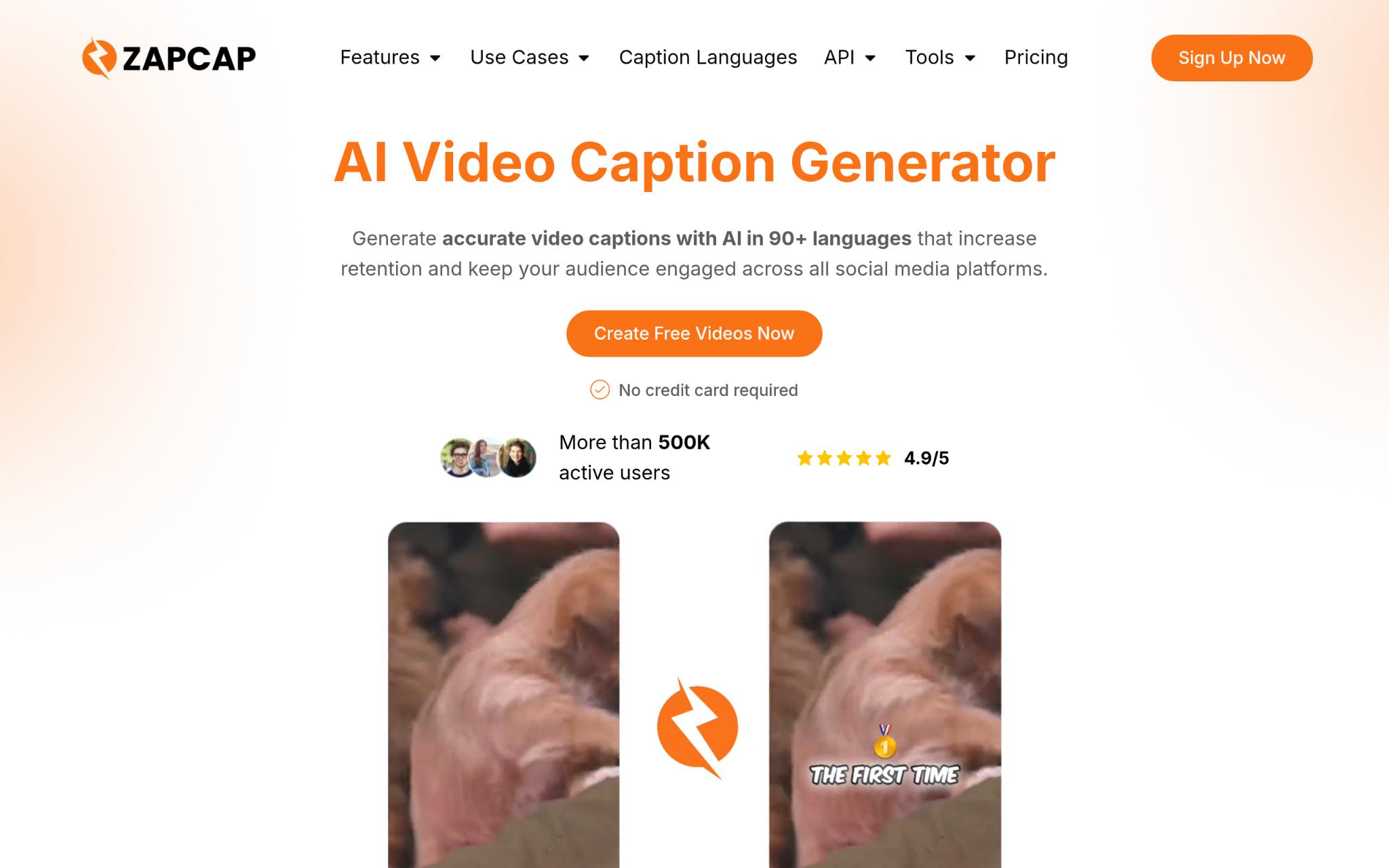
What does ZapCap offer?
ZapCap is an AI-driven video editing platform built to take the grind out of captioning and editing. They offer captions in 90+ languages,auto B-roll generation, silence removal, sound effects, and intelligent tagging, all wrapped into one tool designed for creators who publish consistently. With 99% caption accuracy and over 500K active users, ZapCap offers a combination of speed and reliability that makes it a strong option for creators who want to streamline post-production. Creators like Ali Abdaal and Alex Hormozi use the platform, further demonstrating its application for professional content production.
Why Does ZapCap Belong on This List for Free Submagic Alternatives?
ZapCap directly tackles the challenge of producing accurate, on-brand captions without manually correcting every word or frame. Pairing 99% caption accuracy with support for 100+ languages and pricing starting at $8/month makes it an accessible option for creators who want more capable editing features without a complicated workflow.
Real-World User Take:
Users consistently point to accuracy and speed as standout strengths, with many noting that they spend less time fixing caption errors than with other tools they’ve tried. The variety of templates and B-roll automation also add value for creators looking to speed up their editing process. For a platform at this price point, the combination of captioning, automation, and editing features makes ZapCap a practical choice for consistent content production.
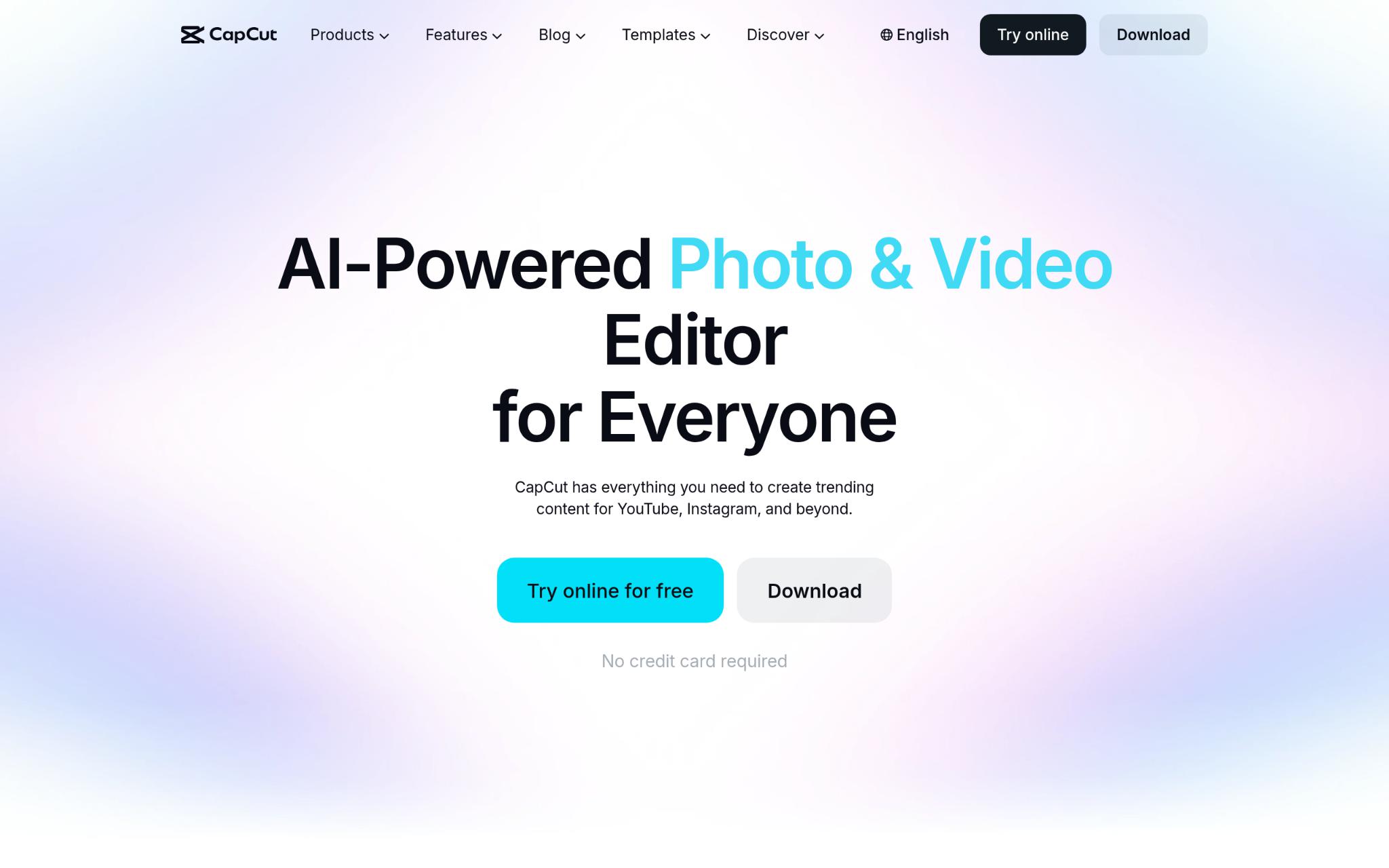
What does CapCut offer?
CapCut is a full-featured video editing platform built by ByteDance, the same company behind TikTok, so the platform-specific design choices make a lot of sense. They offer auto subtitles, text-to-speech, background removal, and an extensive template library across mobile, desktop, and browser. The free tier is genuinely capable, not just a teaser. For creators working in short-form content, CapCut removes the need to juggle multiple apps because the editing, captions, and formatting tools all live in one place (which is rarer than it sounds at the free tier).
Why Does CapCut Belong on This List for Free Submagic Alternatives?
CapCut solves the fragmentation problem that plagues most free workflows, where creators end up using three different tools to caption, trim, and export a single video. The ByteDance backing also means the auto-subtitle feature gets consistent updates, keeping it competitive as speech recognition improves.
Real-World User Take:
CapCut’s user reviews regularly highlight how fast the learning curve is, especially for creators coming from mobile-first editing. The feedback pattern points to people being genuinely surprised by how much the free version covers without pushing them toward a paywall. That kind of reception builds real loyalty in a crowded tool space.
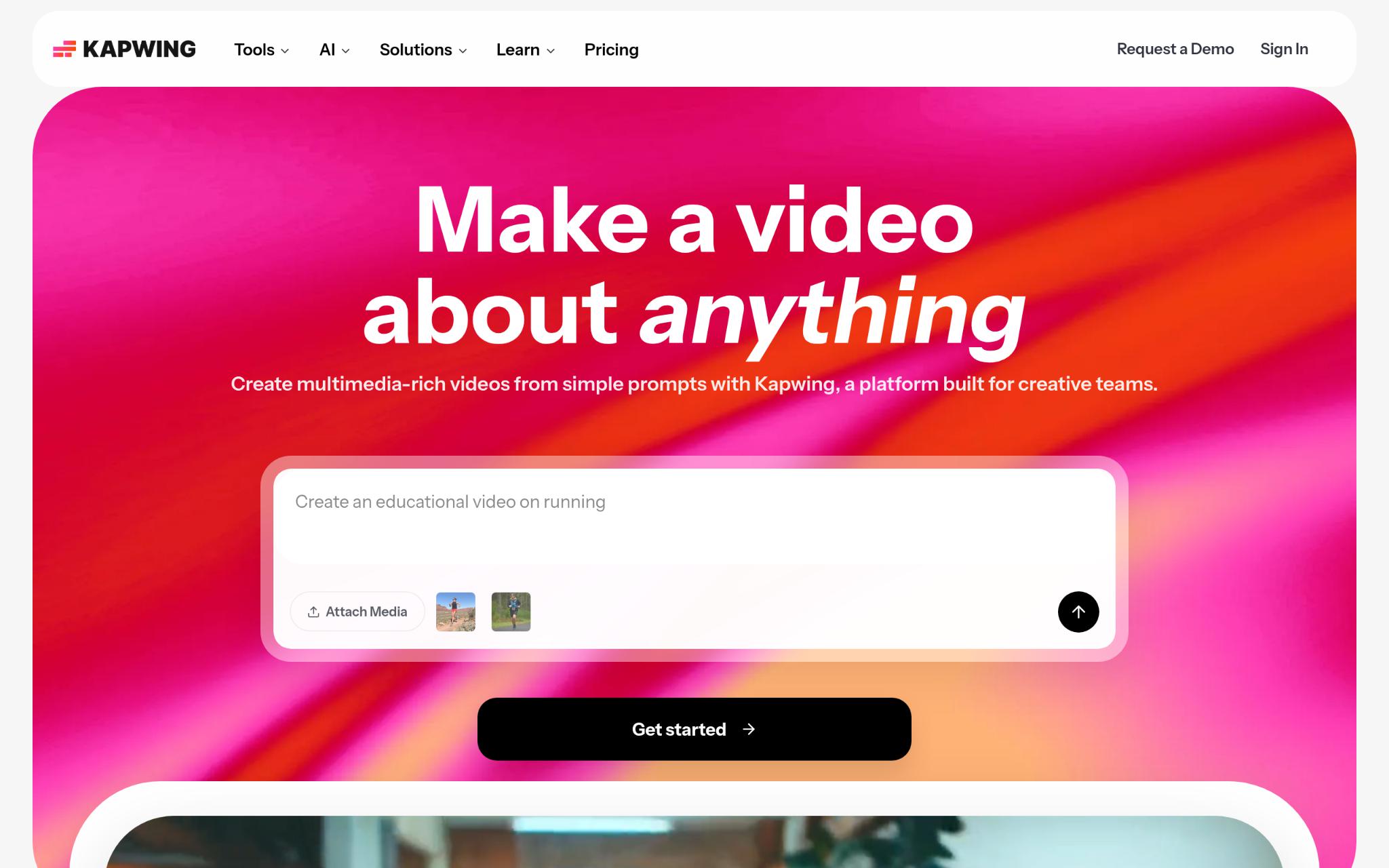
What does Kapwing offer?
Kapwing is a browser-based video editing platform trusted by over 35 million creators that runs entirely in the browser, so there’s nothing to download or install. Founded in 2017 out of San Francisco, they’ve built a strong set of AI tools including automatic subtitle generation, video translation, script generation, and B-roll generation. The platform supports multi-language dubbing in 40+ languages, which makes it a solid pick for teams creating content for international audiences. With a 4.9 rating from over 5,000 Google reviews, the user satisfaction numbers back up what the feature list promises.
Why Does Kapwing Belong on This List for Free Submagic Alternatives?
Kapwing addresses a real need for marketing teams and global creators who need collaboration without the friction of shared file installs. The browser-first design means anyone on the team can jump in and edit captions or review a project from anywhere, and that kind of accessibility is hard to match at a comparable price.
Real-World User Take:
Kapwing users consistently point to the browser-based setup as the thing that keeps them coming back. Teams mention that the collaboration features feel natural rather than bolted on, which is a meaningful distinction. The 4.4 rating on Capterra from 207+ reviews suggests it holds up well even when you move past the honeymoon phase of a new tool.
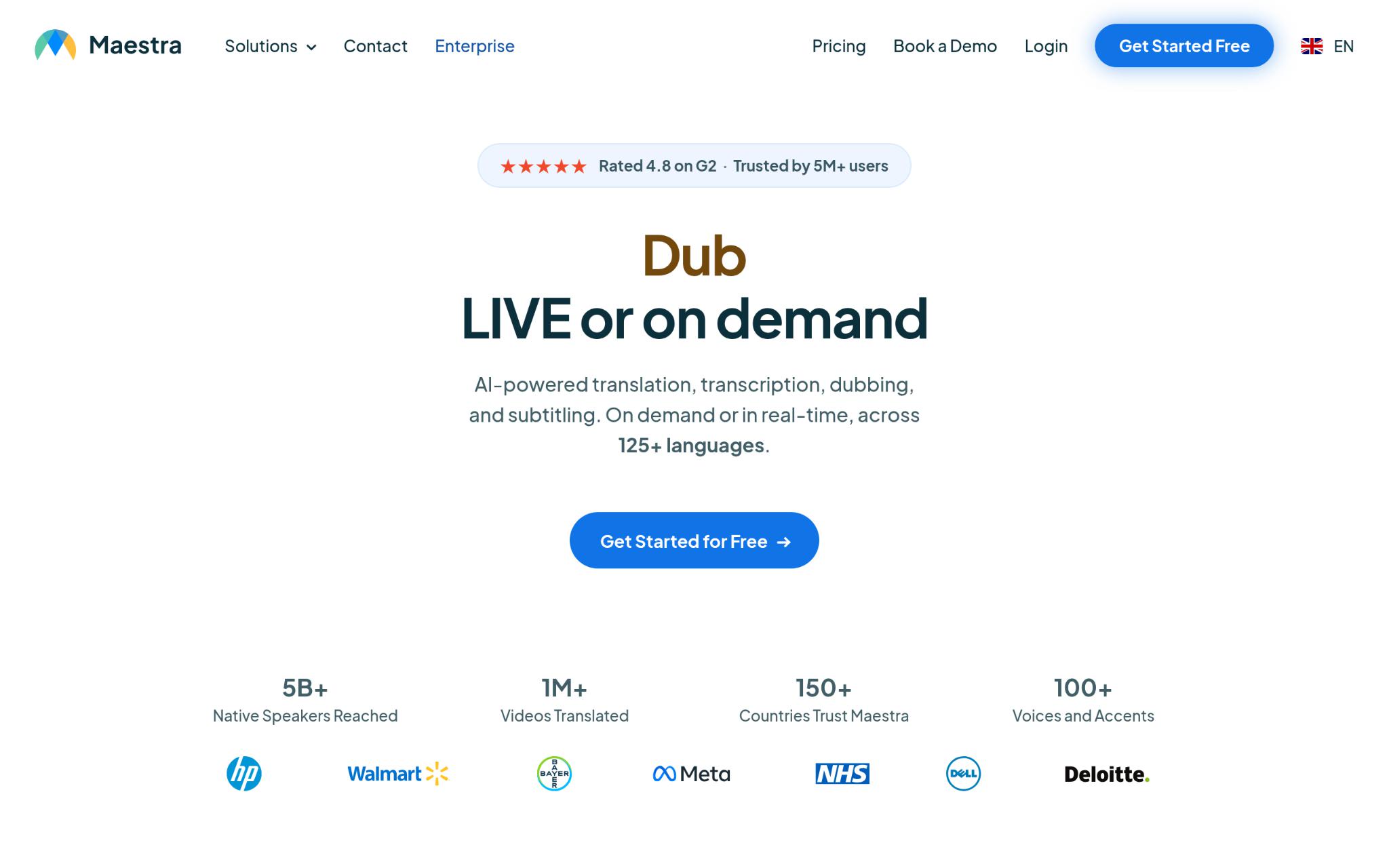
What does Maestra offer?
Maestra is an AI platform built around language, covering automated transcription, translation, dubbing, and subtitling across 125+ languages. Based in New York and running since 2018 with a team of 47, they’ve grown to serve over 5 million users globally and have helped translate more than 1 million videos. The platform includes real-time captioning, voice cloning, and connections to YouTube, TikTok, OBS, and vMix. For video editors working on content that needs to reach audiences across multiple countries, Maestra’s language depth is genuinely impressive (125 languages is not common at this price point).
Why Does Maestra Belong on This List for Free Submagic Alternatives?
Maestra fills a gap that most captioning tools leave open: what happens when you need subtitles in a language that most tools don’t support. Their focus on breaking language barriers through AI means editors can handle multilingual workflows without switching platforms mid-project.
Real-World User Take:
Maestra holds a 4.8 on G2, and the review patterns circle back to two things: ease of use and transcription accuracy across languages that other tools stumble on. Users from 150+ countries are on the platform, which tells you the multilingual claims aren’t just marketing. For creators producing content for global audiences, that reach is the main reason to take a closer look.
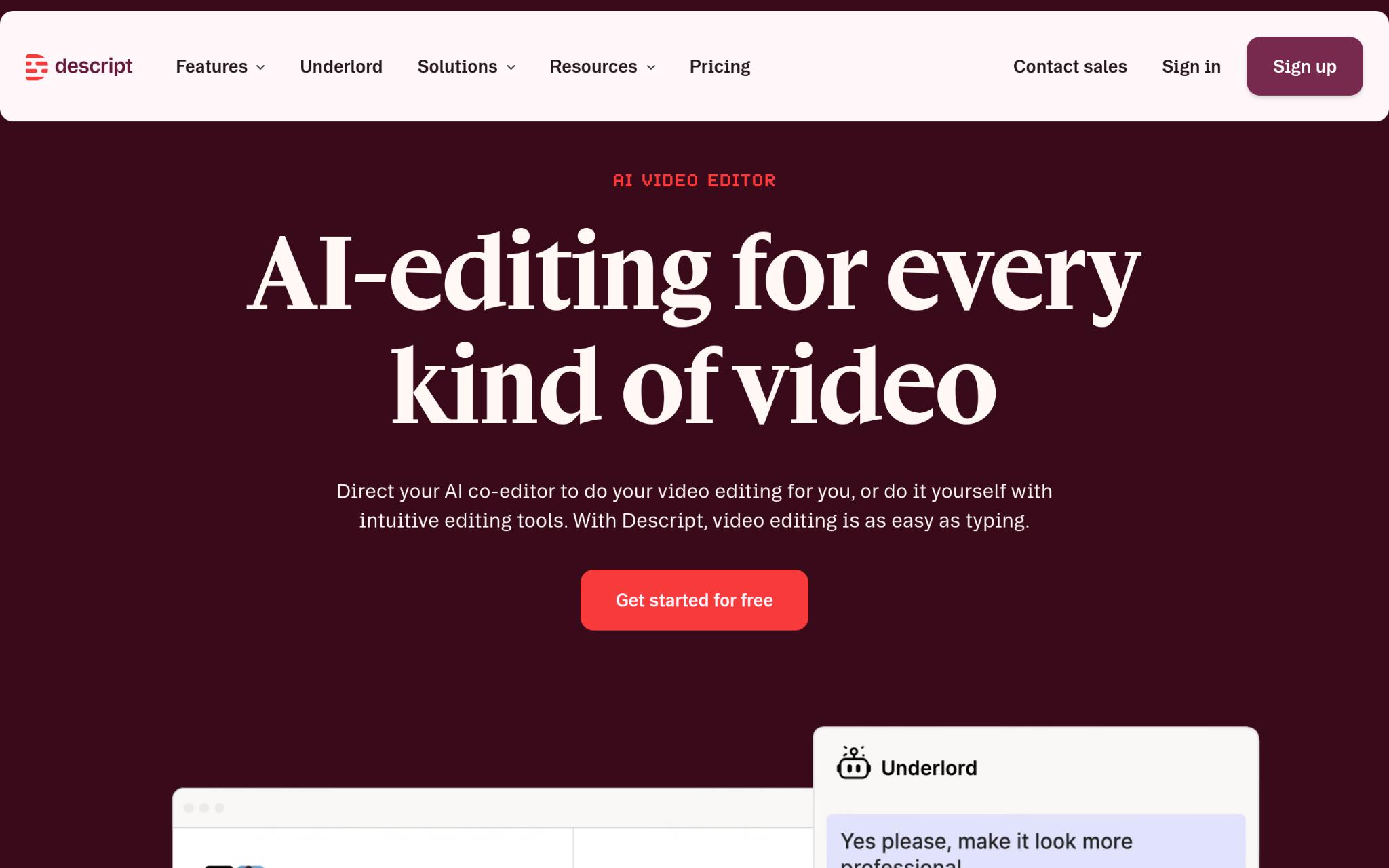
What does Descript offer?
Descript is a video and audio editing platform built around a text-first editing model. Instead of scrubbing through a timeline, users edit content by working directly in the transcript, and the video adjusts accordingly. Founded in 2017 in San Francisco with a team of 185, they’ve built their platform around an AI co-editor called Underlord, which handles transcription, captions, AI speech synthesis, screen recording, and content generation. The approach works especially well for podcast-style video, talking-head content, or any format where the spoken word drives the edit. For creators who find traditional timeline editing frustrating, this is a different kind of workflow.
Why Does Descript Belong on This List for Free Submagic Alternatives?
Descript solves the specific problem of making caption editing fast for content that’s heavily dialogue-driven, because editing the transcript IS editing the video. That tight link between the text and the timeline cuts the manual correction loop that makes traditional captioning tools slow.
Real-World User Take:
Users regularly call out the text-based editing model as the thing that changed how they work, not just a nice feature but a real shift in their entire editing process. Creators scaling content production point to Descript as the tool that let them double output without adding editing hours. Enterprise customers, particularly in healthcare and media, report meaningful gains in content production speed.
Advertisment
The research began by pulling together a broad set of captioning and video editing tools from multiple sources, including product directories, curated tool lists, creator community forums, and major review platforms. Each tool’s official website was reviewed for feature accuracy, pricing structure, and stated capabilities. Review platform data from G2, Capterra, and Google Reviews was collected to understand how real users describe their day-to-day experience, beyond what the product pages claim. The goal was to build a longlist wide enough to spot genuine differences between tools, not just surface-level feature overlap.
Once the longlist was in place, tools were filtered based on a clear set of requirements. Options without enough verifiable user data were removed early. Tools that showed patterns of inflated claims (where the stated features didn’t match what review samples described) were also cut. What remained were tools with consistent review sentiment, real user bases, and feature sets that address the actual challenges creators face: transcription accuracy, language support, export flexibility, and caption styling. The filtering process was deliberately strict because the goal was a shortlist that’s actually useful, not just complete.
Cross-referencing platform claims against user reviews revealed some meaningful gaps. Tools that marketed broad language support sometimes struggled in reviews from non-English speakers who reported higher error rates. Accuracy claims were tested against review patterns where users mentioned correction time, which is a reliable proxy for how good the transcription actually is. Tools that showed strong alignment between their stated accuracy and the real-world correction effort users described were rated more favorably in the selection process.
Recognition signals were also factored in, including mentions in creator communities, coverage in video editing and content marketing publications, and any awards or platform-level recognition the tools had received. Tools with a visible presence in creator conversations (not just formal press) were weighted positively, because that kind of organic mention is hard to manufacture. Platform-specific trust signals, like being featured in app stores with high ratings across large review volumes, were also considered as a quality marker.
The final check focused on whether each tool had features for the use cases most relevant to this list. That meant looking for dedicated captioning or subtitle pages, verified use cases around short-form video, and case studies or user stories tied to platforms like TikTok, Instagram Reels, or YouTube Shorts. Tools with clear evidence of serving this specific creator workflow were prioritized over more general editing platforms that happened to include captioning as an add-on feature.
Choosing a captioning tool isn’t just about what’s free. It’s about whether the free tier actually produces content you’d put your name on, and whether the tool can grow with you as your output increases.
Advertisment
Captions are no longer optional for short-form video, and the tool you use to generate them has a direct effect on how your content lands. The five options covered here each solve a different piece of the problem, whether that’s language range, editing model, or collaboration. ZapCap stands out for accuracy and language depth. CapCut wins on accessibility. As AI captioning keeps improving, the gap between free and paid tiers will narrow, making it the right time to lock in a tool that fits how you actually work.
Advertisment
Pin it for later!
If you found this post useful you might like to read these post about Graphic Design Inspiration.
Advertisment
If you like this post share it on your social media!
Advertisment





Want to make your Business Grow with Creative design?
Advertisment

Advertisment