Every designer knows the feeling: the actual design work – the part you trained for, the part clients pay for – keeps getting squeezed between admin, asset wrangling, and the hundredth “can you just resize this?” request. The creative hour you were protecting quietly disappears into busywork.
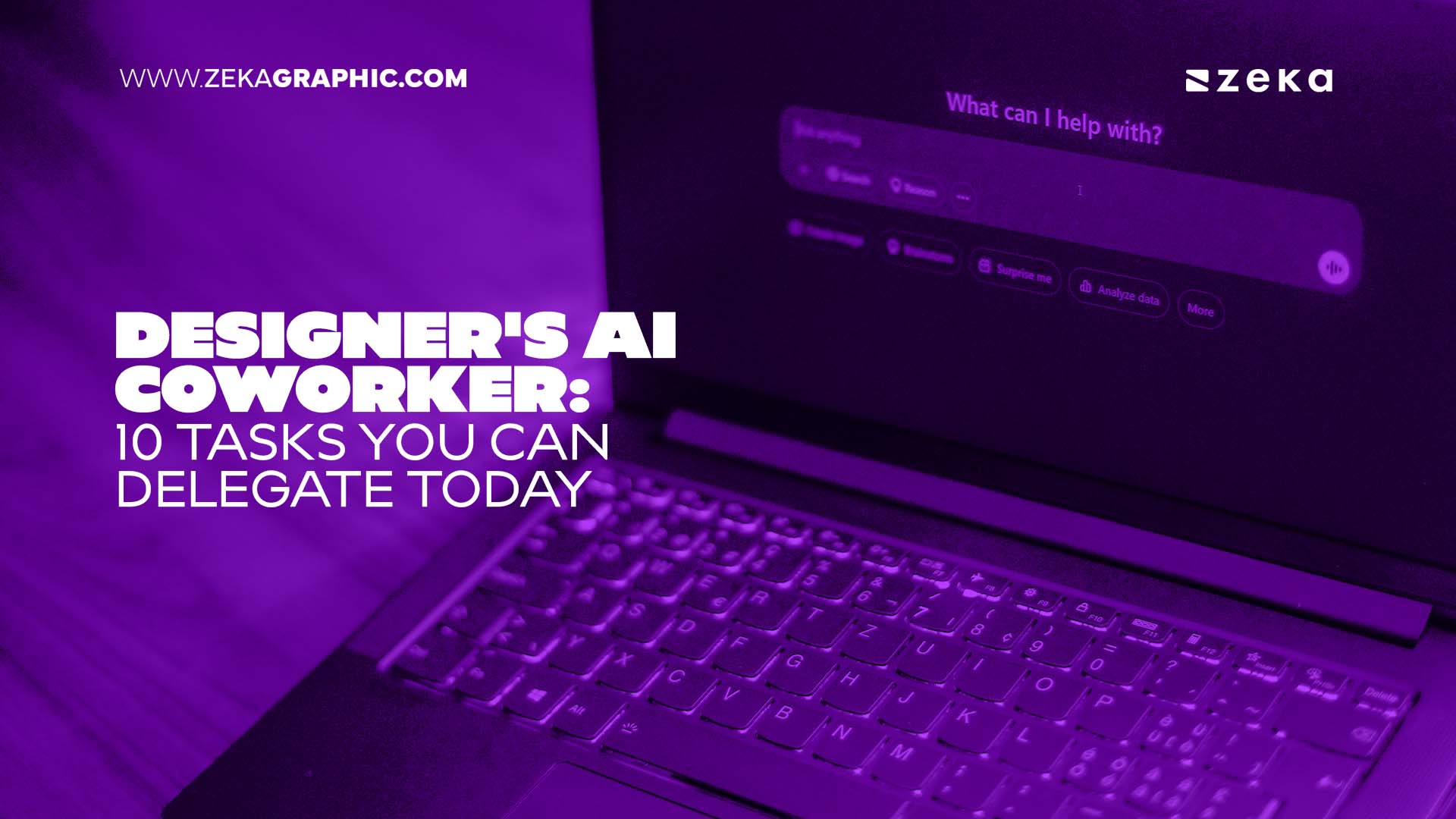
This is where an AI coworker stops being a buzzword and starts being useful. Not as a replacement for taste or craft, but as the junior teammate who handles the repetitive, low-judgment tasks so you can stay in the part of the process that needs a human. You don’t need a new workflow or a six-month rollout to start. You need a shortlist of things worth handing off.
Advertisment
Here are ten tasks you can delegate today, starting with the ones that give you the fastest return.
Staring at a blank canvas is expensive. Instead of opening twelve tabs and manually saving references, describe the direction you’re chasing – “warm, editorial, mid-century print influence” – and let an AI coworker like Glean that works from the context scattered across your tools pull a first pass of references, keywords, and adjacent styles. You still curate. But you start from a rough board instead of nothing, which is often the hardest ten minutes of any project.
The point isn’t to let a model decide the aesthetic; it’s to skip the mechanical gathering so you arrive at the judgment call sooner, with more raw material to react to and reject.
Advertisment
Client notes arrive as voice memos, half-sentences in three different threads, and a screenshot with an arrow on it. Feeding that chaos to an AI coworker and asking it to summarize the actual asks – separating “must change” from “nice to have” – saves you from the guesswork that leads to a second round of revisions.
A clear brief is half the job, and it’s a task you almost never enjoy doing yourself.
Placeholder lorem ipsum makes a layout look finished when it isn’t. Real-ish copy exposes whether your hierarchy actually holds. Ask AI to draft headlines, subheads, and button labels at the right length for your design, and you’ll catch a cramped CTA or an orphaned line before the client does.
If you want to sharpen your instinct for how type and content interact, Zeka Design’s guide on typographic hierarchy pairs well with this habit.
You have the anchor color. What you need is options – the tint that works for accessibility, the darker mode variant, and three combinations to show the client. AI can spin up palette variations in seconds, so you spend your time judging them rather than building them one swatch at a time.
It’s a fast way to break out of the same three palettes you keep reaching for, and a solid complement to browsing curated color palette ideas when inspiration runs dry.
Font pairing is judgment, not math – but a good starting suggestion still saves time. Ask for pairings that fit a brief (“a geometric sans for headings, something warmer for body”), then edit hard. The value isn’t that AI picks the perfect pair; it’s that reacting to a proposal is faster than generating one from scratch.
When you want to slow down and understand why a pairing works, the fundamentals in the art of pairing fonts are worth revisiting.
This is the pure grunt work: one hero image that needs to exist as a square, a story, a banner, and a thumbnail. Delegating format conversions and resizes to AI-assisted tools clears a task that has zero creative payoff and a high annoyance cost. You review the crops; you don’t drag the guides forty times.
It’s also the delegation clients never notice and never should – nobody praises you for a correctly sized banner, but everyone remembers the one that shipped stretched. Automating the boring safety net protects your reputation as much as your calendar.
Advertisment
Background removal, spot cleanup, mild upscaling, straightening a crooked product shot – these are the chores between “the photographer sent the files” and “the layout is ready.” Handing the first pass to AI gets you a usable asset in a minute instead of fifteen, and you step in only where a human eye is genuinely required.
Accessibility matters, and alt text is one of those tasks that’s easy to skip when you’re tired and behind. Ask your AI coworker to draft descriptions for every image in a layout, then adjust for accuracy and tone. It’s a small delegation that quietly makes your work more inclusive and your handoffs more complete.
It also signals professionalism: a developer receiving your files with alt text already written sees a designer who thought past the visuals, and that impression compounds across projects.
Here’s the task nobody assigns but everybody suffers: five minutes hunting for the correct logo file, the current hex codes, or the version of the deck the client actually approved. When brand context is scattered across drives, Slack, and email, consistency slips – not because you’re careless, but because the right file is buried.
This is where an AI layer that connects the scattered context across your tools earns its place, surfacing the approved asset and the latest guideline instead of the outdated copy. The less time you spend searching, the more your output stays on-brand by default.
The client email that starts “just a quick update on where we are” always takes longer than it should. Give AI the week’s progress in bullet points, and let it draft a polished recap, a next-steps list, or a friendly nudge about overdue feedback. You keep the relationship; you skip the blank-page tax on writing it.
Advertisment
The mistake is trying to automate everything at once. Pick the two tasks above that drain you most – for a lot of designers, that’s asset resizing and client-facing writing – and delegate only those this week. Once handing them off feels natural, add a third. Delegation is a skill like any other: it takes a few reps before you trust the output enough to stop double-checking every line, and the tasks on this list are deliberately low-stakes places to build that trust.
The goal isn’t to design less. It’s about spending a larger share of your day on the work that actually needs you, and less on the work that doesn’t. That shift matters most when the clock is against you; if deadlines are your real bottleneck, these focus habits for designers on tight deadlines are a good companion to anything you automate.
An AI coworker won’t give you taste, and it won’t build your reputation. But it will hand back to you the hours you keep losing to everything that isn’t design – and that’s a trade worth making today.
Advertisment
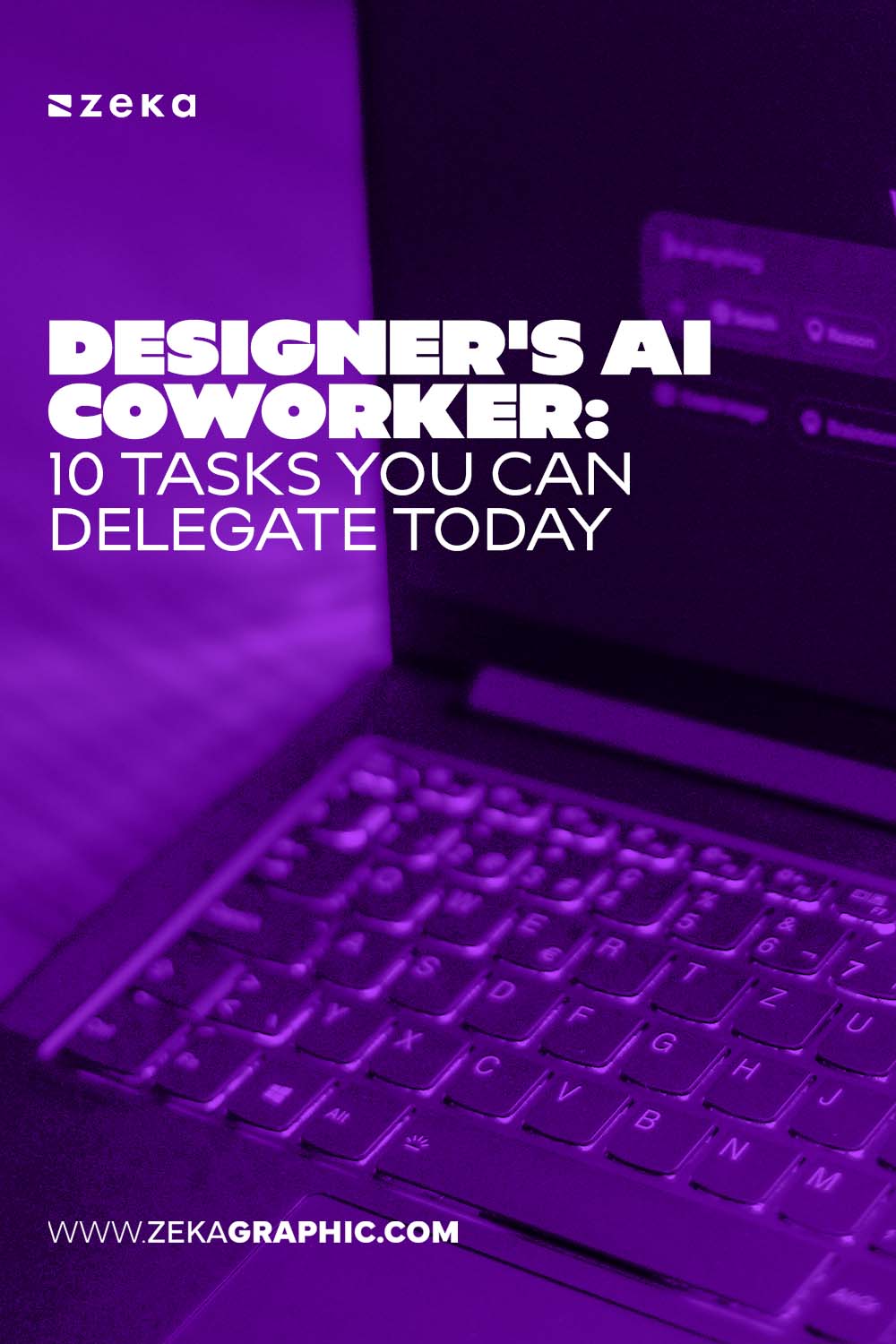
Pin it for later!
If you found this post useful you might like to read these post about Graphic Design Inspiration.
Advertisment
If you like this post share it on your social media!
Advertisment



Want to make your Business Grow with Creative design?
Advertisment
Advertisment