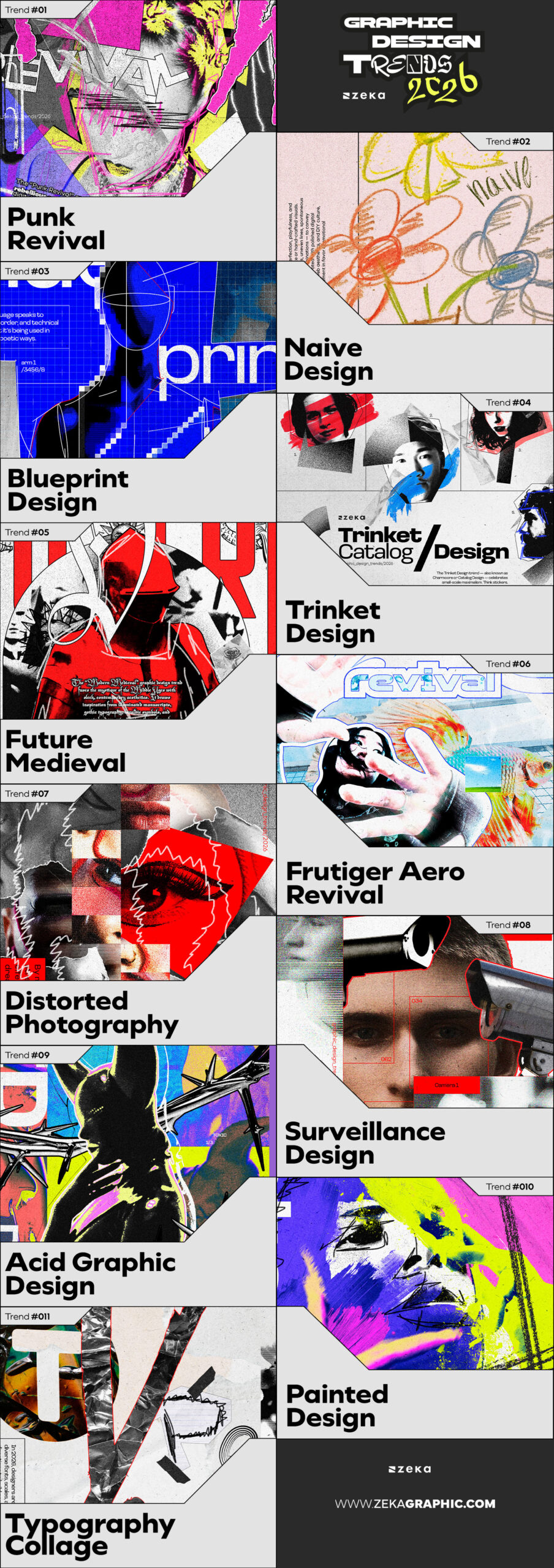
The visual landscape of 2026 is a thrilling collision of rebellion, emotion, and re-enchantment. Designers around the globe are rethinking what “modern” means — blending nostalgia, imperfection, and AI-driven surrealism to create new emotional languages of design. We’re moving past sterile minimalism and entering a humanized digital era, where chaos, tactility, and poetic imperfection rule.
From Punk Revival’s anti-corporate energy to Future Medieval’s dark romanticism, each of these movements speaks to a collective desire for identity in an age of automation. We’re seeing visual culture shift toward storytelling, mood, and sensorial depth, where every texture, line, and pixel feels intentional.
These Graphic Design Trends 2026 are already influencing branding, motion design, editorial layouts, UI/UX, and packaging. Whether you’re an art director, freelancer, or studio owner, understanding these aesthetics will help you stay ahead of the creative curve — and design visuals that feel unmistakably now.
Advertisment
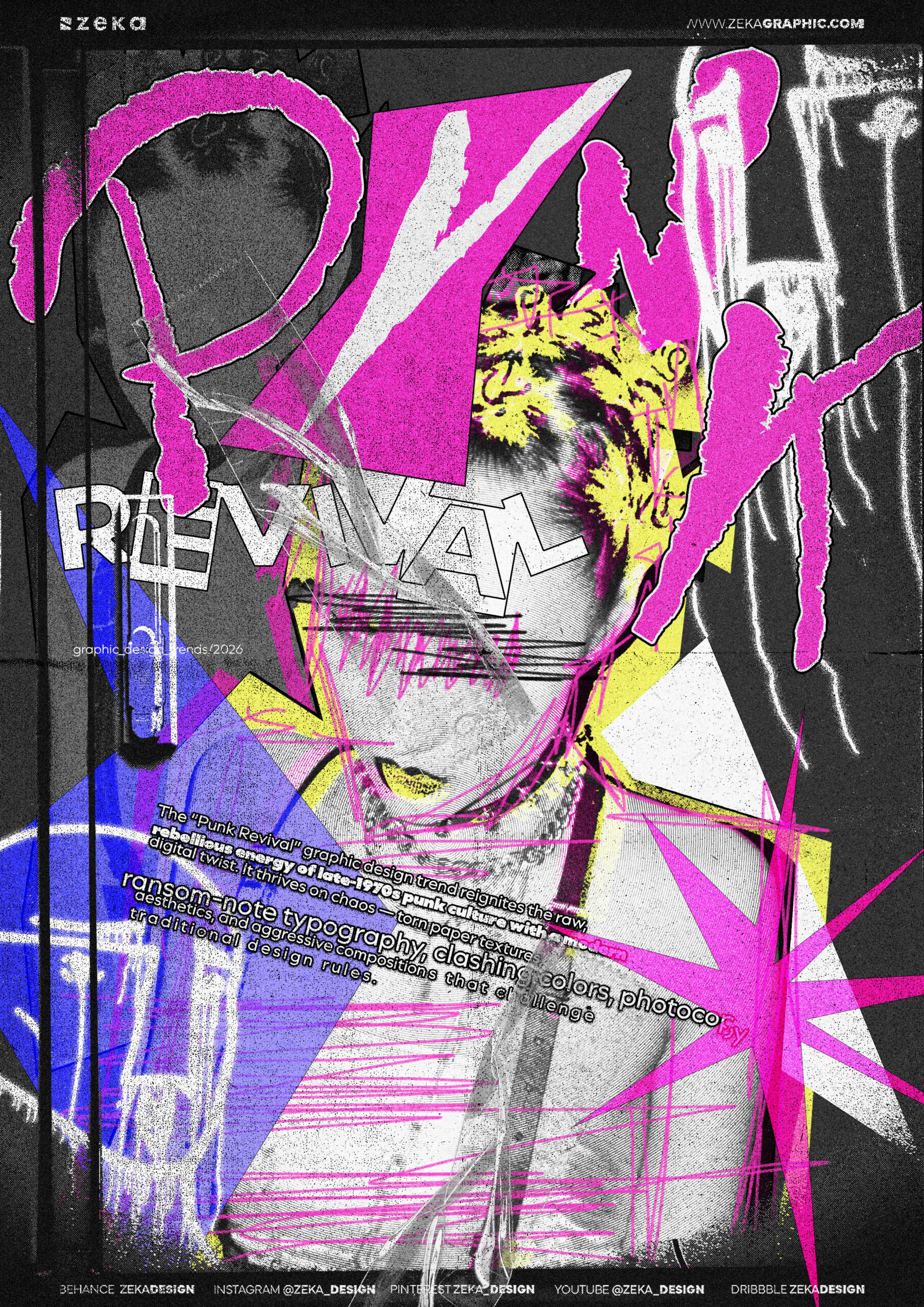
The Punk Revival is exploding in 2026 as a visceral rejection of perfectionism and polished AI imagery. Designers are once again embracing chaos, imperfection, and unfiltered expression — an aesthetic rebellion against algorithmic blandness. Expect to see handmade textures, raw collage, rough type, and zine-inspired layouts dominate everything from indie music branding to digital fashion campaigns.
This trend draws its roots from 1970s punk zine culture, but its new iteration is fueled by Gen Z’s countercultural energy and a deep mistrust of corporate sameness. In an era where AI can generate flawless visuals in seconds, imperfection becomes the new luxury — proof that a human made it. The result is bold, messy, and emotional design that rejects conformity.
Key visual traits of the Punk Revival:
For brands, this trend works perfectly when you want to project authenticity, attitude, or creative independence. Use it in music, streetwear, and activist branding, or even as a rebellious accent in corporate campaigns. The trick is to balance raw emotion with readability — channeling chaos, but always with intent.
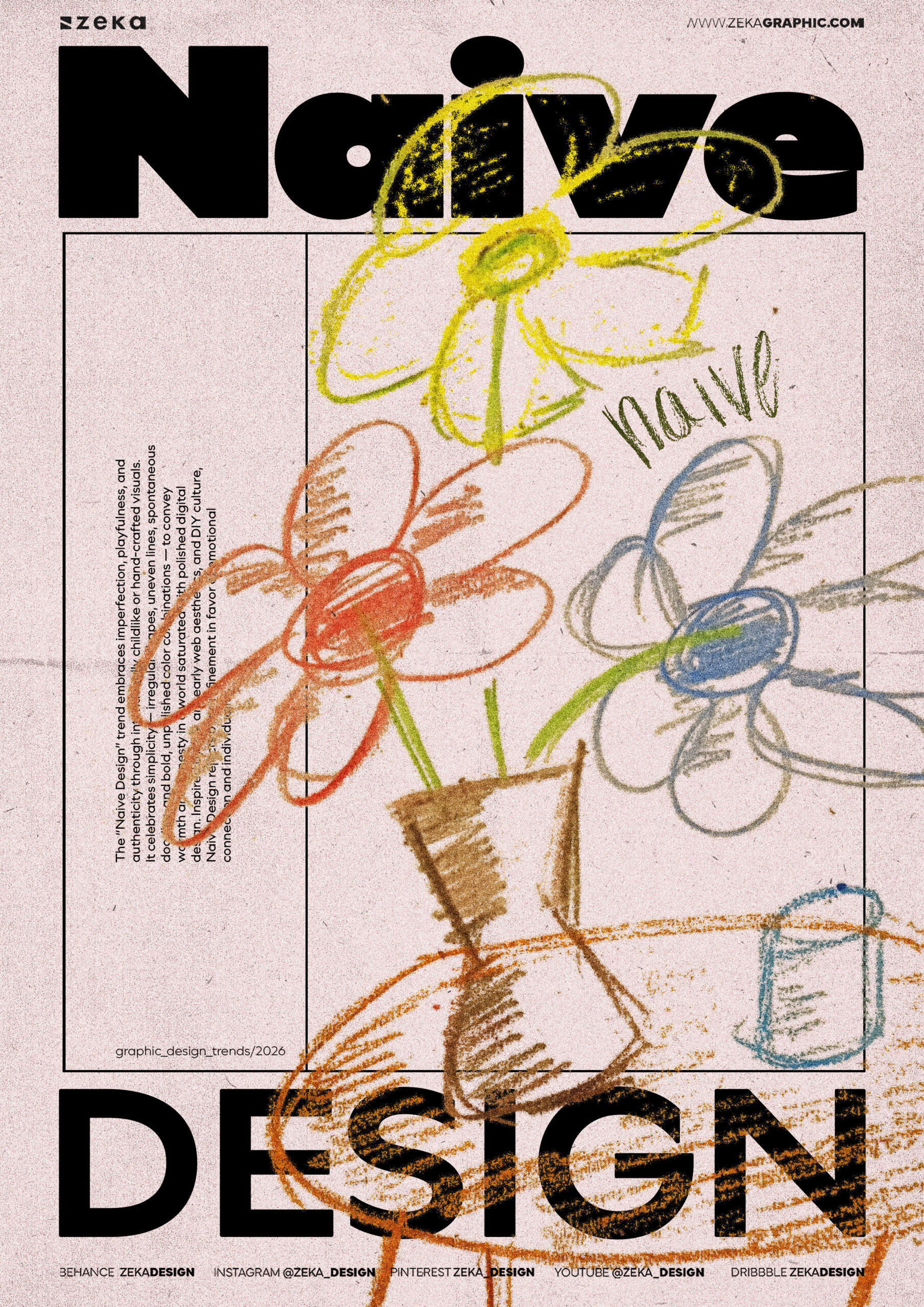
Naive Design is the visual antidote to perfection fatigue. In 2026, this trend celebrates simplicity, childlike honesty, and emotional warmth — all expressed through irregular lines, uneven shapes, and spontaneous color palettes. It’s a direct response to the sterile uniformity of AI-generated design, offering something deeply personal and emotionally real.
Designers are drawing inspiration from folk art, kindergarten drawings, and early computer graphics, merging analog imperfections with digital clarity. The Naive aesthetic invites audiences to reconnect with their inner child — evoking nostalgia, playfulness, and comfort.
You’ll recognize Naive Design by its:
This aesthetic is booming in branding, editorial design, and social campaigns seeking approachability and emotional connection. In practice, it can help brands appear more honest and human, especially when used in food, wellness, and creative industries.
Advertisment
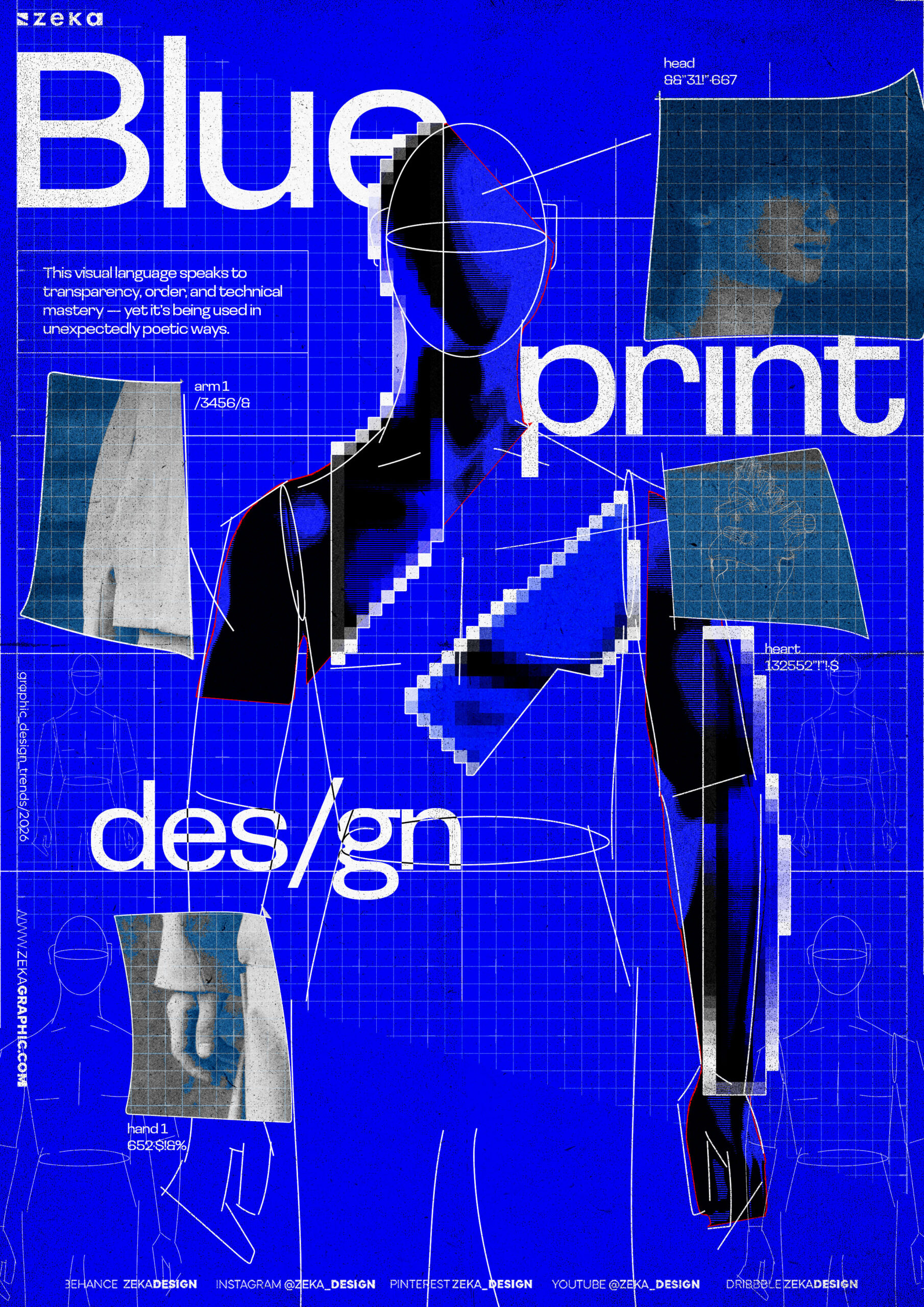
The Blueprint Design trend bridges logic and artistry — a celebration of structure, process, and the beauty of precision. In 2026, we’re seeing an influx of designs inspired by architectural schematics, engineering blueprints, and geometric mapping systems. This visual language speaks to transparency, order, and technical mastery — yet it’s being used in unexpectedly poetic ways.
Its origins trace back to the architectural visualization boom of the 2010s, but its modern return reflects designers’ fascination with process over perfection. Rather than hiding construction lines or grid systems, Blueprint Design makes them visible — turning structure into style.
Expect to see:
This aesthetic resonates in tech startups, architecture studios, and data-driven brands — but it’s also making its way into fashion and editorial layouts. For designers, Blueprint Design is an opportunity to highlight craft, logic, and clarity — a refreshing contrast to maximalist chaos.
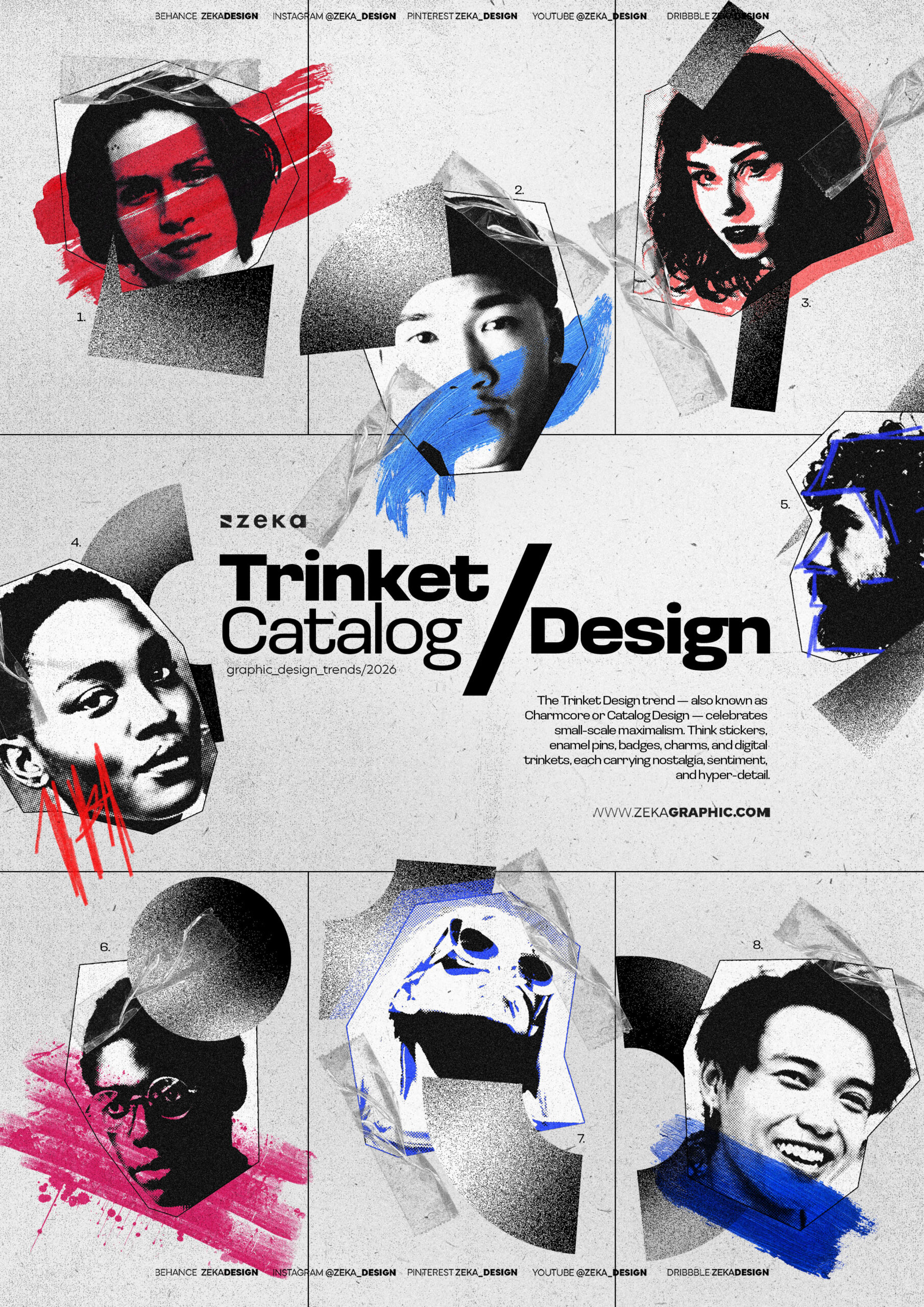
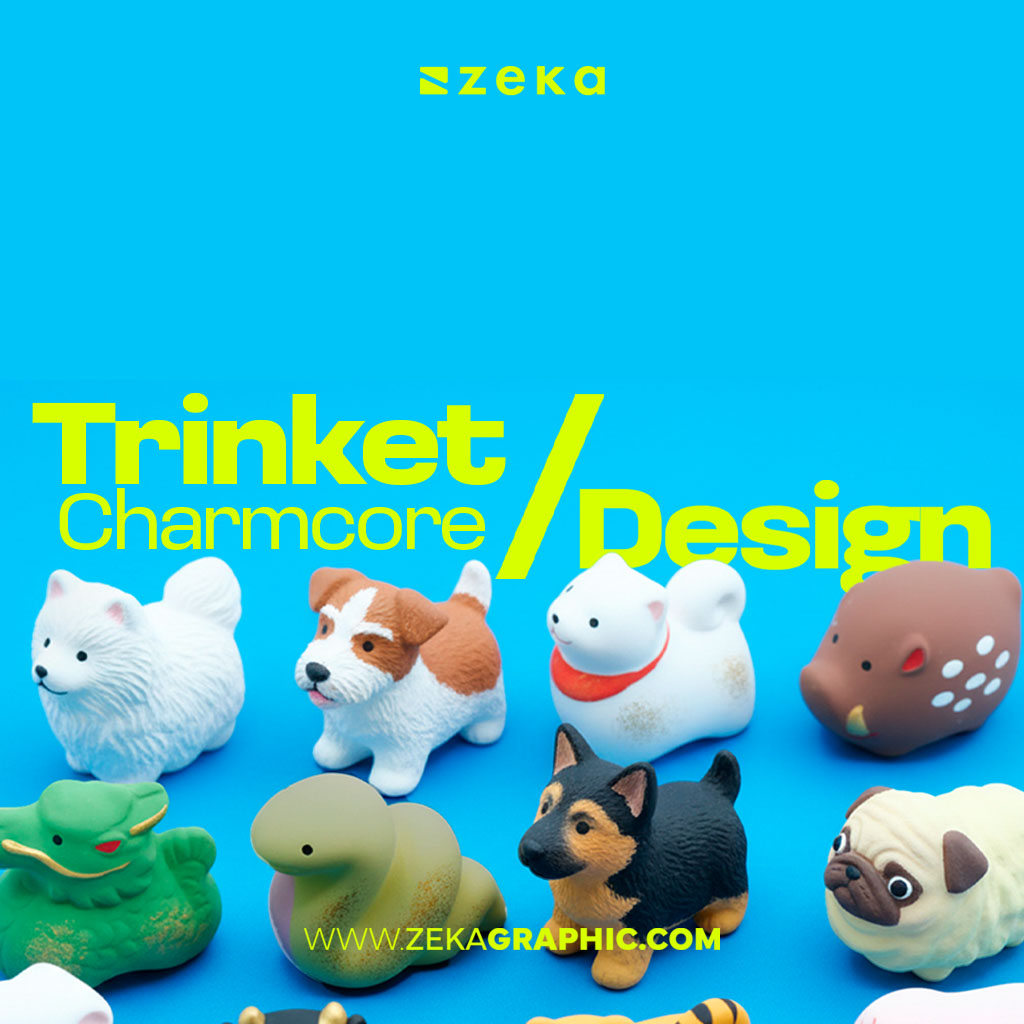
Tiny treasures are making a huge comeback. The Trinket Design trend — also known as Charmcore or Catalog Design — celebrates small-scale maximalism. Think stickers, enamel pins, badges, charms, and digital trinkets, each carrying nostalgia, sentiment, and hyper-detail. In 2026, this aesthetic defines the new visual language of digital collectibility.
Born from the online fandom and DIY craft resurgence of the 2020s, Trinket Design combines personal expression and intricate decoration. Designers are layering small illustrated objects into lush compositions — a delightful mix of digital scrapbooking and maximalist collage.
You’ll notice:
Perfect for product packaging, app icons, and social media branding, this trend thrives on collectibility. The more detail you add, the more memorable the design feels.
Advertisment
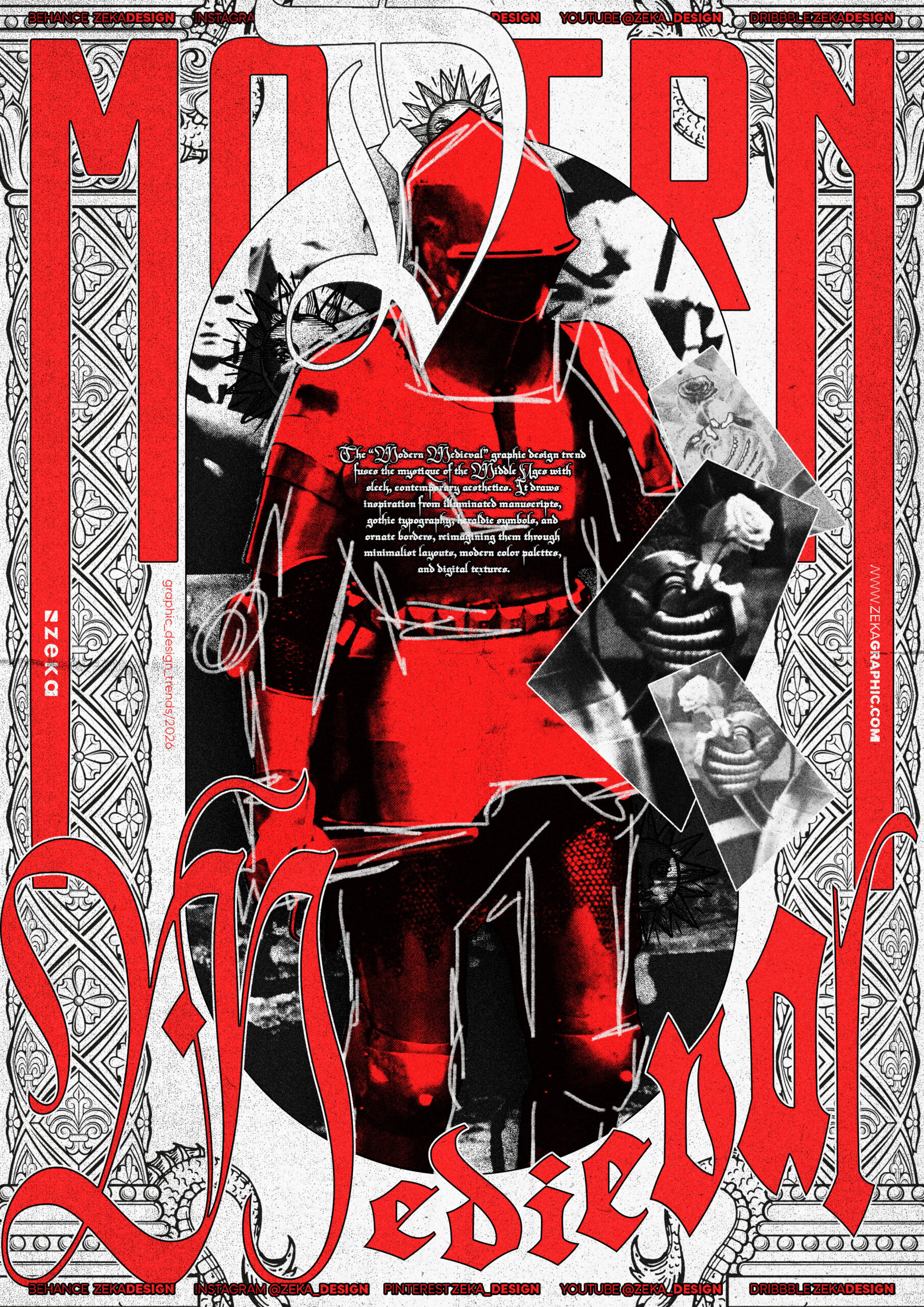
Future Medieval is one of 2026’s most cinematic design movements — merging medieval romanticism with sleek futurism. Designers are rediscovering gothic typography, illuminated borders, and heraldic symbols, blending them with neon gradients, holographic metals, and minimalist grids. The result feels both ancient and ultramodern, like a Renaissance illuminated through the lens of cyberpunk.
Its rise is driven by fantasy culture, gaming aesthetics, and fashion’s dark romantic revival, but its emotional appeal lies in its depth. In a world obsessed with speed and convenience, Future Medieval offers ritual, craftsmanship, and drama.
Key elements include:
Use this trend for luxury branding, album covers, book design, or fashion campaigns that need a touch of mystique. The key is balance: pair old-world symbolism with futuristic restraint to create visuals that feel timelessly new.
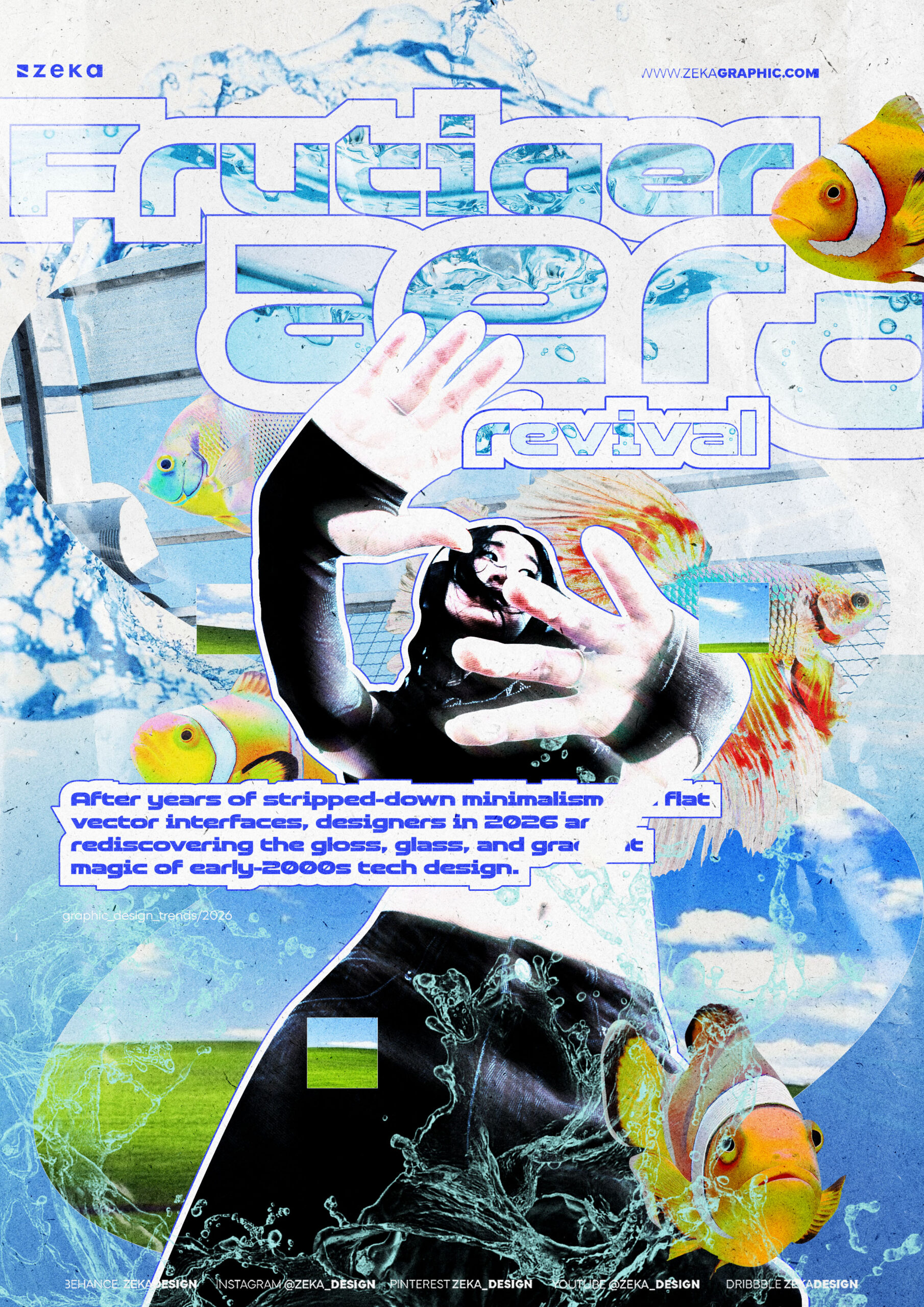
The Frutiger Aero Revival is ushering in a wave of tech nostalgia that feels refreshingly emotional in our hyper-flat world. After years of stripped-down minimalism and flat vector interfaces, designers in 2026 are rediscovering the gloss, glass, and gradient magic of early-2000s tech design. Think shiny surfaces, luminous blues and greens, reflective icons, and 3D bubbles reminiscent of Windows XP, MSN, and early Apple dashboards.
Frutiger Aero represents the Y2K aesthetic’s mature evolution — less chaotic, more sleekly nostalgic. It channels the optimism of the early digital era, when technology felt exciting and human, rather than invisible or intimidating. Designers are embracing skeuomorphic realism once again — transparent layers, soft shadows, and tactile lighting effects that make screens feel alive.
Common visual features:
Expect to see the Frutiger Aero trend dominate tech rebrands, fintech startups, and UI/UX design systems seeking warmth and nostalgia within futuristic interfaces. Used smartly, this aesthetic bridges emotion and innovation — bringing back the joy of digital tactility.
Frutiger Aero Revival Graphic Design Inspiration in Pinterest
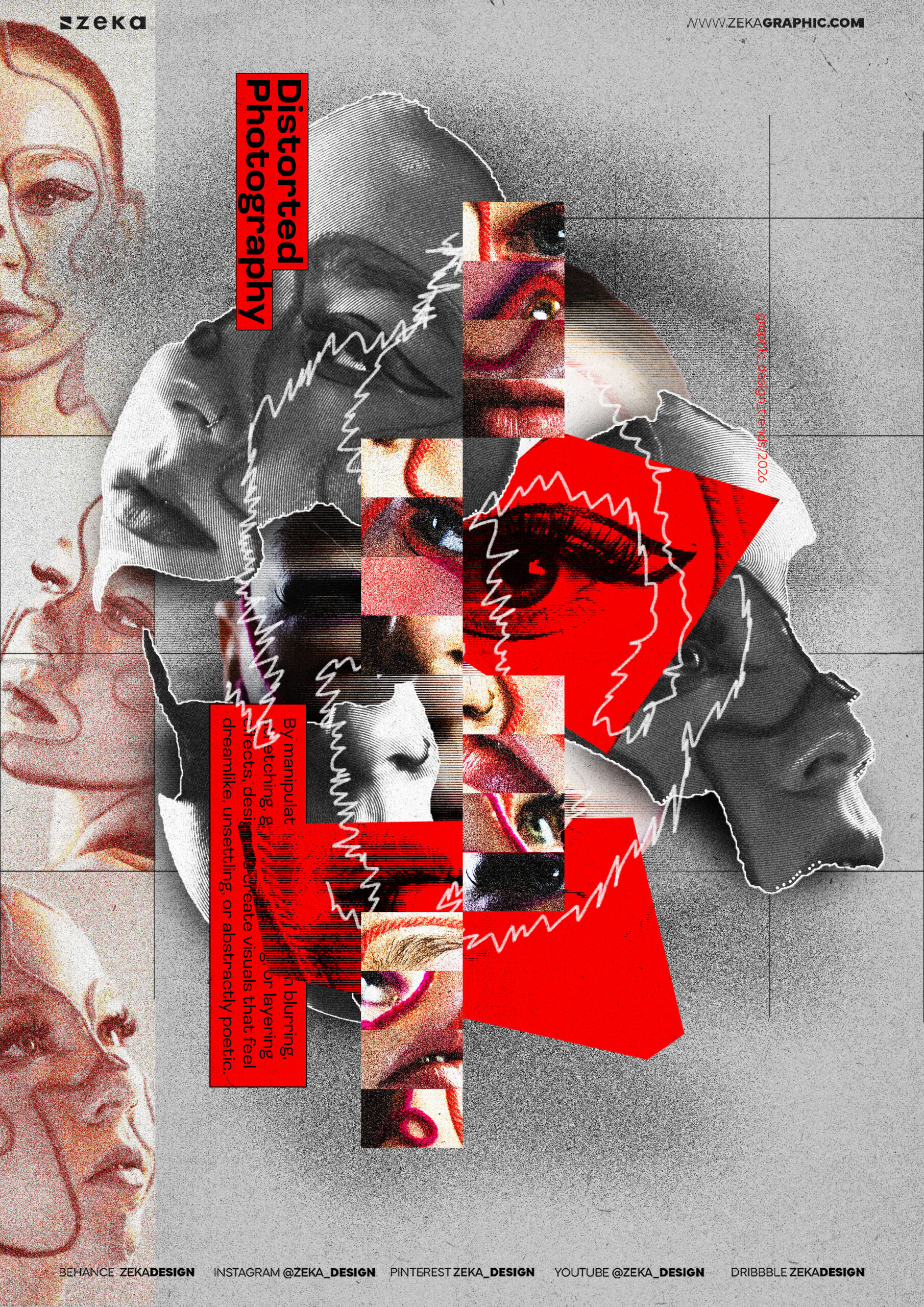
In 2026, distortion is no longer an error — it’s a language. Distorted Photography transforms blur, glitch, and visual interference into powerful emotional storytelling tools. Designers are using motion smears, pixel drifts, reflection overlays, and warped exposures to express instability, memory, and perception. It’s the perfect metaphor for our digital era — where identity, reality, and technology constantly blur.
This trend has roots in experimental photography and glitch art from the 2010s but now thrives thanks to AI photo tools that allow unprecedented creative manipulation. Rather than chasing clarity, designers are leaning into ambiguity — transforming technical “mistakes” into poetic, cinematic beauty.
You’ll recognize the trend through:
The distorted aesthetic adds depth and mystery to album art, editorial layouts, motion posters, and digital fashion campaigns. It suggests emotion, memory, and transformation — perfect for brands and artists who want to appear introspective, bold, or avant-garde.
Distorted Photography Graphic Design Inspiration in Pinterest
Advertisment
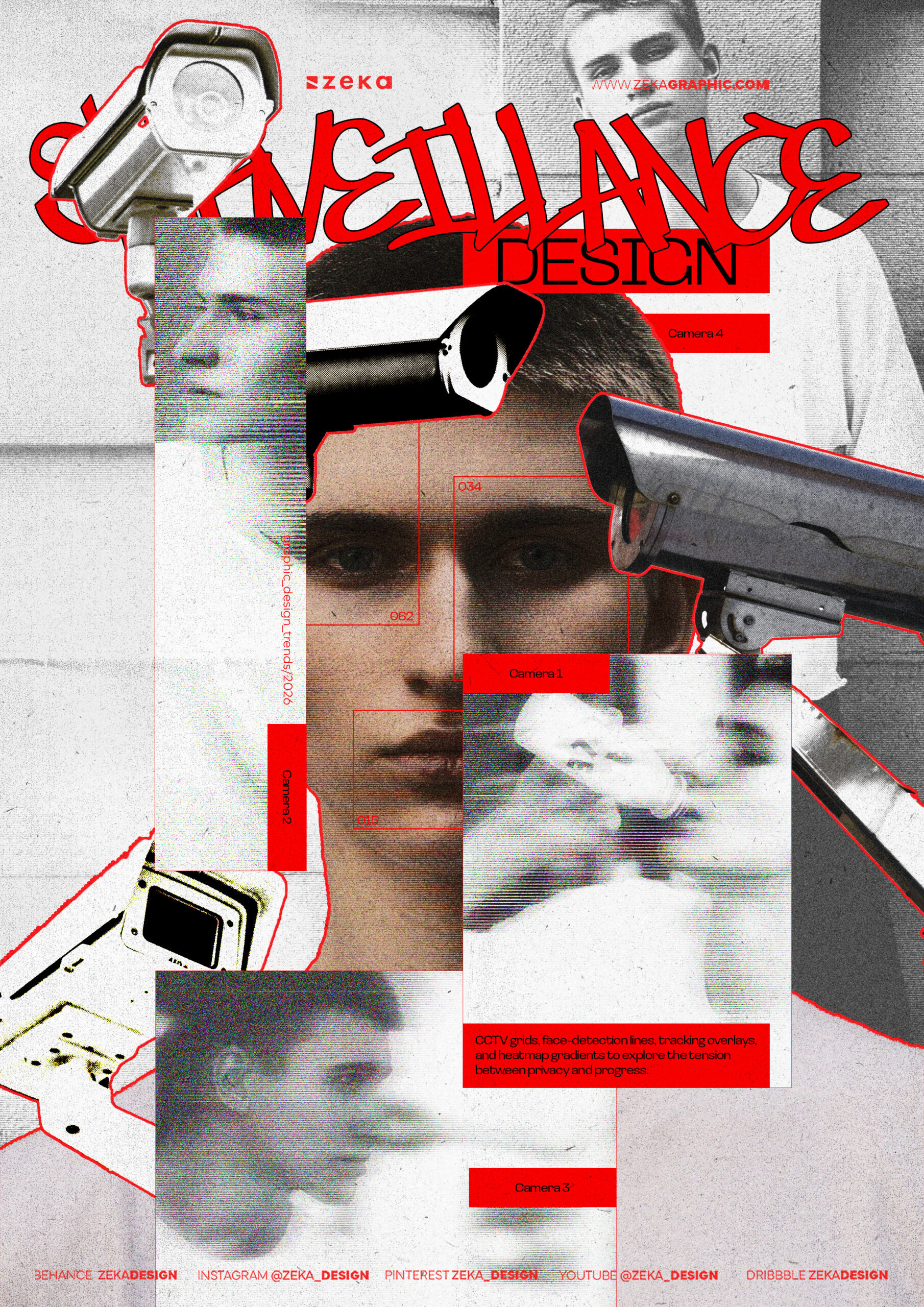
The Surveillance Design trend mirrors our era of data anxiety — turning observation itself into visual art. In 2026, this aesthetic uses CCTV grids, face-detection lines, tracking overlays, and heatmap gradients to explore the tension between privacy and progress. It’s both haunting and mesmerizing — a direct reflection of life inside the algorithm.
Designers are inspired by cyberpunk cinema, predictive AI interfaces, and biometric mapping, translating those ideas into post-dystopian UI visuals. The aesthetic fuses clean precision with an underlying unease — glowing infrared palettes, flickering grids, and semi-transparent UI layers that simulate constant observation.
Core characteristics:
You’ll find this trend emerging in editorial design, music visuals, gaming, and conceptual branding — particularly for projects that address technology’s psychological impact. It’s a visual commentary as much as a style: design as digital resistance.
Advertisment
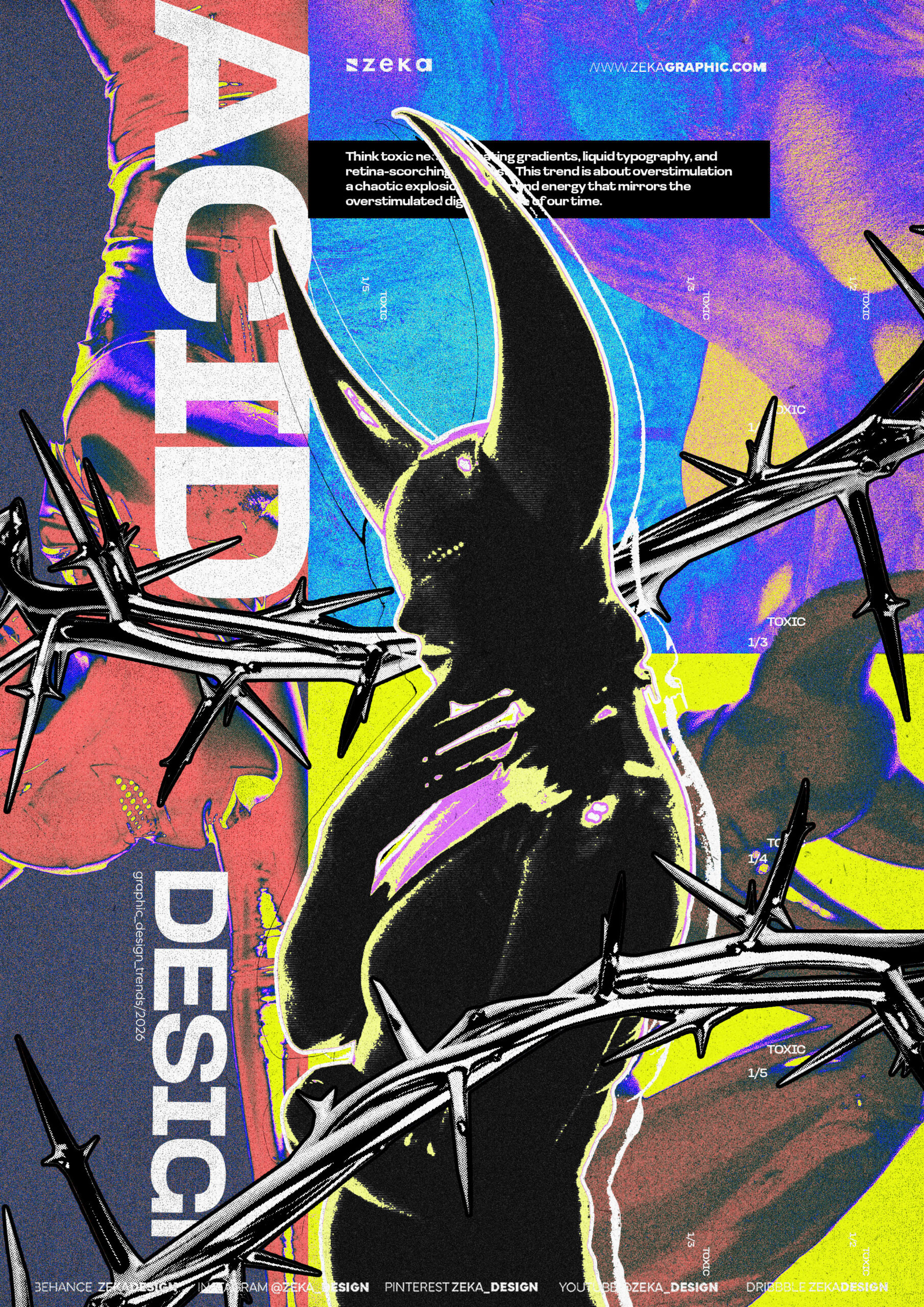
The Acid Graphic Design movement of 2026 cranks visual intensity up to 11. Think toxic neons, vibrating gradients, liquid typography, and retina-scorching contrast. This trend is about overstimulation — a chaotic explosion of color and energy that mirrors the overstimulated digital psyche of our time.
Rooted in early internet rave visuals and late-’90s club posters, Acid Design thrives on psychedelic nostalgia and digital saturation. It’s loud, fast, and intentionally overwhelming — an aesthetic that grabs attention before the algorithm scrolls past.
Recognizable traits include:
Use this style sparingly — it’s best for music, youth fashion, and event branding that thrives on intensity. The key to success with Acid Design is balance: let chaos dominate one layer while keeping other elements legible and structured.
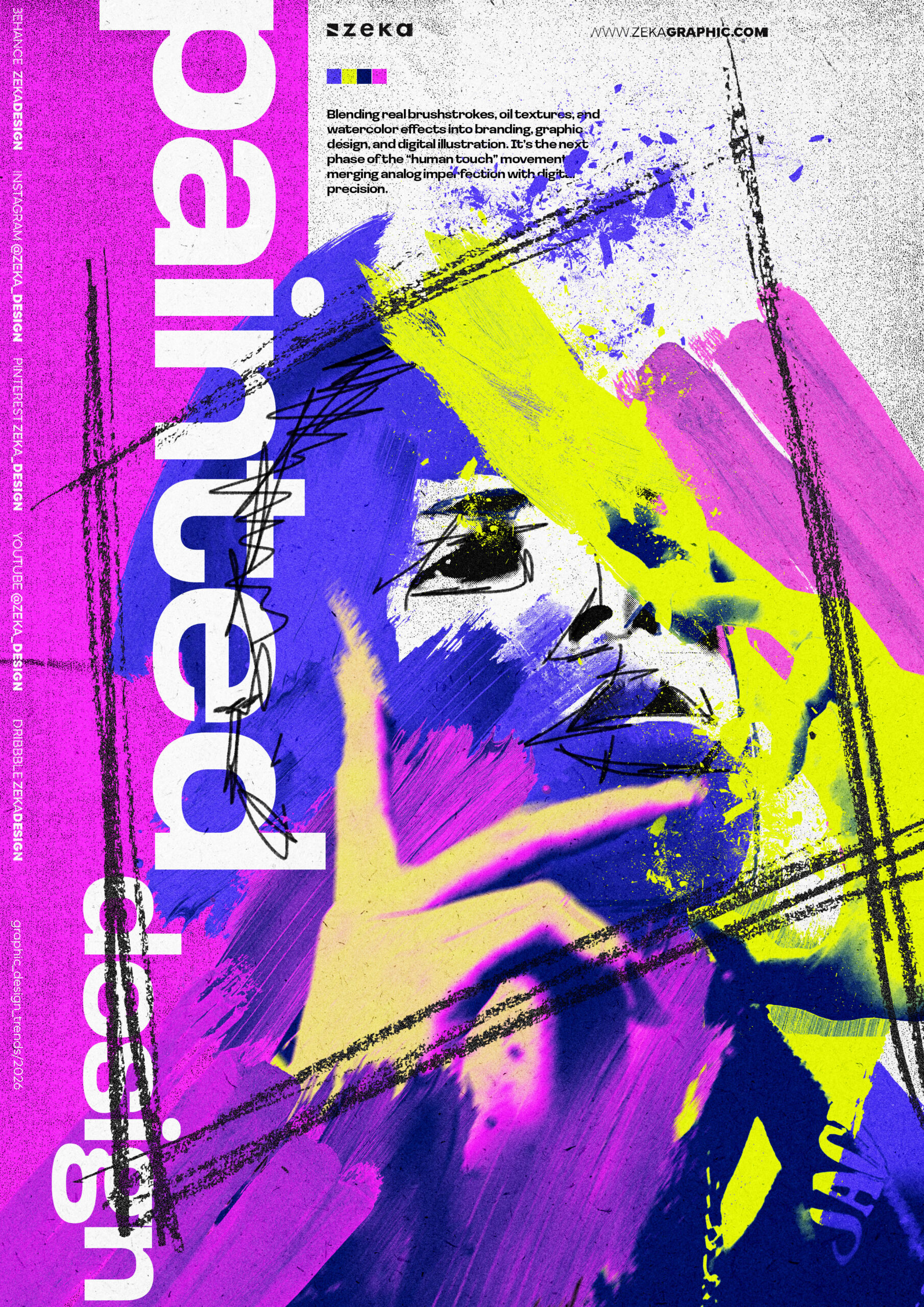
Painted Design brings emotion and craftsmanship back into the digital era. In 2026, artists are blending real brushstrokes, oil textures, and watercolor effects into branding, graphic design, and digital illustration. It’s the next phase of the “human touch” movement — merging analog imperfection with digital precision.
This aesthetic resonates because it feels alive, expressive, and deeply human as it balances technology’s sharp edges with the soul of traditional art. Thanks to advanced brushes in tools like Procreate, Photoshop, and AI painting generators, designers can now achieve hyper-realistic texture blending without losing spontaneity.
Common features:
Painted Design thrives in editorial layouts, branding, and packaging that seek authenticity and artistry. It’s also becoming a major identity cue for independent creators and cultural institutions who want to communicate craftsmanship in a digital-first world.
Painted Graphic Design Inspiration Pinterest
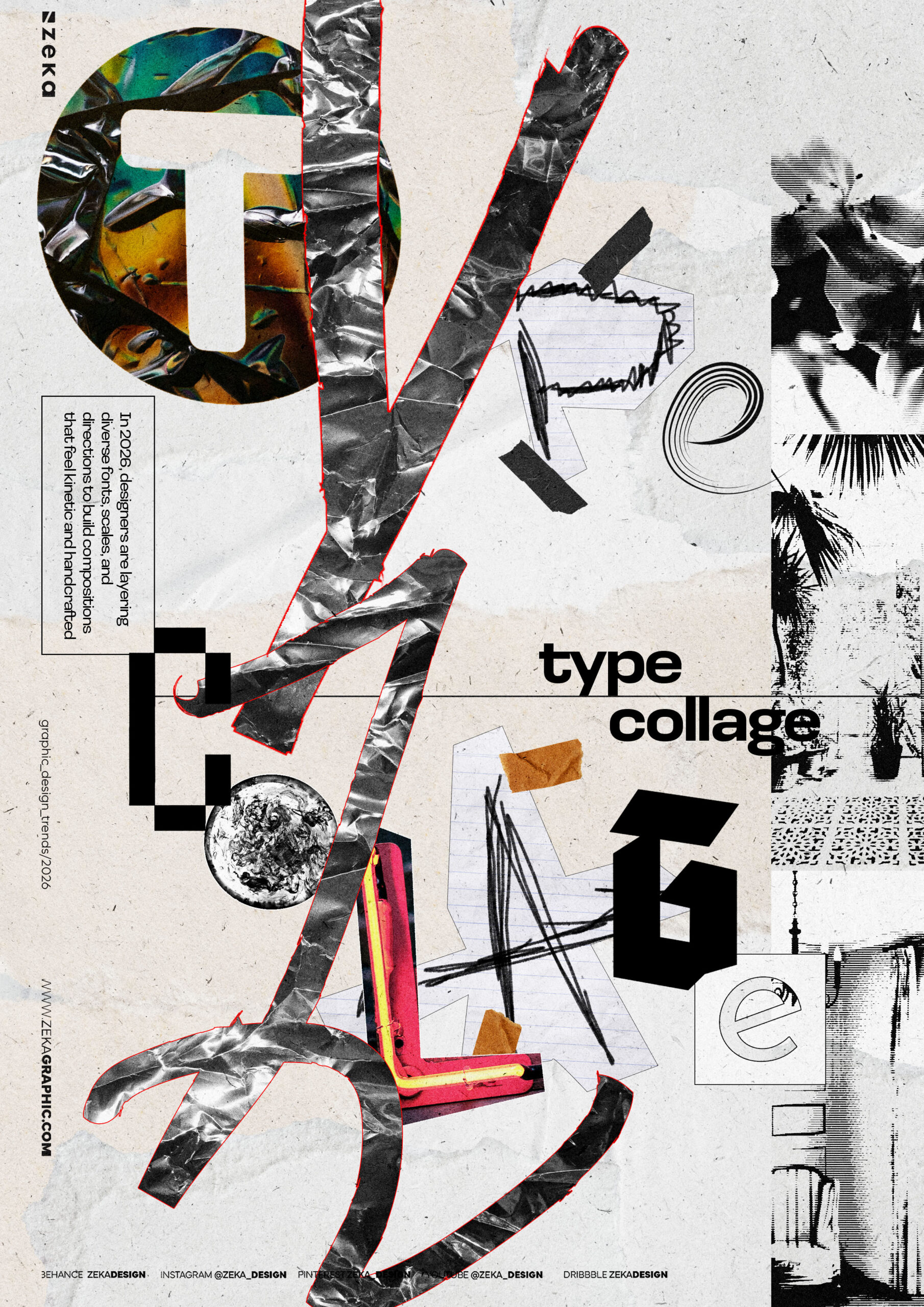
Typography Collage transforms type from a communication tool into a visual medium in itself. In 2026, designers are layering diverse fonts, scales, and directions to build compositions that feel kinetic and handcrafted. It’s a fusion of punk zine energy, Dadaist composition, and digital experimentation — where letters become textures, not just words.
Driven by anti-AI sentiment and a resurgence of experimental publishing, Typography Collage celebrates expression over order. Designers freely mix serif and sans-serif, uppercase and lowercase, Latin and non-Latin characters — turning typography into abstract art.
Visual identifiers:
This approach shines in editorial covers, poster design, and fashion branding where bold personality trumps clarity. For designers, it’s a space to reclaim authorship and treat typography as an expressive, living material — not a preset grid.
Advertisment
The future of graphic design in 2026 is a thrilling dialogue between technology, nostalgia, and rebellion. From the handcrafted soul of Naive Design to the cyber-romanticism of Future Medieval, these trends reveal a creative world unafraid to mix extremes — raw imperfection with digital precision, emotion with data, chaos with control.
For designers, this is more than a list of styles — it’s a call to exploration. The real challenge isn’t to follow trends but to reinterpret them through your personal lens, infusing your voice into the visual currents shaping our collective imagination.
So, experiment. Distort. Paint. Layer. Let your work question and reimagine what “modern” means. Because in 2026, the most powerful designs won’t just follow trends — they’ll define the next visual language of the future.
Pin it for later!
If you found this post useful you might like to read these post about Graphic Design Inspiration.
Advertisment
Written by
If you like this post share it on your social media!
Advertisment
Want to make your Business Grow with Creative design?
Advertisment
Advertisment