
Branding strategy vs marketing strategy is one of those business debates that creates confusion long before it creates clarity. One team handles “the brand stuff” and “the marketing stuff” without anyone defining where one ends and the other begins.
That confusion is why campaigns launch without clear positioning and brand refreshes happen with no connection to what is actually driving revenue. And this is what we will fix here. You will see 8 specific differences between the two and what each strategy actually produces, so you can start using branding and identity for the job they are meant to do.
Advertisment
Here are 8 major distinctions between brand strategy vs marketing strategy, explained in detail throughout the rest of the article.
Branding Strategy | Marketing Strategy | |
Primary Goal | Build identity and brand reputation | Drive acquisition and revenue |
Timeframe | Long-term (years) | Campaign-based (weeks to months) |
Audience Relationship | Emotional connection and customer loyalty | Transactional reach and conversion |
Key Output | – Brand guidelines – Voice – Positioning | – Campaigns – Content marketing – Ad creatives |
Metrics | – Awareness – Sentiment – Recall | – Leads – Conversions – ROAS |
Who Owns It | Brand team / Founder | Marketing team / CMO |
Budget Behavior | Consistent annual investment | Fluctuates by campaign and quarter |
Adaptability | Changes rarely and deliberately | Shifts with every new channel or marketing trend |
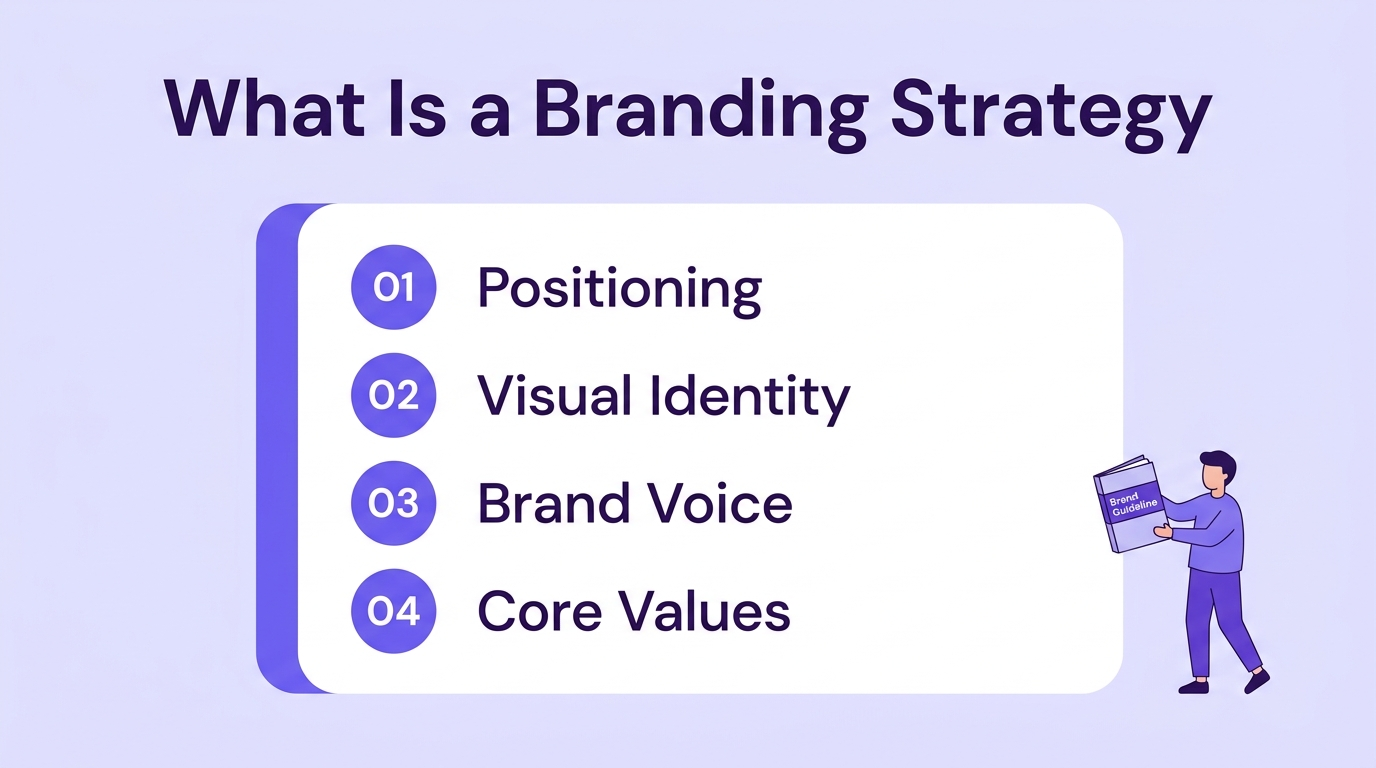
A branding strategy defines who your company is before anyone interacts with your product. It covers:
– Your positioning – how you want to be perceived relative to competitors
– Your visual identity and your brand story
– The brand values you communicate at every touchpoint
The output is a brand style guide that gives every team a consistent reference point. A long-term brand strategy doesn’t change when a campaign launches. It is the foundation that campaigns build on top of.
Advertisment
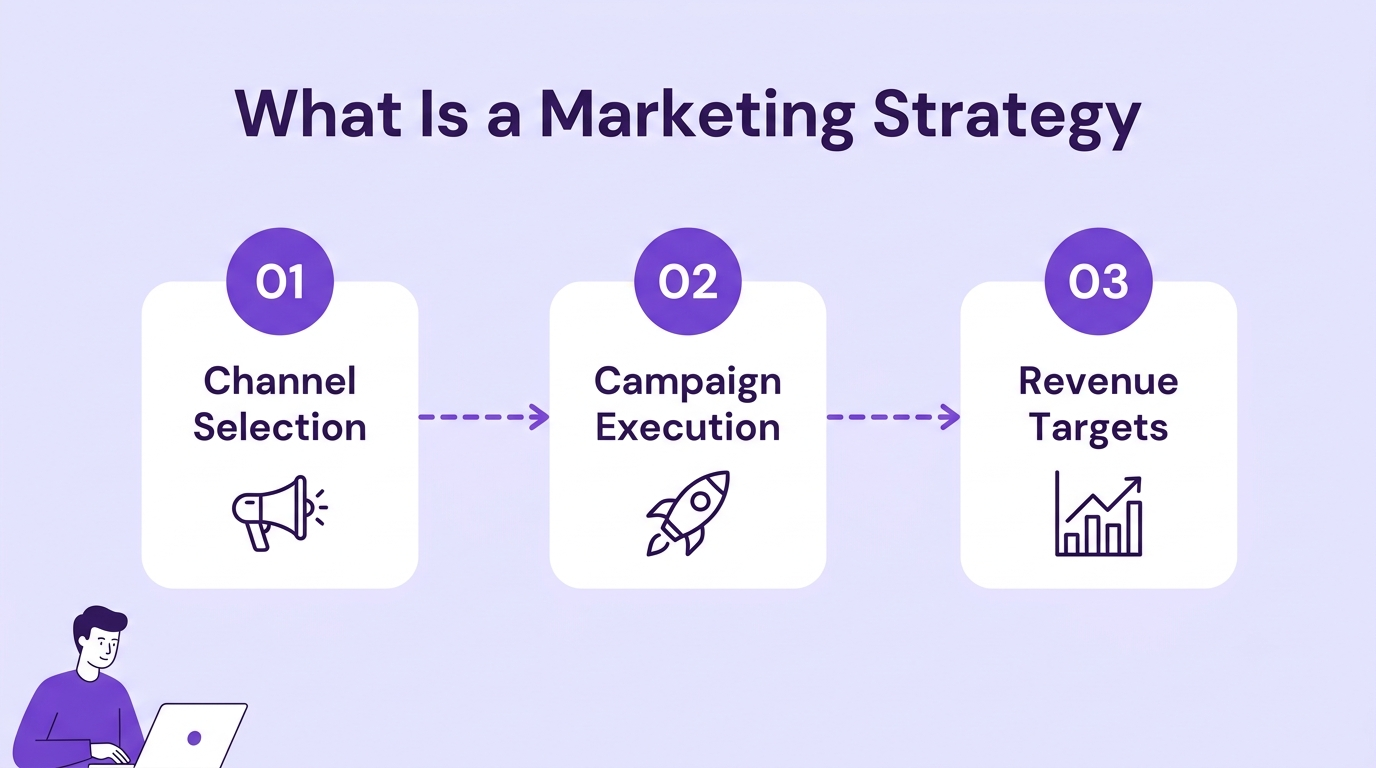
A marketing strategy focuses on how you reach your audience and convert them into customers. It covers:
– Channel selection
– Content production
– Ad spend allocation
The campaigns you run to generate leads or sales are the visible output. The output is a plan tied to revenue targets with a defined timeline. Marketing strategy changes frequently. One new competitor or an algorithm update is enough to change your entire plan in just a few months.
The table above gives you an overview of marketing strategy vs brand strategy. Now we will go deeper into each difference.
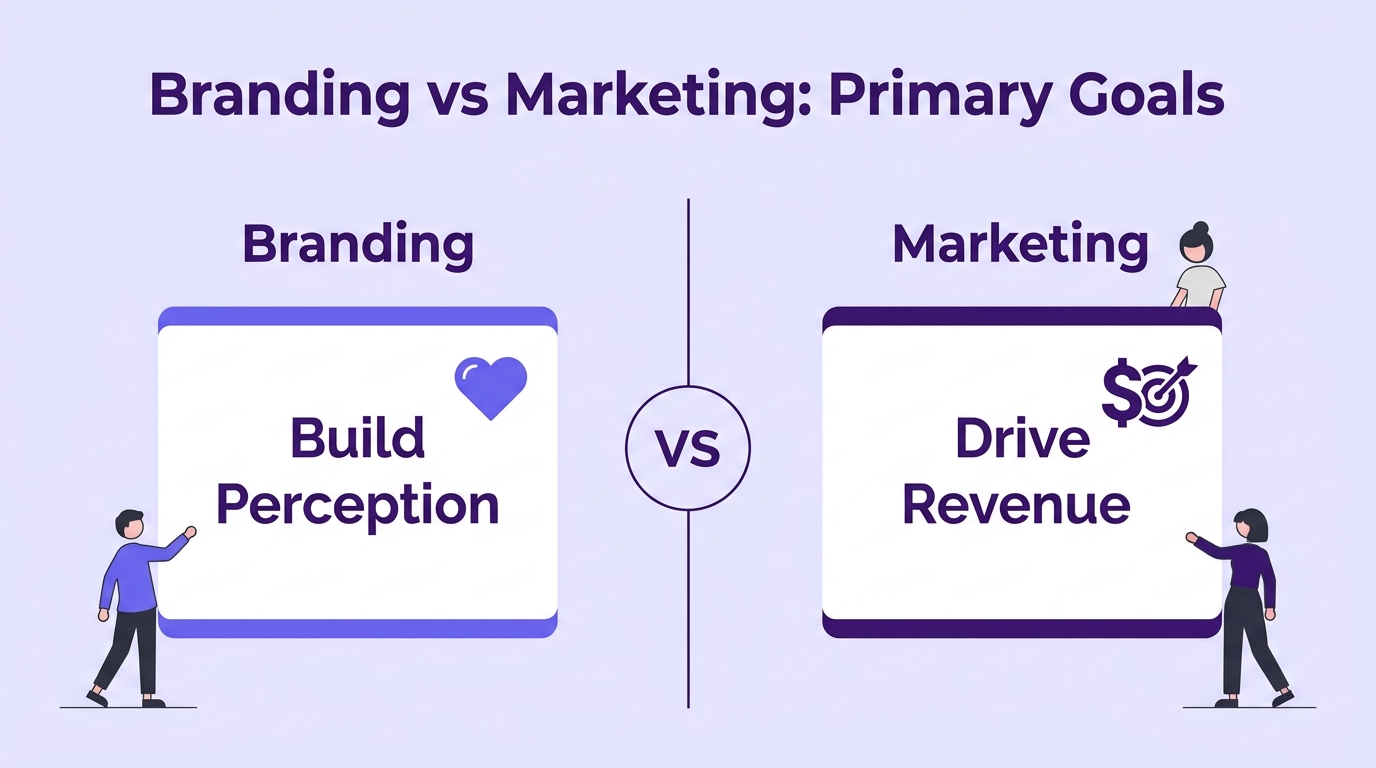
The goal is to build a consistent brand image that exists independently of any single campaign. When someone hears your company name, the branding strategy determines what they think and how they feel about it – before they have ever clicked an ad or visited a landing page. A strong brand strategy means people already trust you when the marketing reaches them.
The goal is to drive a specific action. That could be a purchase or a signup. It could be a demo booking, too. Whatever the action is, marketing efforts are measured by whether the audience did it. If branding sets your perception, marketing brings them in and gets them to convert.
Brand building operates on a timeline measured in years. You won’t see the impact of a new positioning statement in a weekly report. It compounds slowly… through consistent visual identity and repeated brand messaging. Trust signals accumulate over time alongside both.
Consistent brand presentation can increase revenue by up to 23%. But that consistency needs time before people actually start noticing it.
Marketing results show up in days or weeks. A paid Google Ads or digital marketing campaign can generate clicks within hours of going live. An email marketing sequence can move leads through a funnel in under two weeks. The feedback cycle is tight and measurable – which is why marketing usually gets prioritized over branding. The results are visible immediately.
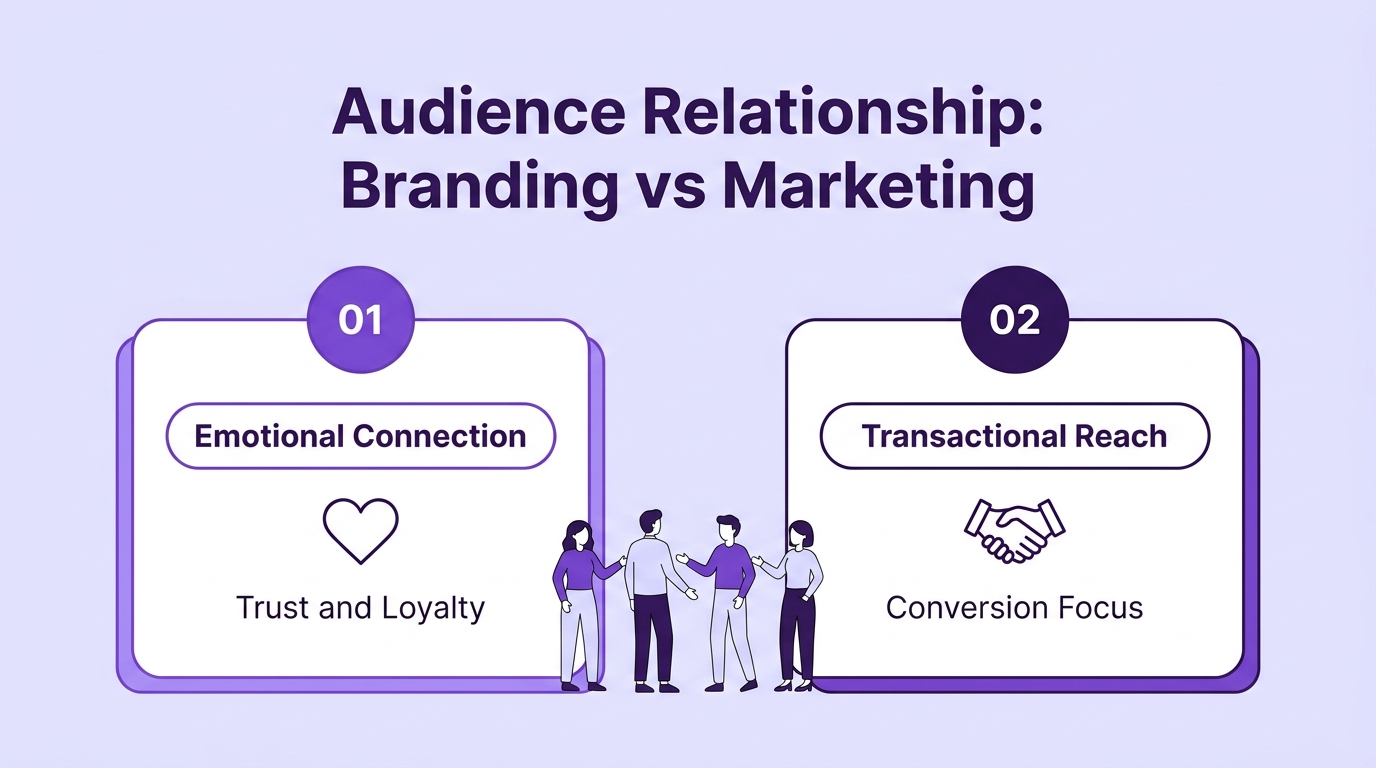
Branding builds a relationship where the audience identifies with what your company represents. That emotional layer is what makes someone choose your product over a cheaper alternative – not because of a feature comparison, but because they trust what the brand stands for. This connection doesn’t come from one interaction. It builds across every touchpoint over time.
Marketing operates on reach and relevance. The relationship is transactional: you show an offer to the right person at the right time, and they either act on it or they don’t. Marketing brings the audience to the door. What they feel about your brand when they walk through it – that is the branding strategy’s job.
The deliverables are reference documents: a brand identity system and a messaging framework. A tone of voice guide and positioning statements round out the set. These don’t generate revenue directly. They exist so that every piece of marketing produced by any team member sounds and looks like it came from the same company.
The deliverables are campaign assets: ad creatives and landing pages. Email sequences and social media marketing are part of this, too. Each one is designed to perform against a specific metric. Marketing deliverables have a shelf life – they launch and run for a set period, get measured, then get replaced by the next round.
Brand success is measured through surveys and sentiment analysis. Recall studies add another layer. Can your target audience name your brand unprompted when asked about your category? Do they associate the right attributes with your company? These metrics are slow to move and hard to tie directly to a revenue number or business growth.
59% of consumers prefer to buy from brands they already recognize – but proving that your strategy caused that brand recognition takes patience.
Marketing success is measured through conversion data. Click-through rates and cost per lead are two of the most common. Return on ad spend and pipeline contribution round out the picture – all tied to specific campaigns with defined date ranges. These numbers show in a dashboard the same week the campaign runs. The feedback is immediate, and the accountability is direct.
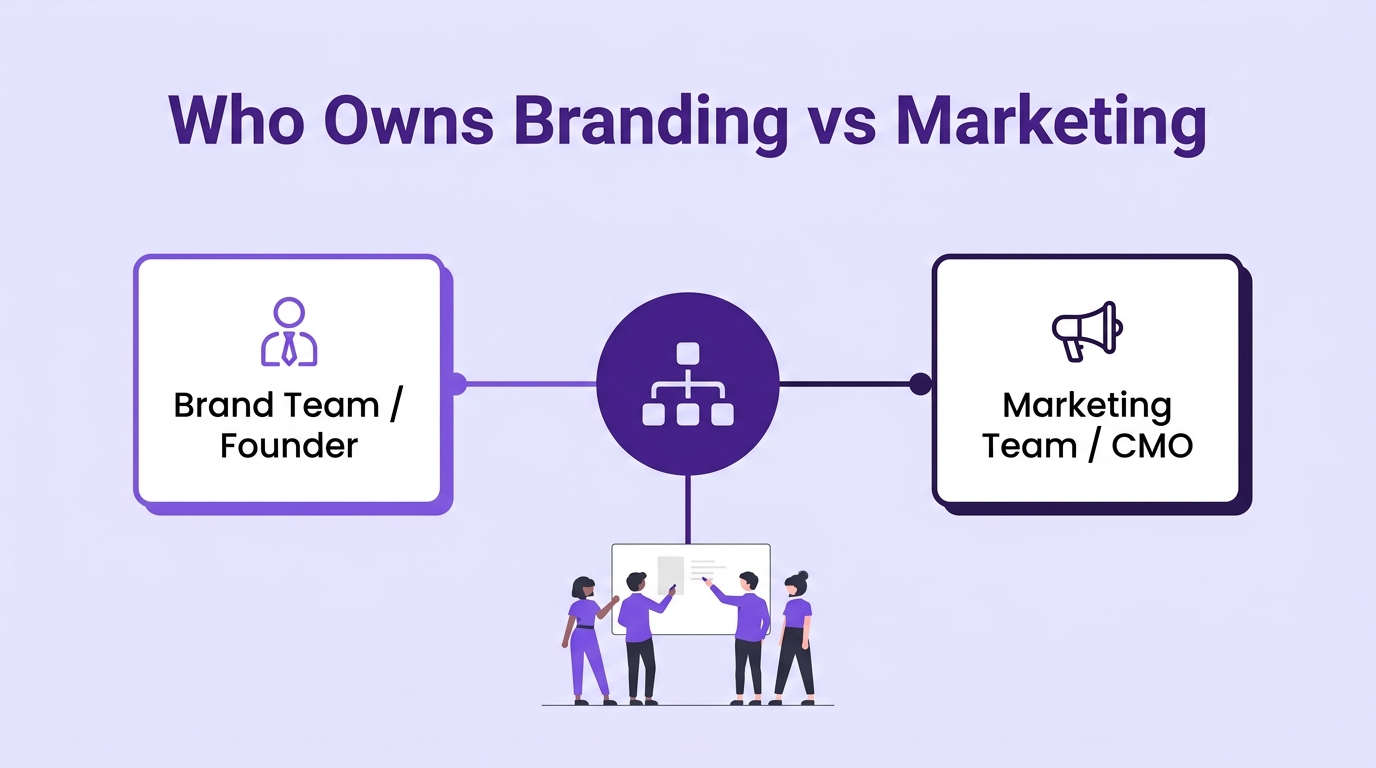
In early-stage companies, the founder owns the brand. They set the tone and approve the visual direction. They also decide what the company stands for at a level that no one else in the organization is positioned to define.
As the company scales, a brand manager or creative director takes over – but the founder’s voice usually stays embedded in the positioning for years. Brand decisions are slow and centralized because inconsistency is expensive to fix.
The marketing team or CMO owns this. They control channel selection and budget distribution. Campaign execution rolls up under them, too.
Marketing decisions happen faster because they are tied to performance cycles – weekly dashboards and monthly reports linked to quarterly targets. Unlike branding, marketing ownership is distributed across specialists who each run a piece of the overall plan.
Brand budgets stay relatively flat across the year. The work is ongoing – maintaining visual consistency and updating guidelines as the company evolves. Brand assets that every team draws from need ongoing production.
Cutting the brand budget in Q3 to fund a Q4 campaign is a common decision, and it is almost always a mistake. The effects just don’t show up until the following year when the brand image starts drifting.
Marketing budgets spike and dip with business cycles. A product launch doubles the spend for two months. A slow season cuts it by half. Seasonal promotions and new market entries shift it. Competitive responses change the allocation quarter to quarter.
This volatility is normal and expected – it is how marketing operates. The problem starts when the brand budget follows the same pattern.
A branding strategy changes when something fundamental shifts – a rebrand or entry into a new market. Outside of those events, the strategy should stay steady for years. Changing your brand positioning every six months means you never had a position to begin with. The whole point is consistency over time.
Marketing strategy should change as often as the data tells it to. A new platform emerges, and your audience is already on it. A campaign underperforms, and you redirect the budget. A competitor launches a feature that changes the conversation. Good marketing teams treat this business strategy as an evolving plan that gets revised monthly based on what is working.
Each of these successful businesses operates in a different market with different audiences. What connects them is treating branding strategy vs marketing strategy as two coordinated efforts – and the results that followed.
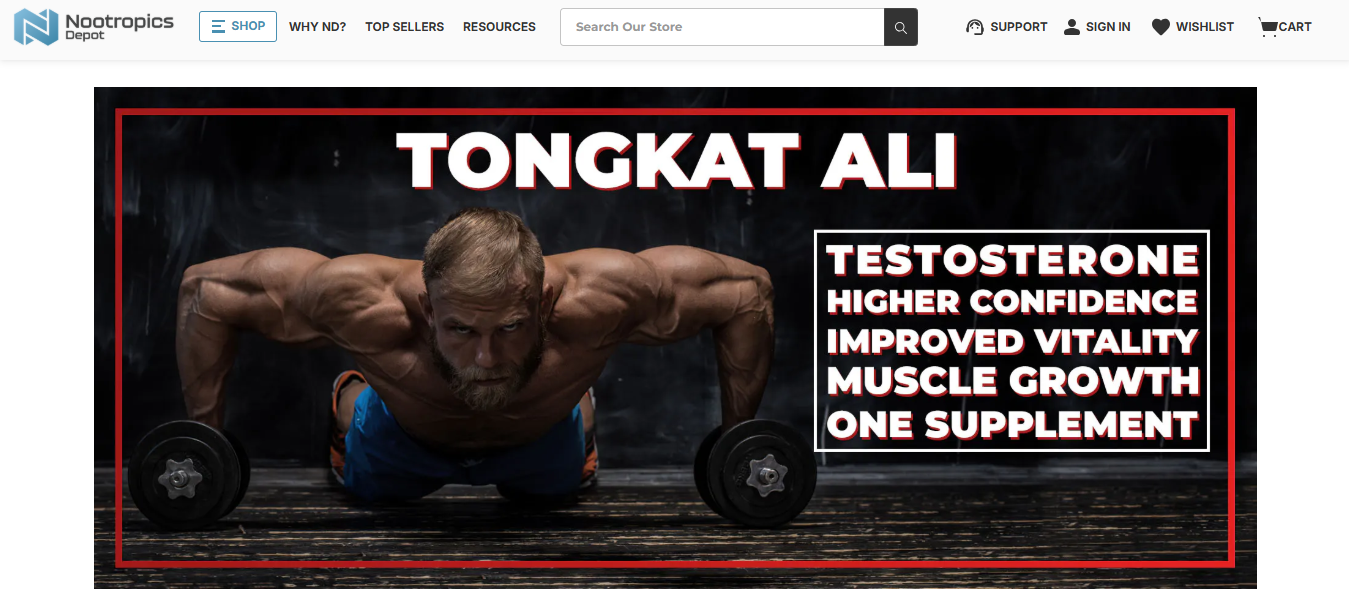
Tongkat ali product line by Nootropics Depot competes in a market flooded with brands making identical claims. Their branding strategy centered on one specific differentiator: ISO-accredited in-house laboratory testing with third-party verification.
Instead of competing on price or dosage like every other supplement brand, they built their entire brand identity around the statement that most competitors’ tongkat ali products contain zero eurycomanone – the active compound buyers are actually paying for.
Their marketing plan then carried that brand position across every touchpoint. The tongkat ali category page functions as an educational buying guide explaining the difference between 2% and 10% eurycomanone extractions, with six pre-built supplement stacks for specific goals like testosterone support and post-workout recovery.
The brand voice on that page is deliberately irreverent and conversational (“Kids are short and stupid, so that should be easy for you”), which contrasts sharply with the serious lab-testing claims. That combination created a brand personality that their marketing campaigns could amplify rather than reinvent with every new product launch.
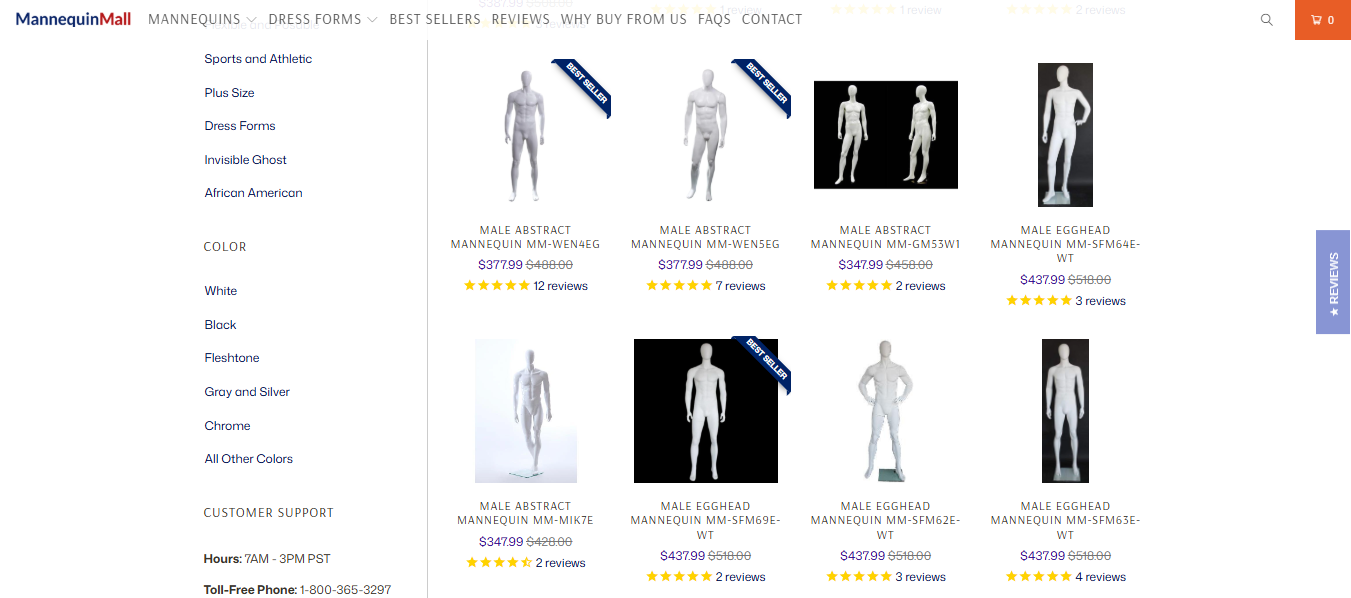
Mannequin Mall’s male mannequins fall into a niche B2B category where most competitors operate as faceless wholesale catalogs with no strong brand identity.
Their branding strategy focused on two pillars: “Lowest Prices” and “Satisfaction Guaranteed” – simple positioning, but in a market where no one else was making any positioning claim at all, it gave them a business identity that every marketing asset could reference.
Their marketing execution aligned directly. The male mannequin collection page organizes 32+ products across abstract and athletic categories, plus sport-specific styles with pricing visible on every card. Promotional banners offer coupon codes (10% off dress forms using code “Clear”) and email capture runs through Klaviyo.
Product data is structured for search engines down to the color variant level. Each of those marketing decisions – the coupon and the email flow, plus the SEO-structured product data – reinforces the “affordable expert” brand position rather than working against it.
In a category where competitors rely on trade show relationships, Mannequin Mall built discoverability through branding and marketing, working from the same brief.
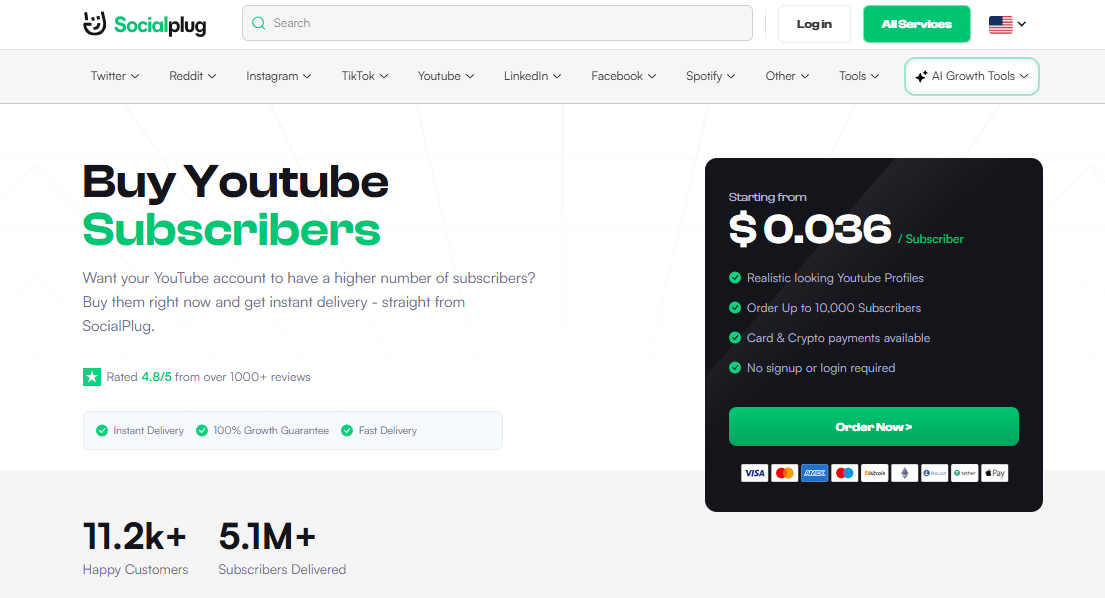
SocialPlug’s YouTube growth solution is a service category where buyer skepticism is the default. Most competitors in this space operate with minimal branding: a pricing page and a payment form. Not much else.
SocialPlug’s branding strategy addressed the trust deficit directly by building a brand identity around transparency and scale metrics. Their YouTube subscribers page leads with a 4.8/5 rating from over 1,000 reviews, displays “11.2K+ Happy Customers” and “5.1M+ Subscribers Delivered,” and integrates Trustpilot verification directly into the purchase flow.
Their marketing strategy carried that trust-first brand position into the conversion copy itself. Instead of leading with pricing, the page opens with benefit-focused messaging (“Show Your Success,” “Build Trust & Confidence”) that reframes the purchase as a growth investment rather than an engagement transaction.
The pricing structure starts at $0.036 per subscriber with a “100% Growth Guarantee” – language that aligns with the brand’s credibility positioning rather than competing purely on cost. Every marketing asset on the page is a direct expression of the branding strategy.
The marketing didn’t build trust. The brand did. The marketing made the trust visible at the moment of purchase.

Sun City Hilton Head real estate agent John is a well-known name in this South Carolina retirement community. In real estate, most agents brand themselves with a headshot and a tagline. This site built a personal brand around a completely different asset: deep community-level data.
The Sun City page includes population density analytics and age distribution breakdowns. Educational attainment data and employment type classifications appear alongside them – the kind of demographic detail that shows genuine neighborhood expertise rather than just listing access.
The marketing strategy used that data-authority brand to capture a very specific search audience: retirement-age buyers researching communities before contacting an agent.
Instead of running generic “homes for sale” campaigns, the marketing focused on neighborhood-level content that matched the long-tail queries these buyers actually type – comparative amenity information and household composition stats for the surrounding area.
The personal brand said, “I know this community better than anyone.” That clear marketing strategy made the claim findable at the exact moment someone was deciding where to retire. The brand created the authority. The marketing put it in front of the right people.
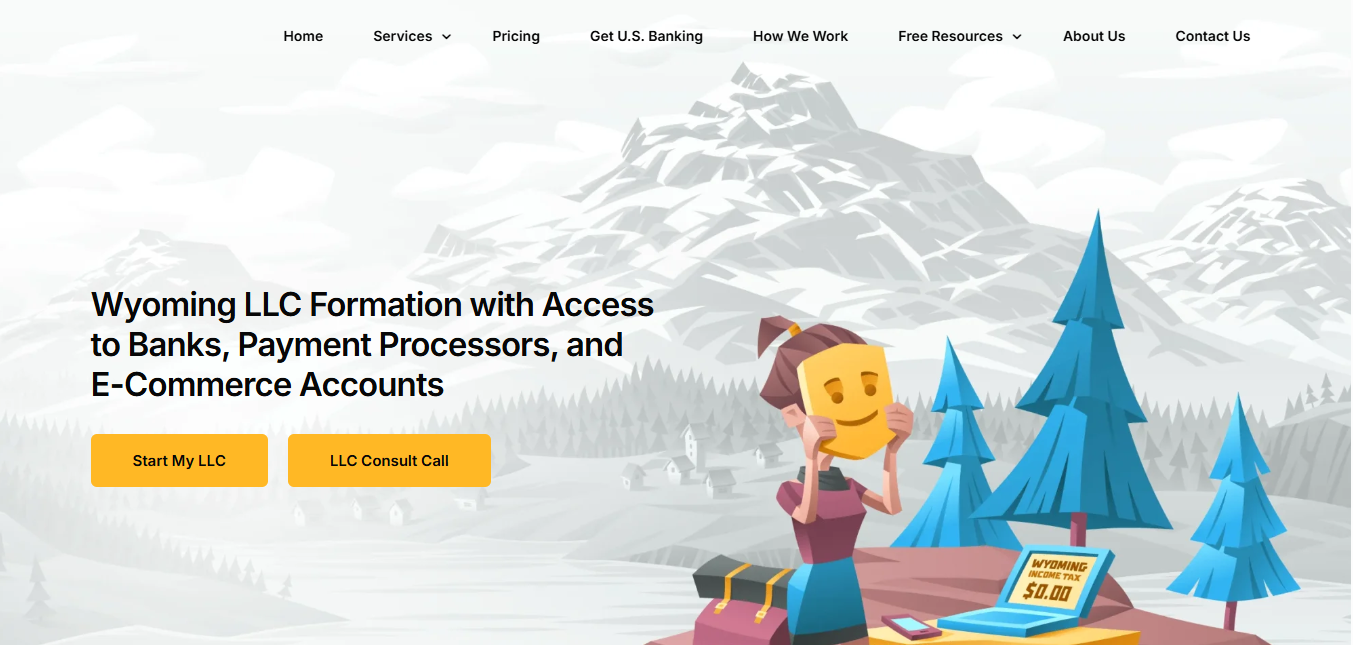
Start in Wyoming’s LLC formation services operate in a market dominated by self-service platforms that compete primarily on price and speed. Their branding strategy took the opposite position: every formation includes attorney involvement and an integrated U.S. banking setup.
That is the brand’s core value. Not “cheapest” or “fastest” – but “an attorney handles your filing, and your bank account opens at the same time.” Their marketing strategy was built directly on that premium positioning.
The LLC formation page emphasizes the attorney-backed process and banking integration as the headline offer. The visual identity uses a professional color palette (gold and deep purple) with the Inter typeface – clean and authoritative, matching the “legal service” positioning rather than the startup-friendly aesthetic that most formation competitors use.
Their marketing channels (SEO-optimized WordPress site, conversion-focused landing pages via Elementor, performance tracking through NitroPack and Google Tag Manager) all serve the same brand promise: this is a professional legal service, not a DIY filing tool. The brand decided who they were. The marketing tactics made that identity appear everywhere the buyer was looking.
Advertisment
The difference between branding strategy vs marketing strategy comes down to what each one protects. Branding protects perception. Marketing protects revenue. When both brand and marketing strategies work from the same brief, every campaign reinforces the brand, and every brand touchpoint makes the next campaign more effective.
I built Zeka Design as a branding and graphic design agency where brand identity is the starting point for everything that follows. My process – from logo design to full visual systems and brand guidelines – gives your marketing team and brand strategists a foundation they can execute against without wondering if they are heading the right way. Start a project with Zeka Design and grow your brand online.
Advertisment
Pin it for later!
If you found this post useful you might like to read these post about Graphic Design Inspiration.
Advertisment
If you like this post share it on your social media!
Advertisment




Want to make your Business Grow with Creative design?
Advertisment

Advertisment