Some brand promise examples become so familiar that people stop seeing them as marketing. They become little expectations that work their way into everyday life. A package arrives exactly when it should. A streaming app remembers where you left off after a long day. Nobody stops to think about the slogan behind it because the experience already did the talking.
Intrigued? Good, because you are going to like what is next. We will show you 11 inspiring brand promise examples and why they have stayed relevant for years. You will also get 5 strategies for writing a promise that will make your brand the default choice.
Advertisment
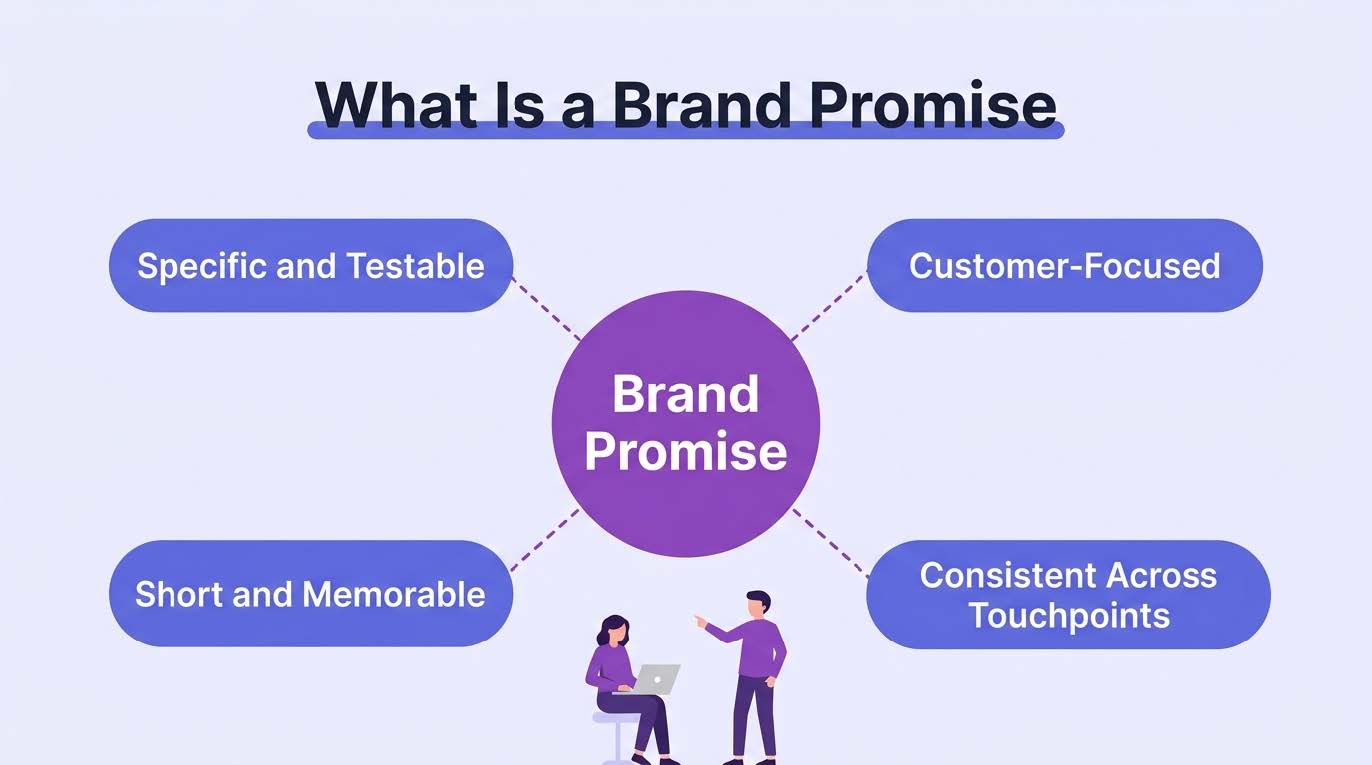
A brand promise is the commitment a company makes about what customers can expect from every interaction. It falls between a mission statement (which is internal) and a tagline (which is advertising). The promise is the specific value a customer receives and is stated clearly enough that the company can be held accountable for it.
Core Elements of an Effective Brand Promise:
The best brand promise examples come from companies of all sizes. Some are globa, successful companies. Others are niche businesses that get this one thing exactly right.
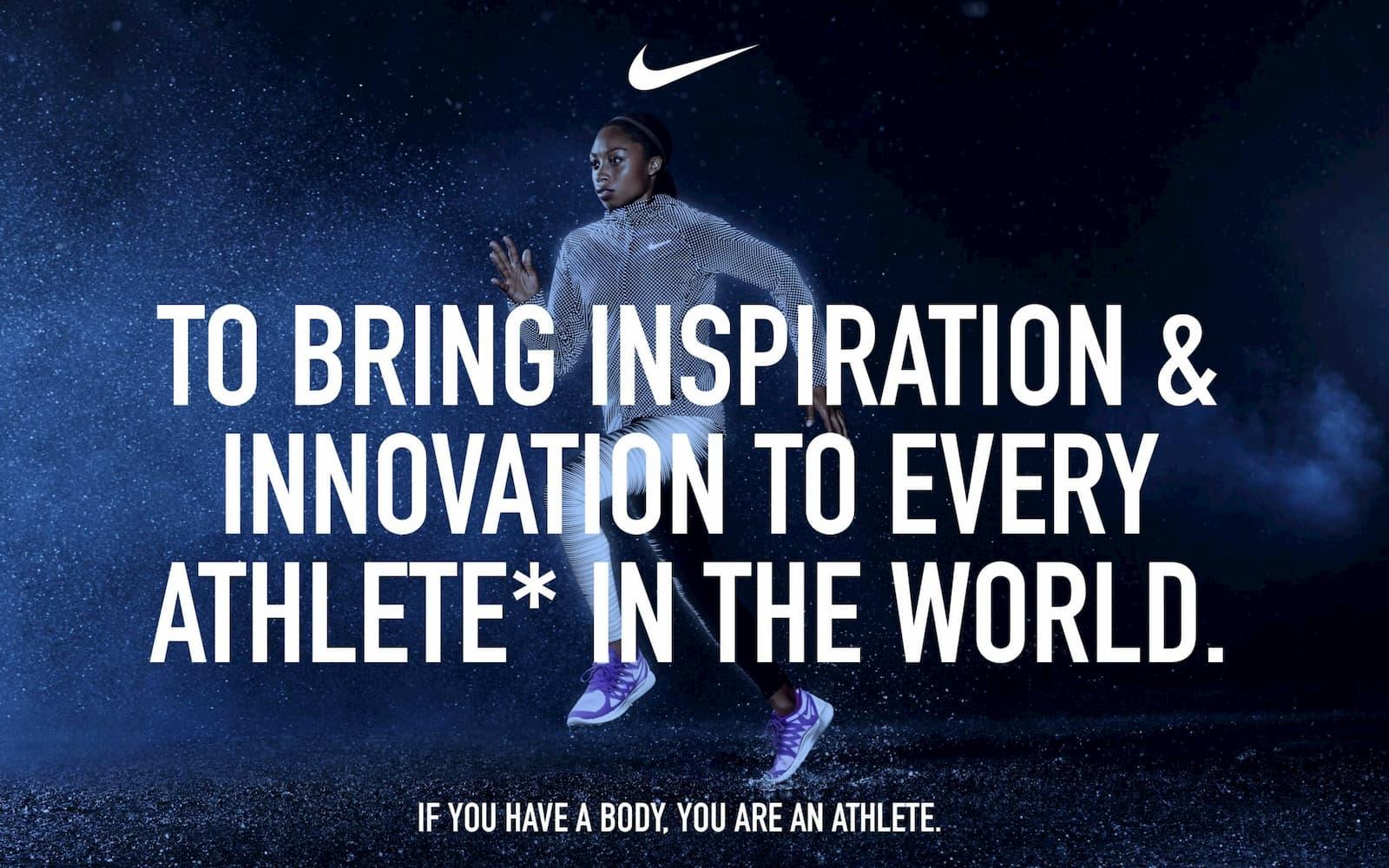
The Nike brand promise has a footnote: “If you have a body, you are an athlete.” That footnote changed everything. It turned a statement aimed at professional sports into a lifestyle brand promise for anyone who moves. And Nike backs it with constant product innovation – new foam compounds, new knit patterns, new fit technology in almost every seasonal release.
Key Takeaways:
FedEx picked the one scenario where a shipping company gets tested the hardest – overnight delivery for time-critical packages. It then built their entire brand around it. The promise is binary: the package arrived overnight, or it didn’t.
That clarity is rare. Most companies avoid this specificity because failing publicly is uncomfortable. FedEx bet that delivering on a bold brand promise would be worth more than playing it safe with a generic one. And that shaped what customers expect from the brand every time they choose it for an urgent shipment.
Key Takeaways:
Apple’s brand promise goes way beyond specs or performance. It is about who the customer becomes by using the product. Buying Apple means you value design over defaults. You choose different over standard.
Apple reinforces this in every decision – the packaging feels intentionally minimal, the interfaces are unlike anything on Windows or Android, the stores are designed as open spaces instead of traditional retail layouts. The product experience matches the promise at every step.
Key Takeaways:
Brondell sells bidets and water filtration. Two product categories most people don’t associate with brand loyalty. But Brondell framed both through a health and sustainability angle.
Their bidets reduce toilet paper use by up to 80%, and their water filters remove contaminants without single-use plastic. The promise ties a household purchase to a larger outcome – personal health and environmental impact. And this gives the company’s customers a reason to choose Brondell over others that do the same mechanical job.
Key Takeaways:
Advertisment
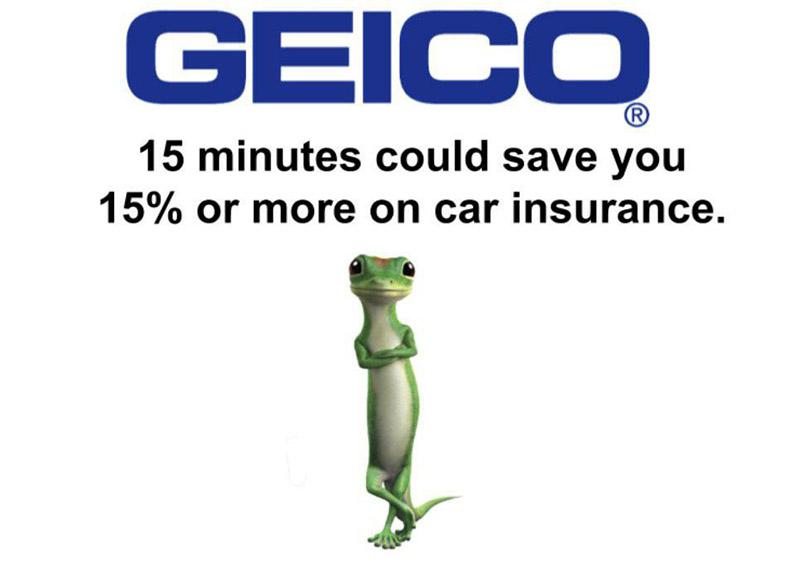
Geico put numbers in the promise. 15 minutes. 15%. Both are things a customer can verify after one interaction. That kind of specificity is almost unheard of in insurance marketing, where most competitors use generic reassurances about “protection” and “peace of mind.”
Geico ran with this single line for over 25 years with almost no change. Repeating the same promise for decades became a major part of the brand’s reputation and recognition. Consistent brand presentation can increase revenue by up to 33%, and Geico proves the power of sticking to one message over decades.
Key Takeaways:
IceCartel sells moissanite and diamond jewelry to a style-conscious audience. Their brand promise states the specific craft steps and adds a personal commitment that most jewelry brands would never put in writing.
In a market full of imported, mass-produced pieces sold under premium-sounding names, IceCartel’s well-defined brand promise points directly at the work happening in their own workshop. The “working through the night” part isn’t corporate polish. It reads like something the founder said during a late shift, and someone turned it into the brand’s position.
Key Takeaways:
Coca-Cola sells a sugary drink. The promise sells a feeling. “Refreshment” applies to the physical experience of a cold Coke on a hot day. But it also applies to the emotional experience.
Coca-Cola has spent decades associating with its brand colors and campaigns – holiday ads, shared meals, celebrations. That emotional layer of Coca-Cola’s brand promise is why someone reaches for a Coke instead of any other cold drink. The product is interchangeable. The feeling is not. And that is exactly what retains customers.
Key Takeaways:
Sewing Parts Online serves quilters and sewing enthusiasts – an audience that knows exactly what they need and doesn’t want to search five websites to find a specific bobbin case for a 2004 Singer.
The business promise makes three commitments:
– Team knows what they are talking about
– Inventory is the broadest available
– Shipping is fast
The company has been at this since 1997. That 29-year track record makes the “expert” claim credible in a way that a startup calling itself “expert” on day one could never replicate.
Key Takeaways:
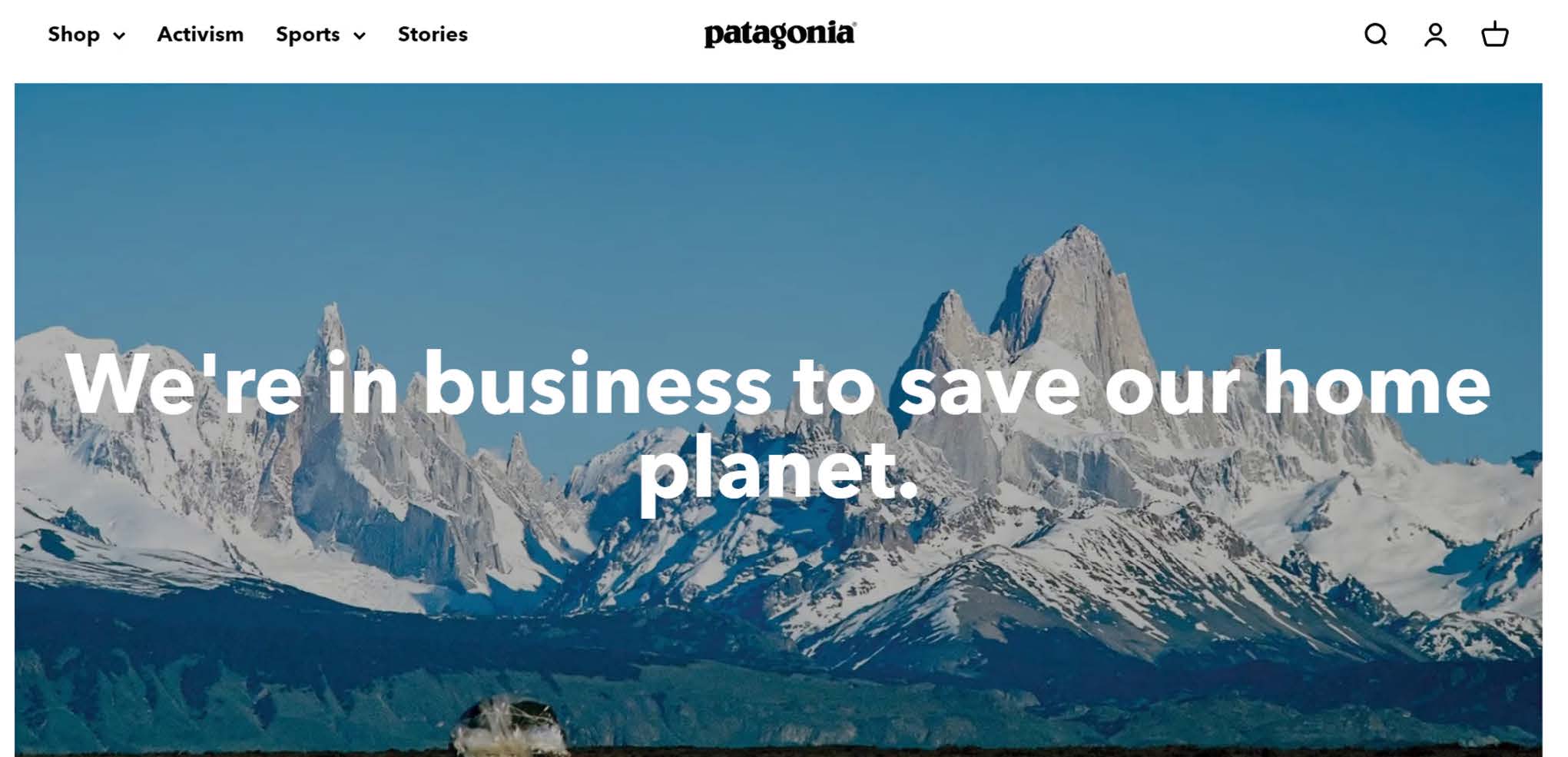
Most brand promises are about what the company does for the customer. Patagonia’s is about what the company does for the planet – and it asks the customer to be part of that.
They give 1% of all sales to environmental organizations. They ran a “Don’t Buy This Jacket” campaign telling people to consume less. In 2022, the founder transferred company ownership to a climate trust.
Every one of those decisions would seem bizarre for a normal retailer. For Patagonia, each one proved the promise was real. That is why people pay $300 for a jacket they could get for $100 elsewhere.
Key Takeaways:
DialMyCalls sends mass texts and automated phone calls. Schools use it for weather closures. Churches use it for event changes. Small businesses use it for promotions.
The promise doesn’t wrap what the tool does with big claims about “transforming the way you communicate” or “building deeper connections.” It has become a part of the overall brand strategy by just naming the job: reach everyone at once, and do it without friction.
The brand delivers on “easy” by letting users send a message to thousands of contacts in under five minutes – no training required.
Key Takeaways:
Mesothelioma.net supports patients and families dealing with a cancer diagnosis caused by asbestos exposure. Their audience is scared and overwhelmed. The promise doesn’t try to sound authoritative or clinical.
“Standing by” communicates readiness without pressure. “You and your family” expands the commitment to the people around the patient, who are usually the ones searching for information and making calls. The organization has been doing this for 20+ years and has helped over 1,000 families. That track record is the proof behind six simple words.
Key Takeaways:
Advertisment
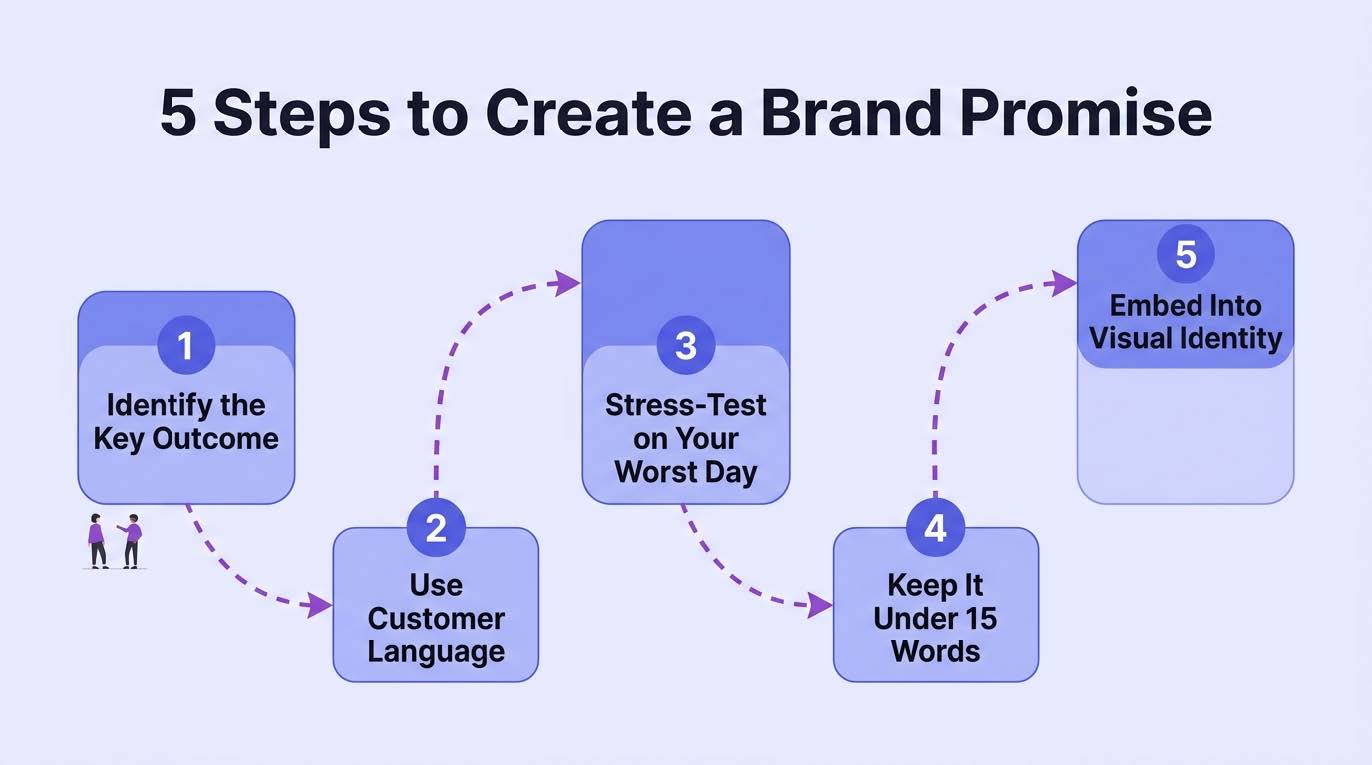
All the great brand promise examples above all have a few things in common. These five brand strategies come straight from what those customer-centric companies did right, and they work for companies of any size.
Nike picked inspiration. FedEx picked speed. Geico picked savings. Brondell picked health. Each successful brand promise statement above is built around a single outcome the customer wants. Not a feature. Not a process. An outcome.
A promise that talks about something the company is proud of, but the customer doesn’t prioritize, is just internal language with a frame around it. According to theHRDirector’s research, 66% of consumers will leave a brand after a single broken promise. So the outcome you pick has to be the one you can deliver on 100% of the time.
Sewing Parts Online says “Expert Service. Largest Selection. Everything Sewing Delivered Quickly to Your Door.” That reads like a customer describing exactly what they want from a store, not like a marketing team spent six weeks workshopping it.
Compare that to a promise full of words like “deliver excellence” or “drive success” – phrases nobody outside a conference room has ever said out loud. Your brand and identity should be like the people it is built for.
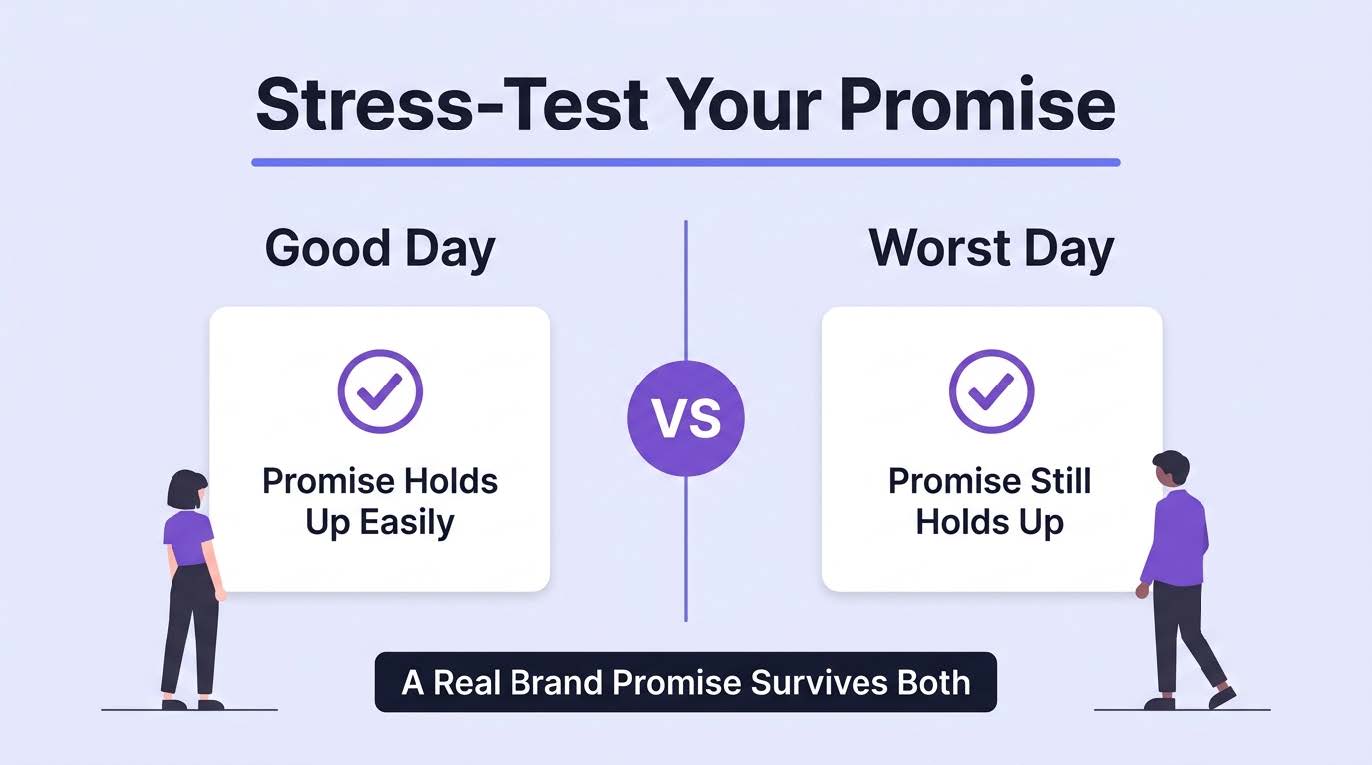
Keeping a promise on a good day is easy. The real question is whether it works when a supplier messes up or a product ships with a defect. IceCartel built this directly into their promise – “even if it means working through the night.”
That language acknowledges that delivery isn’t always smooth, but the commitment stays the same. Loyal customers spend 67% more per purchase than first-time buyers. And that customer loyalty is earned through customer satisfaction during the hard moments, not the easy ones.
Geico: “15 minutes, 15%.” Nike: “Inspiration and innovation to every athlete.” Patagonia: “In business to save our home planet.” All under 15 words. A promise that needs a paragraph to explain is a promise nobody will take with them.
The length limit also pushes clarity – if you can’t say it in one sentence, you probably haven’t decided what you are actually promising yet. Your brand style guide should have the final wording so it stays the same across every use.
Apple’s “Think Different” is visible in the minimalism of every product before you read a single word on the box. Patagonia’s environmental commitment shows up in recycled packaging and earth-tone photography. Coca-Cola’s “refreshment” shows up in a red and white visual identity that hasn’t changed in over a century. A powerful brand promise should be something people feel from the visuals alone, before they have read any copy.
Advertisment
If you step back from all the brand promise examples in this article, one thing becomes obvious fast. The strongest brands sound specific. They pick one idea, stick with it, and repeat it until people start finishing their sentences for them. Get that right, and everything else starts to line up behind it without force.
At Zeka Design, I design logos and build full brand guidelines for companies that want their visual identity to express a strong brand promise at every touchpoint. If your brand promise is about speed, I reflect that in sharp and clean design choices. If it is about trust, I build a visual language that is steady and consistent across every touchpoint. Everything I design is meant to reinforce what your brand stands for, not distract from it.
Reach out to me at Zeka Design and let’s build something that actually matches what you promise.
Advertisment
Pin it for later!
If you found this post useful you might like to read these post about Graphic Design Inspiration.
Advertisment
If you like this post share it on your social media!
Advertisment

Want to make your Business Grow with Creative design?
Advertisment
Advertisment